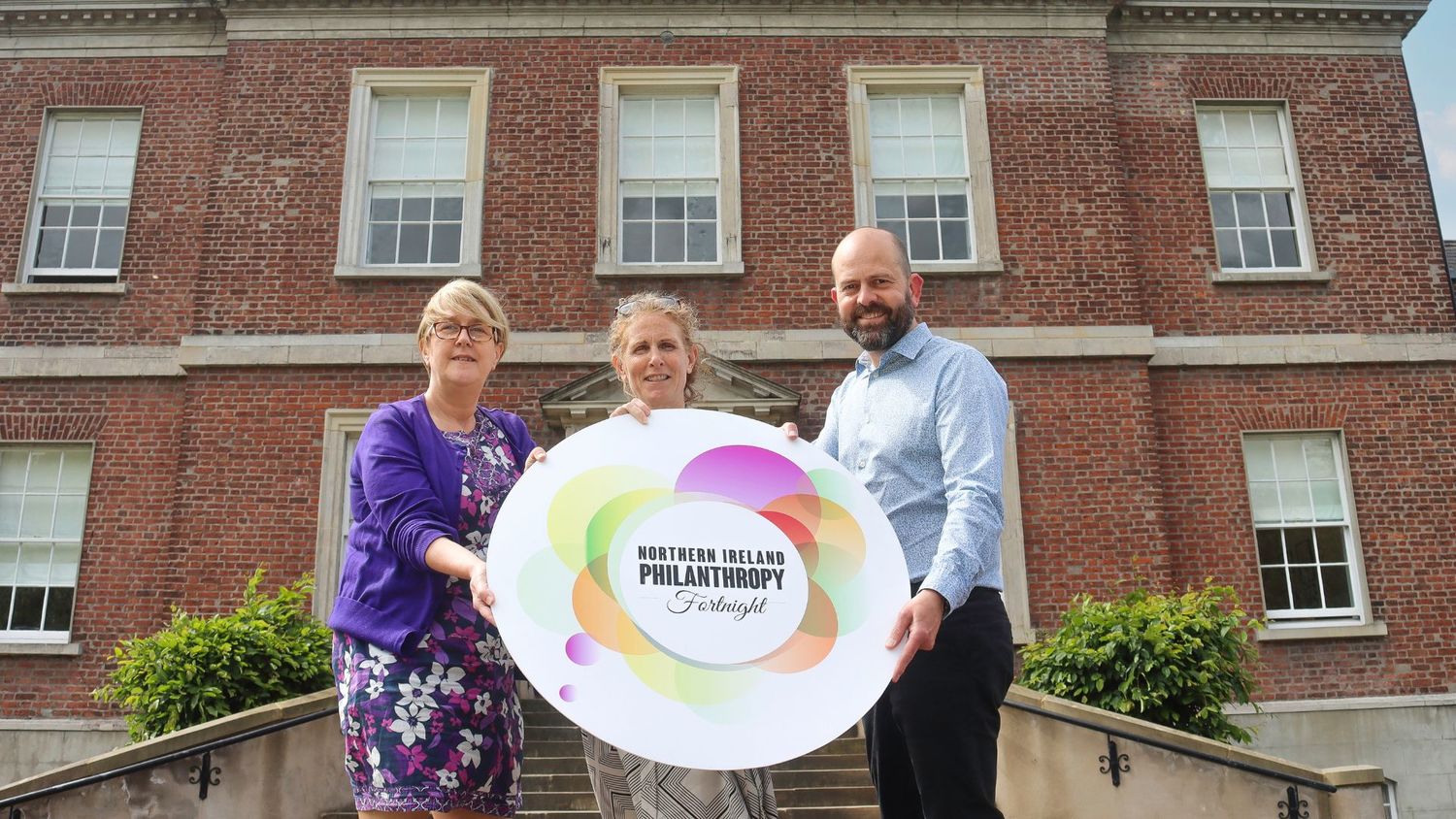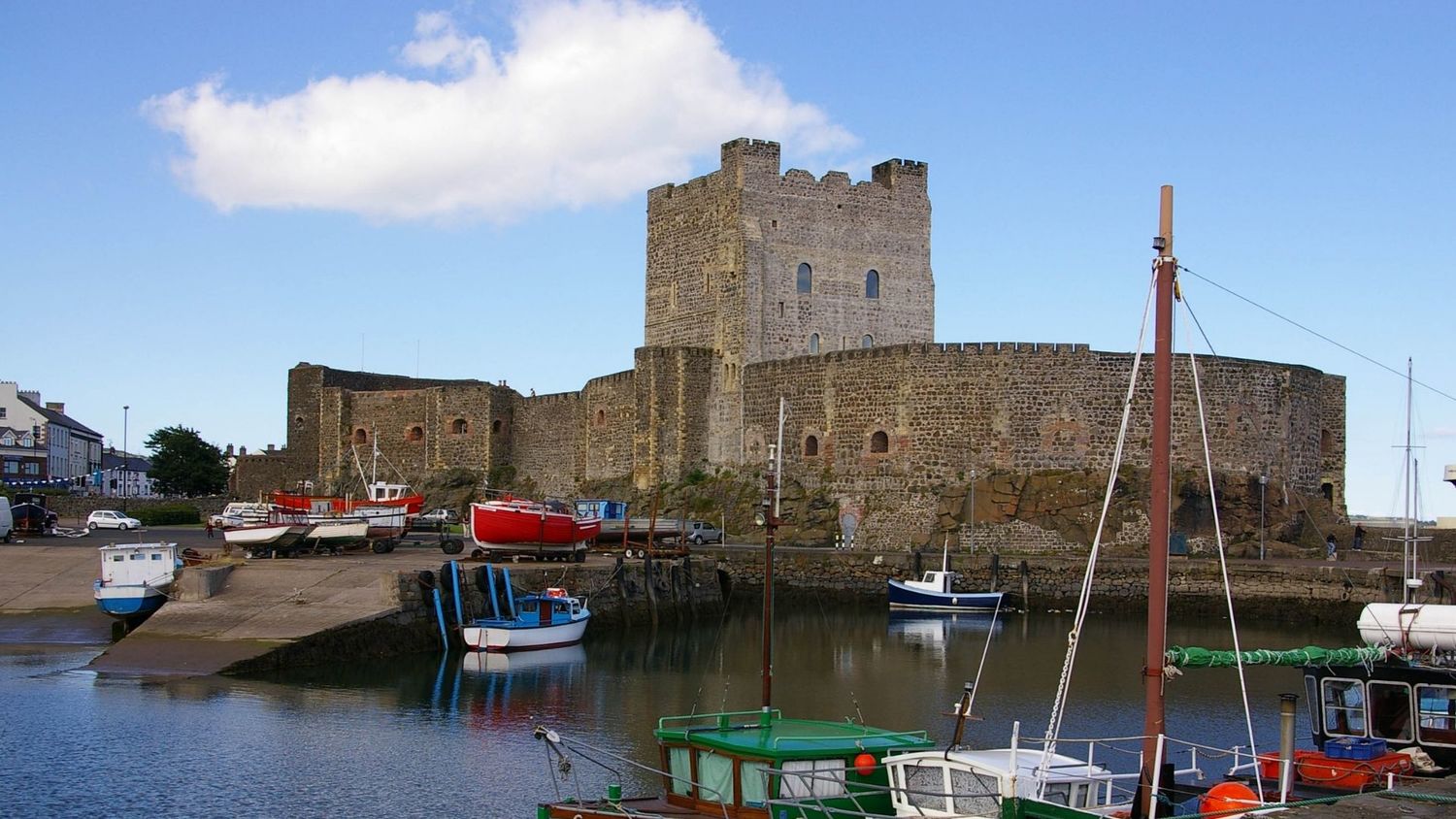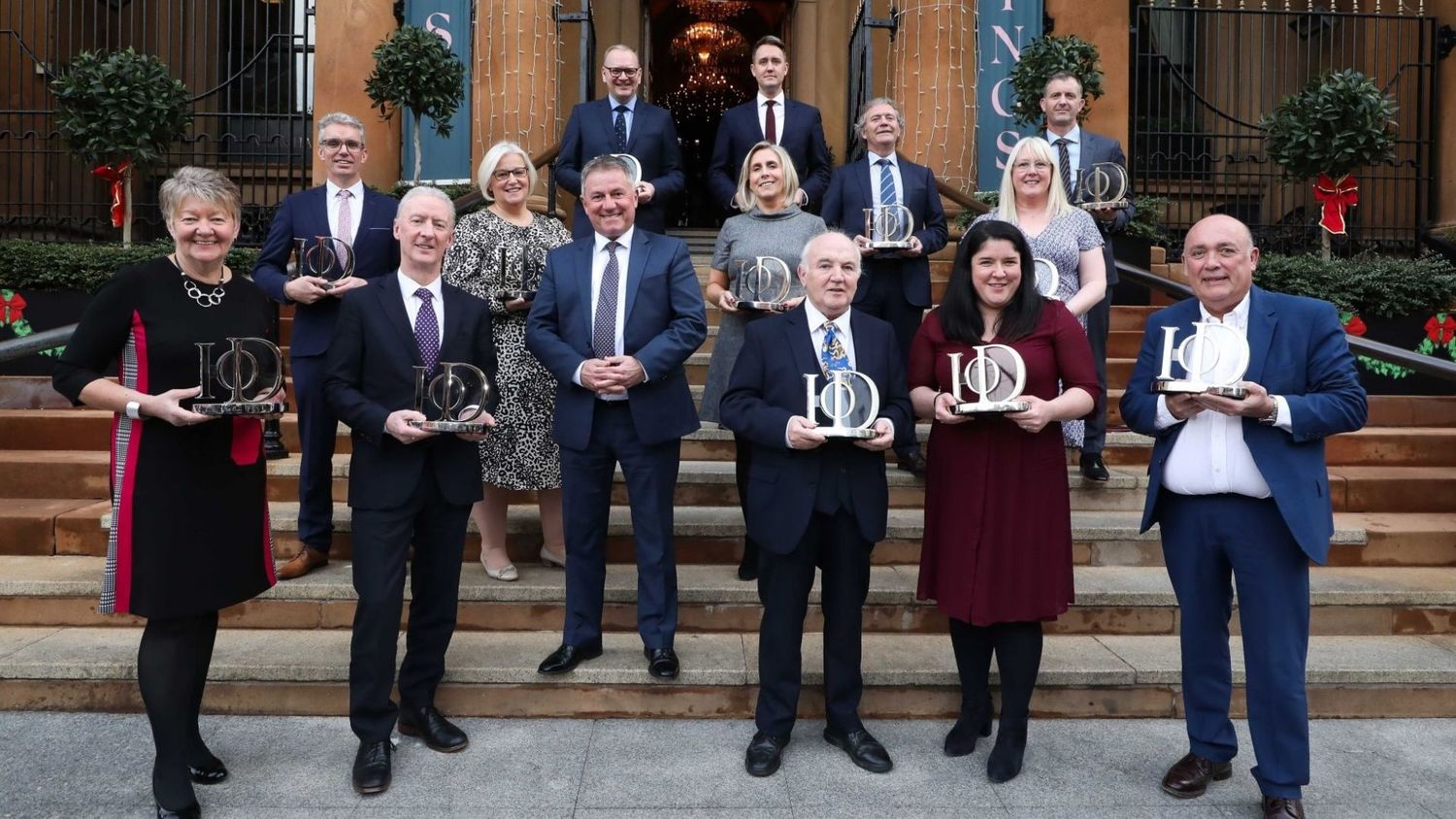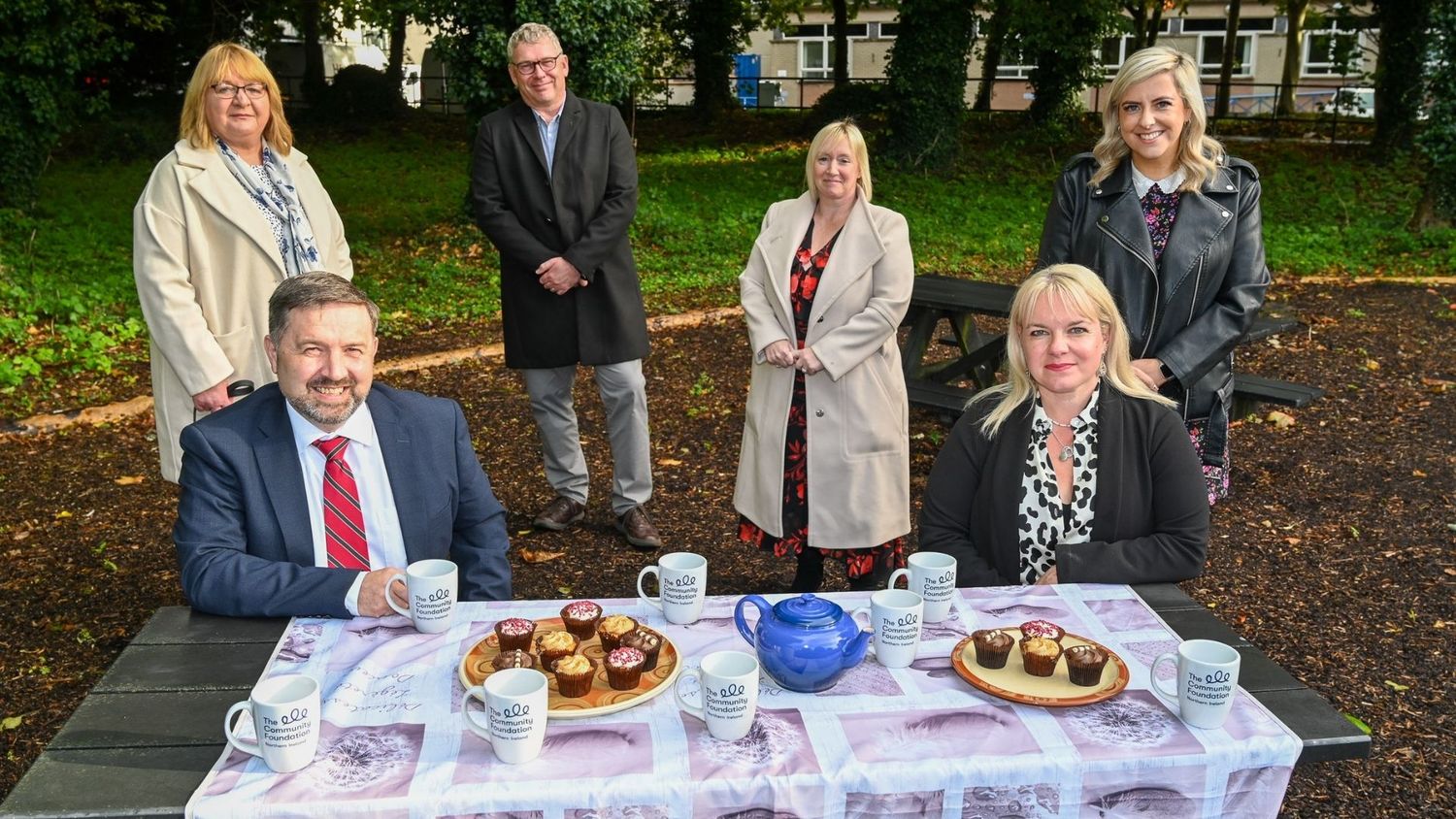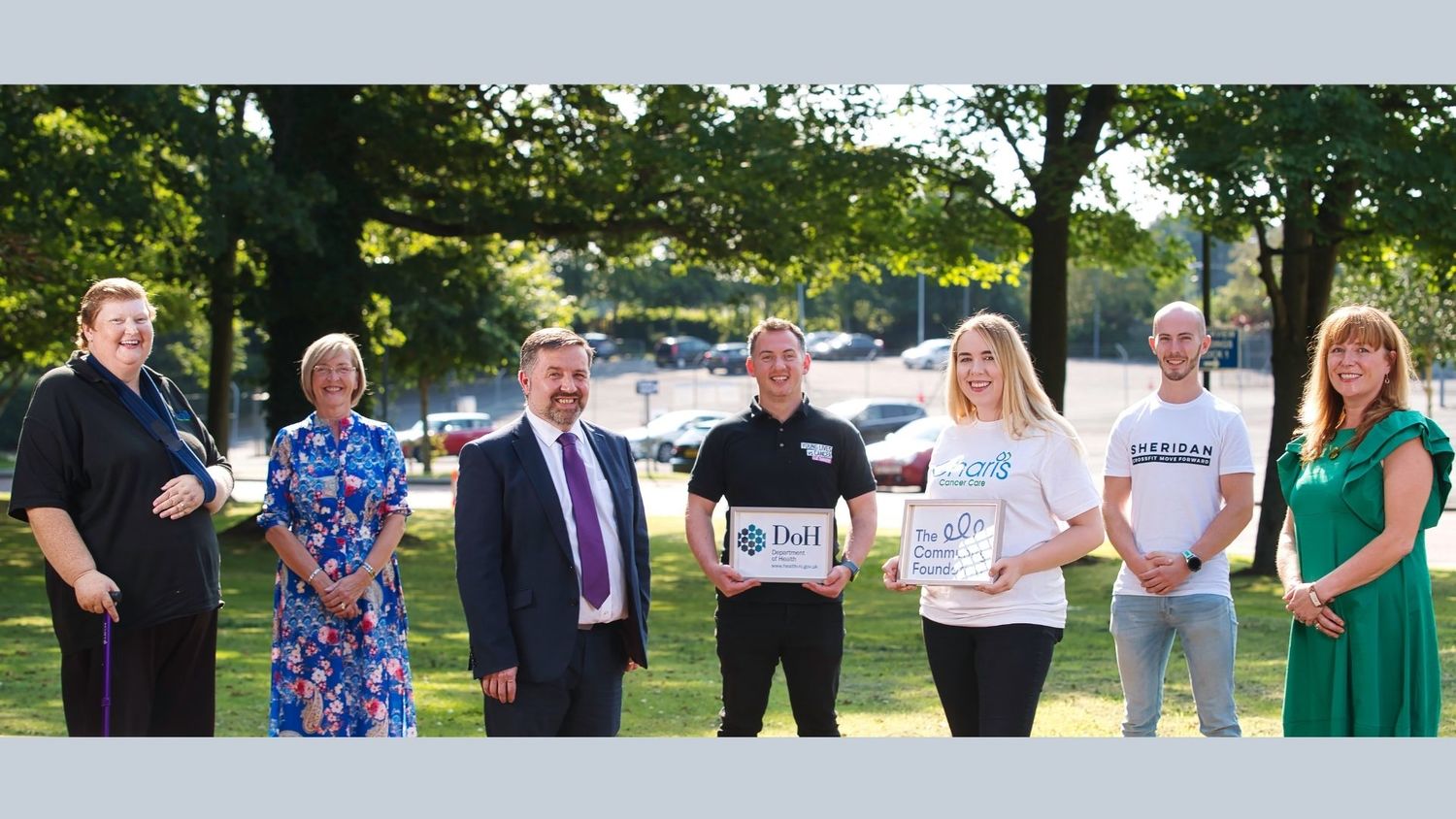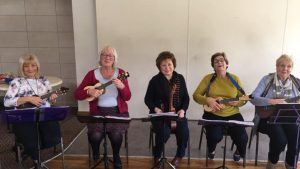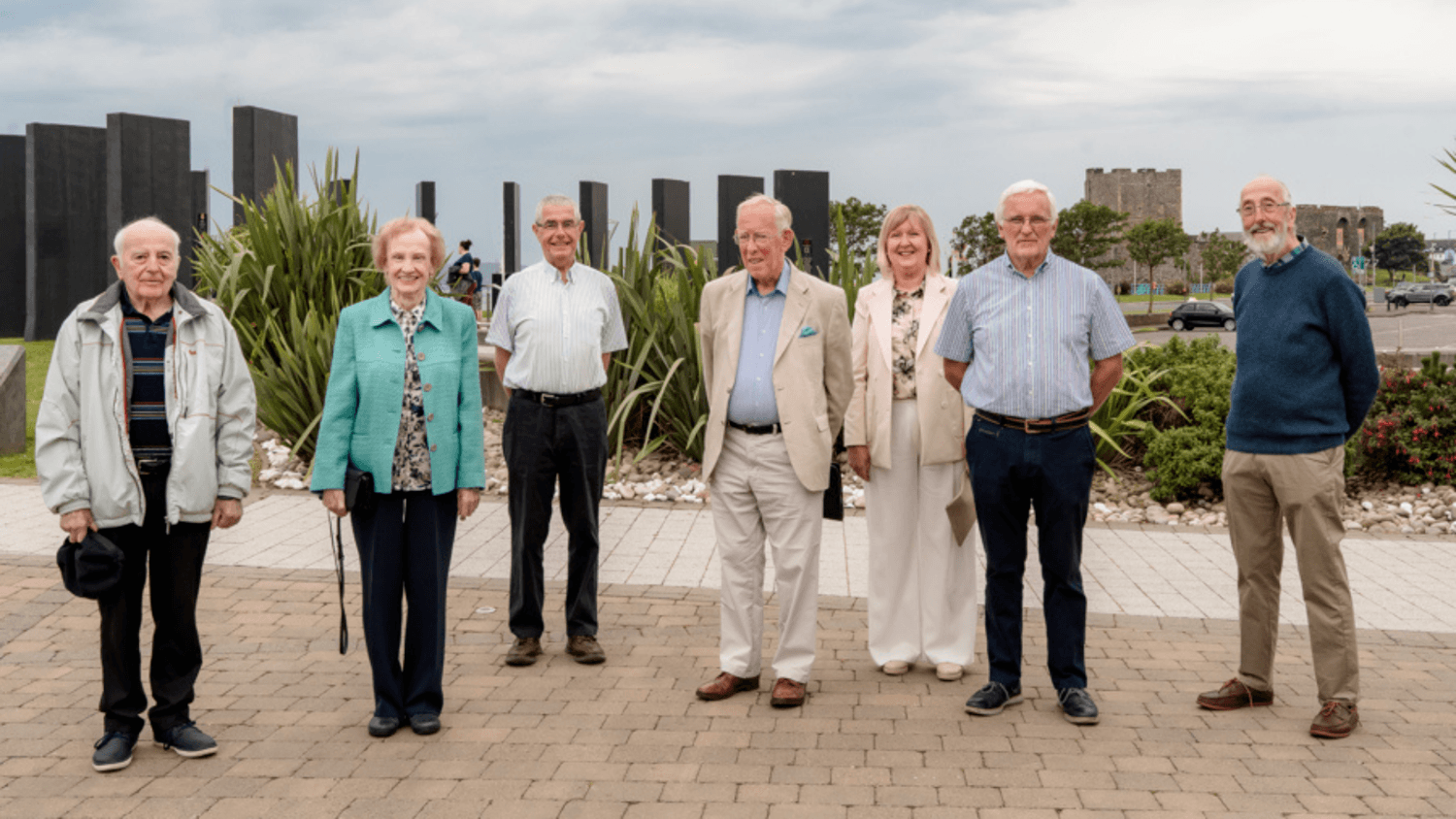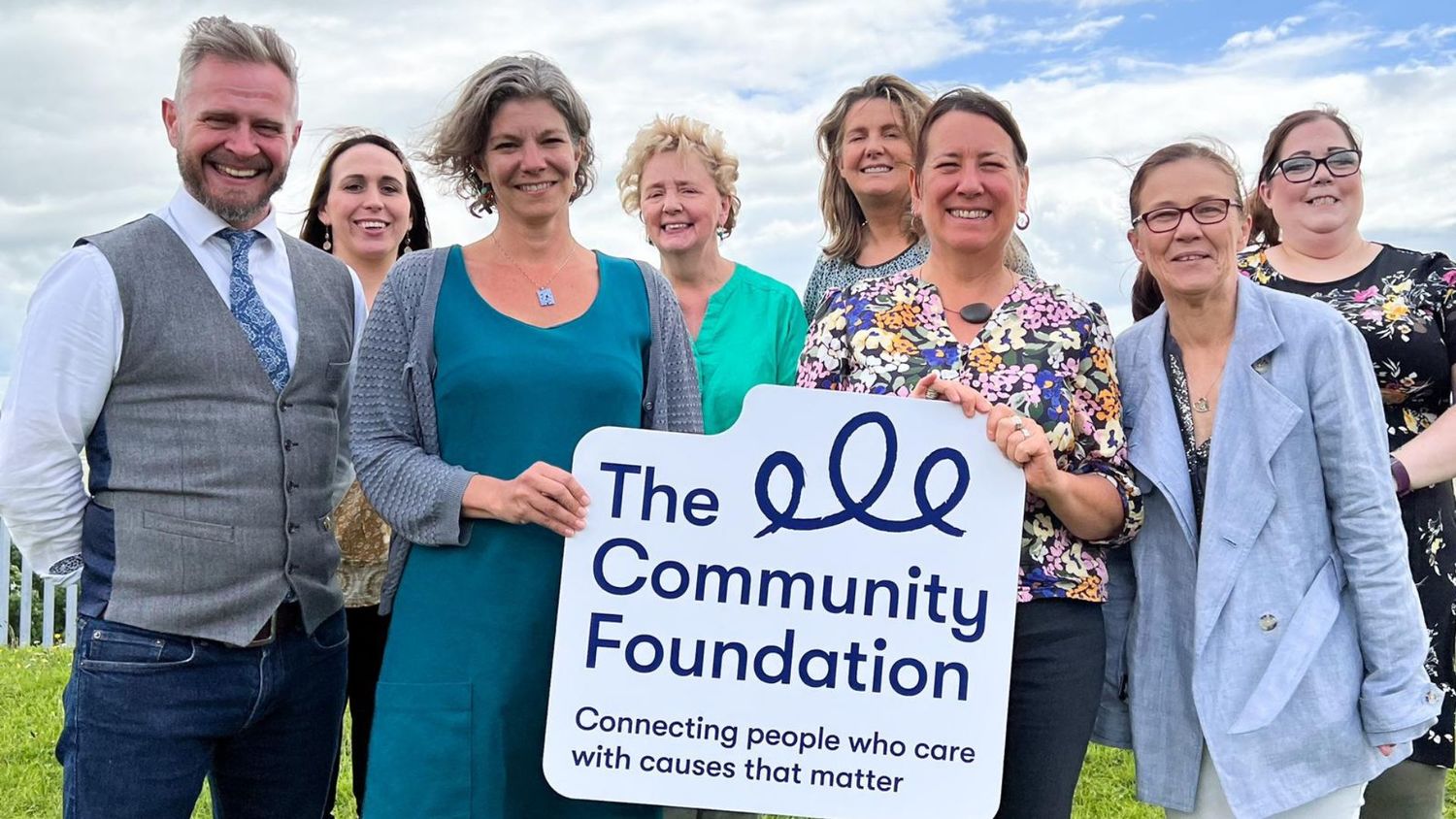
Over £8,000 has been awarded to local groups in the Carrickfergus area aimed at boosting services supporting older people the Community Foundation for Northern Ireland and the Gill’s Charity Fund, is delighted to announce.

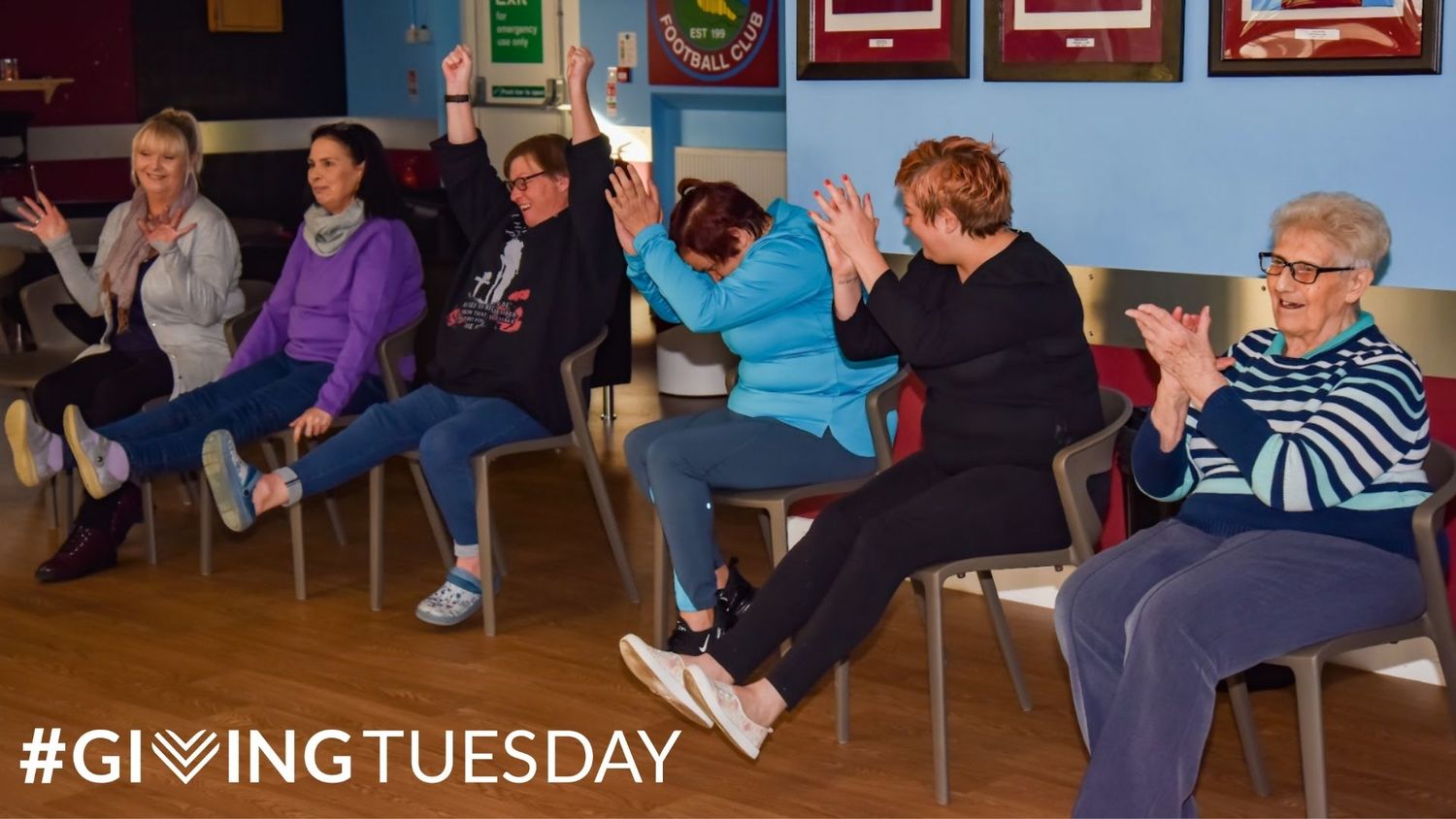
Funding of up to £2,000 was available to support the physical and mental wellbeing of older people through activities that reduce isolation, support independence and enable active participation of older people in community decision-making, and addressing issues facing their sector.

John Richardson, previous Secretary of the Gill’s Charity said,

“It is wonderful that the Gill’s Charity Fund has been able to support these groups. The Gill’s Charity was originally established in 1761 from the Will of Henry Gill and for 260 years the Charity has been supporting the Carrickfergus community. I am pleased and encouraged that now under the auspices of the Community Foundation, the Fund is continuing to help groups supporting older people in Carrickfergus”.

Marcus Cooper, Fund Development Manager at the Community Foundation said:

“We are happy to be able to make awards to a number of groups in the Carrickfergus area.

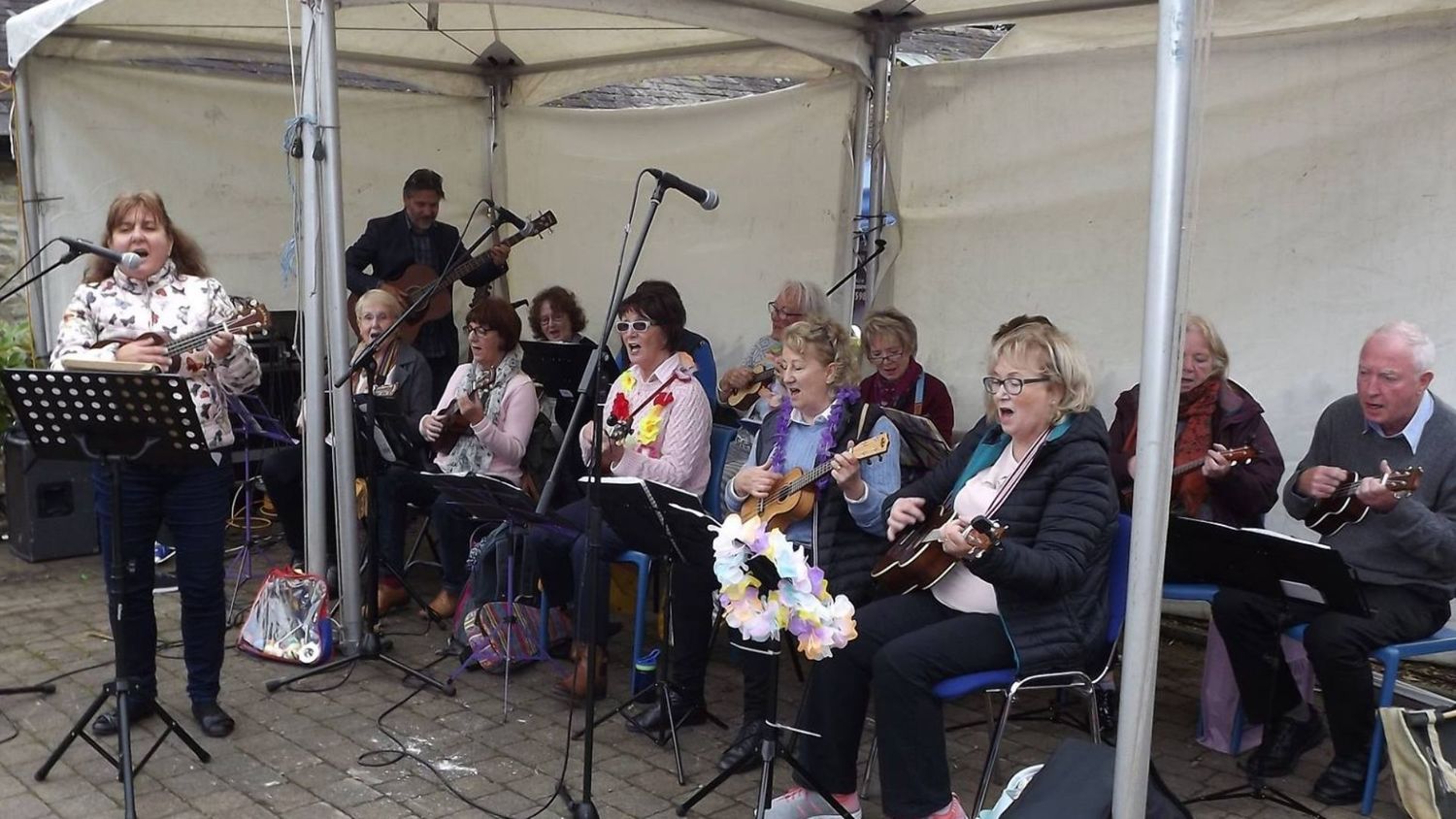
“From projects ranging from Good Morning Carrickfergus, which is a valuable lifeline to the older residents in the town ensuring daily connections, to the Carrickfergus Music Festival Association who are actively seeking to get older people involved, knowing that music has no boundaries, there are many ways in which a cherished generation in Carrickfergus will benefit.   

Joan Stephenson: Chairperson of Good Morning Carrickfergus said:

“We are delighted with this support. Our service provides a Monday-Friday telephone befriending, support and alert service, giving much needed reassurance and a sense of community and belonging to vulnerable adults and the elderly in Carrickfergus, Greenisland and Whitehead.

“The service is provided by our faithful Good Morning volunteers and managed by the Service Coordinator, Elaine Rajkumar, who also provides and arranges additional wraparound support when needed.

“Over the entire period of COVID, we had to find a different way of working and as a result of many volunteers being willing and keen to work from home, we were able to sustain our core telephone befriending, support and alert calls, without exception. This helped reduce isolation and loneliness over this unprecedented period of time, when families and friends were unable to visit.

“The Gill’s grant will certainly help us maintain this valuable service to the community.”

The Chief Executive of the Community Foundation NI has stated that an Executive must be formed and an urgent cross departmental approach implemented to deal with the current cost of living crisis.

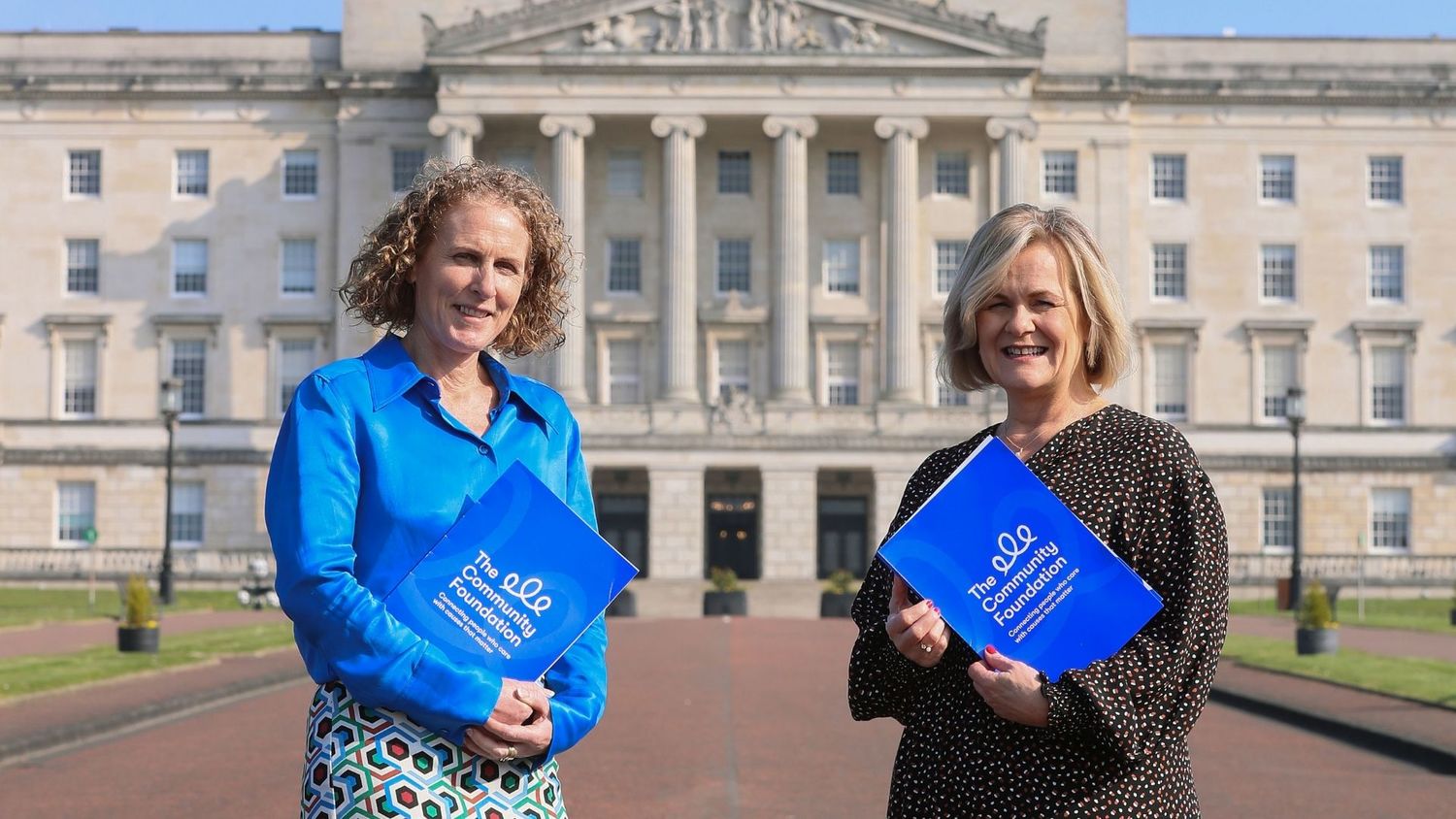
Speaking following a meeting with the Minister for Communities, Deirdre Hargey, which saw the reconvening of the Emergencies Leadership Group, the CEO of the Community Foundation, Roisin Wood said:

“It is very clear that we are in a cost of living crisis and that we need to see an urgent response to very real challenges that people in our communities are facing on a daily basis. We are in unprecedented times with ever increasing costs in terms of fuel prices, energy prices, food prices and threats to frontline services.

“I welcome the opportunity to meet with the Minister for Communities, Deirdre Hargey, to put forward our concerns. These concerns are reflective of the groups we work and what are telling us about the challenges they are encountering.

“The Community Foundation NI supports a wide range of groups who are working to provide services for those in need. For our part we will be releasing a new fund in the coming weeks aimed at addressing poverty for groups working with older people. We will also be examining how we can further impact on this crisis elsewhere through a partnership approach.

“Currently there is over £400m that can be released if an Executive is formed which can be used to ease the current pressures. The formation of an Executive would also see the ability to bring forward an Anti Poverty Strategy to help deal with this growing crisis.

“There is a huge imperative for an Executive to be formed now with an urgent cross departmental approach being a primary focus. Every day that passes more and more people will be struggling to make ends meet. That is just not good enough.”

Verbal Arts Centre are using a unique storytelling based approach with children and young people to improve mental health and wellbeing.

With the support from the Hobson Fund Verbal Arts Centre have developed a programme for both children and their carers to enable them to tell their story. The project – ‘WellRead’ uses literature to create an imaginative space, providing structured setting for children in a safe, enjoyable environment to build the skills required to challenge negative thoughts as well as develop new skills that will protect them in the future. WellRead also provides a safe and supportive context for carers to feel enabled and address the increased prevalence of mental issues they see within their children and young people.


We caught up with Andrea Dornan, Director at Verbal Arts and Tracey Grey, Programme manager for children and young people at Verbal Arts. Listen below as they share how the power of storytelling has been improving mental health in young people and carers.


Music and dementia: a powerful connector

Access to Arts NI wanted to make their community a better place to live by providing positive social activities to those with limited opportunities. A successful application to the Micro Community Fund at the Community Foundation made this possible.

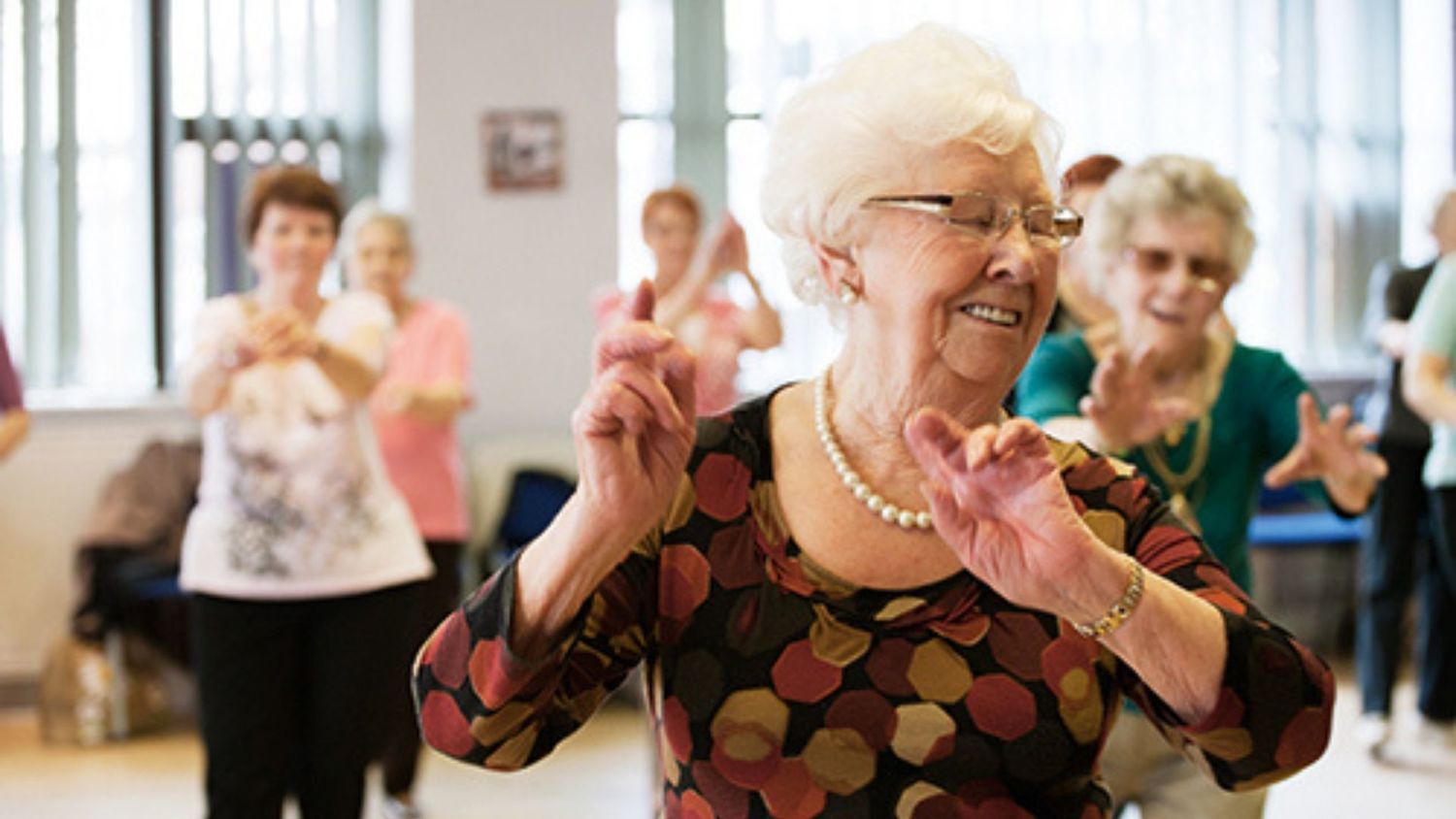
Each month the Access to Arts NI holds a dementia friendly tea dance providing an interactive and fun social environment for the over 50’s who have early signs of dementia. These individuals come along with their carers or companions, to enjoy a wide variety of music and tunes,  providing both physical and emotional connections.

Given the huge impact of Covid 19 especially on those with dementia, and the added challenges that lockdowns and restrictions for sufferers and carers alike this is an opportunity to provide some fun and social interaction all while promoting inclusion and belonging within their community.

Dolores O’Reilly, Access to arts NI stated;

“Music and memory have a powerful connector. Music lights up emotional memories – everyone remembers songs from their past – the first kiss, the song at a wedding, seeing their parents dance.”

“Music can have many benefits in the setting of dementia. It can help reduce anxiety and depression, help maintain speech and language and has a positive impact on carers. The universal nature of the ability to enjoy music provides a very powerful tool to enhance the quality of life of people with dementia.” 

Dementia Action Week is a national awareness day, encouraging individuals to take action to improve the lives of people affected by dementia and raise awareness of the signs and coping mechanisms.

Adrian Johnston has enormous knowledge and experience of strategy, commercialisation and digital transformation gained over a 25-year career in technology. At the same time, he’s had a solid and ongoing grounding in the voluntary sector through several trustee appointments. Most recently he became Chair of the Community Foundation for Northern Ireland, where working alongside Chief Executive Roisin Wood and the Board of Trustees, Adrian has big ambitions for the three-year tenure of his role.

Adrian recently shared his vision around some of the key priorities for the Community Foundation’s strategic vision:

‘Diversity and Inclusion’
“We’re very lucky with our Chief Executive, Róisín Wood. Róisín brings a strong EDI (Equality, Diversity and Inclusion) background to the Foundation and we want to be representative of the changing and diverse society in NI. That must be given time-it’s not a box ticking exercise-and the construction of the Board has to include lived experience.”

“When you look at under-represented groups, whether it be through a process design or a product design, if you don’t have a diverse community engaged as part of the development process, then you actually develop a product that’s only for the type of people who are creating it.

“In the way that needs to happen in industry, as we go through the strategic review at the Foundation, we’ll be co-designing programmes to ensure that diversity is represented within those programmes; our Board will have lived experience feeding into the development of our programmes and the way we manage and administer them. Similarly in tech, you see new product development is looking at that inclusive innovation space to ensure wider society is part of the conversation. That opens up opportunity for employment, development and lifelong engagement. It’s a great space to be in at the moment, in Northern Ireland.”
‘Climate Action and Digital Transformation’
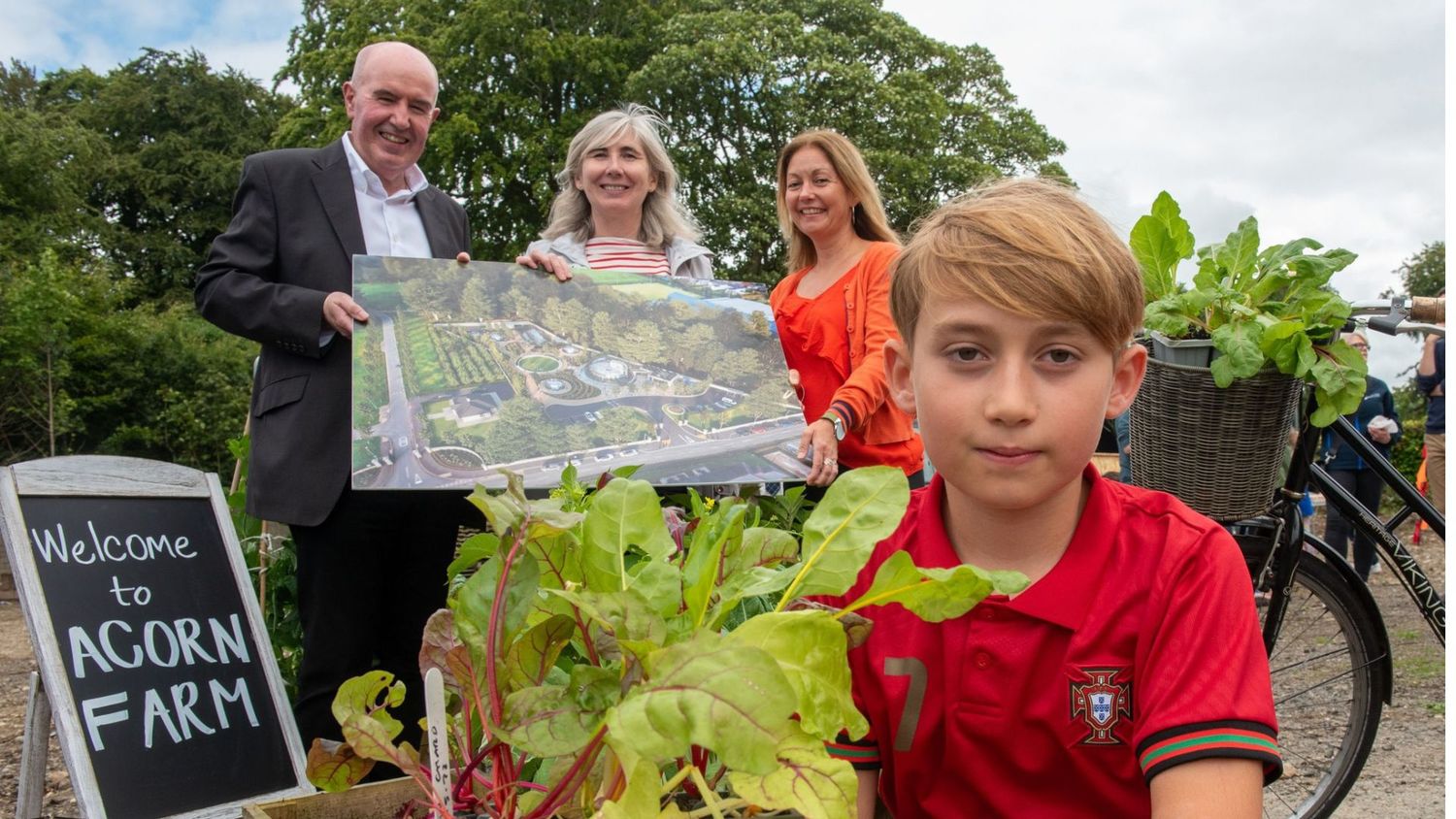
Adrian also detailed the need for climate action, both locally and globally in the aftermath of Covid, a need that is beginning to be addressed through the Foundation’s review of policies, actions and funding including the recent Acorn Farm Development programme in Derry – a very exciting £9m partnership.

As might be expected from someone who holds a unique insight into the private and voluntary sectors in Northern Ireland, Adrian is passionate about finding solutions to digital exclusion:

“While the pandemic drove a massive transformation of the sector, that also resulted in digital exclusion, emphasising issues like social isolation, especially in rural communities. I want a renewed focus to be placed on addressing digital exclusion and supporting groups to digitally transform as a sector; Over the last 18 months the sector has pivoted, but can they sustain that pivot and do they have the right skills to do so?”

To Adrian, this challenge represents a huge opportunity for collaboration between the private sector and the voluntary sector through the provision of technology, solutions and skills and the opportunities for employment for under-represented groups within NI. He explained how he believes these sectors can benefit each other.

“The high-profile conversations taking place in government departments at the moment are around Agri-tech, life and health sciences, cyber security and digital transformation, all of which impact on the daily lives of the citizens in NI. Meanwhile our voluntary sector is one of the strongest in NI, with a workforce of almost 54,000* and it has an untapped skills and talent pipeline we should be engaging to drive prosperity. Skills like project delivery, budget management, stakeholder engagement and strategic reform, that are entirely transferable.

“In addition to this, the NI Voluntary sector benefits from significant lived experience of the issues the private sector is trying to address, so creating formal opportunities for collaboration on core objectives and ideas sharing between the sectors can only lead to positive impacts.

That potential for driving prosperity is key to what Adrian sees as the pathway to the next chapter of peacebuilding.

“Peace and reconciliation conversations are ongoing, however I believe that prosperity is ultimately what will take us out of those discussions. Lack of prosperity and opportunity makes it easier for some parts of society to be controlled by malevolent forces.

“DfE (the Department for the Economy) released their 10X strategy that is about the talent and skills pipeline and yet there’s a huge part of society that’s currently cut off for multiple reasons; These people could be of huge value to industry, but they’re not currently engaged.”

He believes that the Community Foundation is exactly the right kind of organisation to be having conversations with those people about what opportunities are available to them. Meanwhile, he says it’s up to organisations like Catalyst (of which Adrian is the Director of Strategic Business Development) and the private sector to create the conditions so that the training is available, the right policy is in place with government, so if someone from an under-represented community wants to become an entrepreneur or complete a PhD in Artificial Intelligence, they can see a clear pathway to achieving this.

‘Shifting the power’
As a representative for the community, Adrian believes the collective voice of the Board has an opportunity to help shift the power from those who currently hold it to those who have little. With a currently inactive Executive, huge fiscal pressures across multiple sectors resulting from covid and communities demonstrating the need for significant funding, he recognises that there’s no easy answer to how to do this. A solid foundation to start helping communities to influence policy however can come from their inclusion in the development of the Foundation’s programmes.

“It [the Voluntary sector] has to get those it supports closer to those policy and decision-making discussions. That’s not easy – under-represented groups are currently less likely to be part of those conversations, so we need to support the leadership of voluntary sector organisations to empower those groups.”

He cites Citizens Assemblies, pioneered in Northern Ireland by the Community Foundation in 2018, as an effective mechanism for this which could be used to look at issues like digital inclusion and employment opportunities, involving multiple departments. He is hopeful for support for future assemblies from the newly appointed head of the NICS, Dr Jayne Brady, who herself comes from an engineering background and has an innate interest in using innovative mechanisms to facilitate those conversations.

Past Highlights
People are at the core of the Foundation’s work and there’s no surprise that they are central to Adrian’s highlights to date and as a way to shape the future.

“The core value of social justice is shared among all the trustees. The strength of the Board and the Foundation’s Senior Leadership Team allowed them to deliver substantial programmes last year with £8.8m of funding distributed. A real highlight for me was the ability of the organisation to respond with agility to crisis, a situation we’ve never really faced before. Looking at the team’s response, their impact in the aftermath and being asked to manage funds by new partners, we’re now more than ever being looked at as a trusted partner. In a way that makes this the perfect time for us to look at the strategy over the next three years – what do we need to deliver and what’s the right way to do it.”

Gilford Youth, a participant in the Foundation’s Community Innovators Programme, have been showcasing the efforts young people are making to improve relationships between adults and children in the area.

The Community Innovators programme supports communities to find new and innovative solutions to challenges they are facing. As a result of some incidents of antisocial behavior, young people in Gilford were collectively viewed in a negative light and their views were rarely sought when making decisions in their community.

A lack of engagement increased the likelihood of children and young people from Gilford coming into contact with police and the criminal justice system, damaging relationships between older and younger people even further, leading to reduced quality of life in Gilford.

‘Through Our Eyes’, a project celebrating youth and sharing achievements was put into action to improve the relationships between children/young people and adults in Gilford. A series of imaginative workshops and intergenerational events was held over eight weeks, leading up to the festival day itself.  The workshops ignited conversations between generations, supporting people to express themselves and highlight issues they face through creative mediums including art, photography, film making, dance, music and inventive workshops.

The overarching aim of Through Our Eyes was to provide a platform for building better relationships in Gilford and promote intergenerational understanding, through regular interaction and the inclusion of young people in local decision-making bodies.


Gilford Youth Chairperson, Matt Crozier commented “ We wanted to celebrate creativity, energy achievements of local young people who have just completed the ‘Through Our Eyes’ programme.

On show where the young peoples creations including mural art, animations and the young people shared what they got out of the programme. This programme was the beginning of new relationships between young and old in the community, bringing everyone together to begin that conversation and decide how we can work together in the future sharing our community space so everyone feels welcome and safe.”


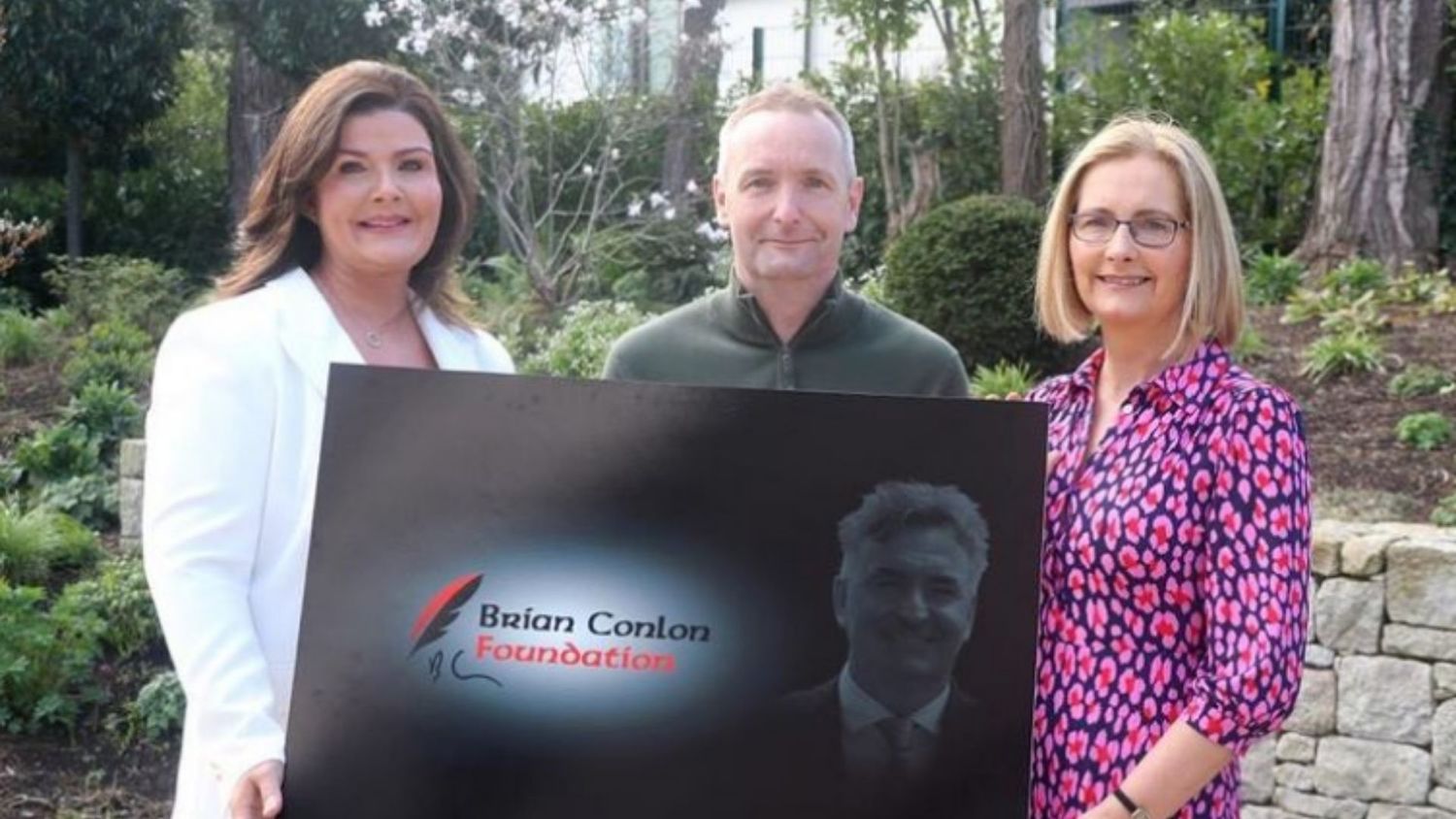
The Foundation is delighted to be working in partnership with the Conlon Family to launch The Brian Conlon Foundation, set up in memory of Brian Conlon, to continue his legacy by supporting causes that were close to his heart and that he was passionate about.

Brian was hugely successful in many walks of life – a high achiever in education, entrepreneurship, sport and in business. When a knee injury ended his budding Gaelic football career, Brian turned his attention to business setting up First Derivatives from his mother’s spare bedroom in 1996. Now one of Irelands most successful companies, it employs nearly 3,000 people with fifteen offices globally. Thousands off local graduates have passed through the company’s HQ in Newry many of whom ended up being deployed to large financial institutions throughout the world.

Brian was immensely proud of his roots and his hometown of Newry and despite all of his success, he remained a humble and generous individual throughout supporting numerous people and deserving causes, often quietly.

The Community Foundation is therefore delighted to be working in partnership with the Foundation to launch a fund to support charities in the Newry area. Donations will be made to local organisations that are working to advance education, amateur sport, opportunities for young people and assisting communities’ groups in the local area.

Brian Conlon Foundation, “Brian spent his life making a difference to the people around him, so it is fitting that this Foundation reflects those values and continues the spirit of his generosity in areas that he cared passionately about. Our goal is to ensure that Brian’s legacy lives on will continue to make a difference.”

Siofra Healy, Director of Philanthropy, Community Foundation commented.
“The Community’s Foundation is delighted to be partnering with the Conlon family as they pay tribute to Brian and set up a Foundation in his memory. Brian was a leader in all that he did and by choosing to set up this foundation, Brian’s leadership and generosity can continue to make a difference and change lives locally.”


Grants up to £3,500 will be available from 2nd May on our grants page.

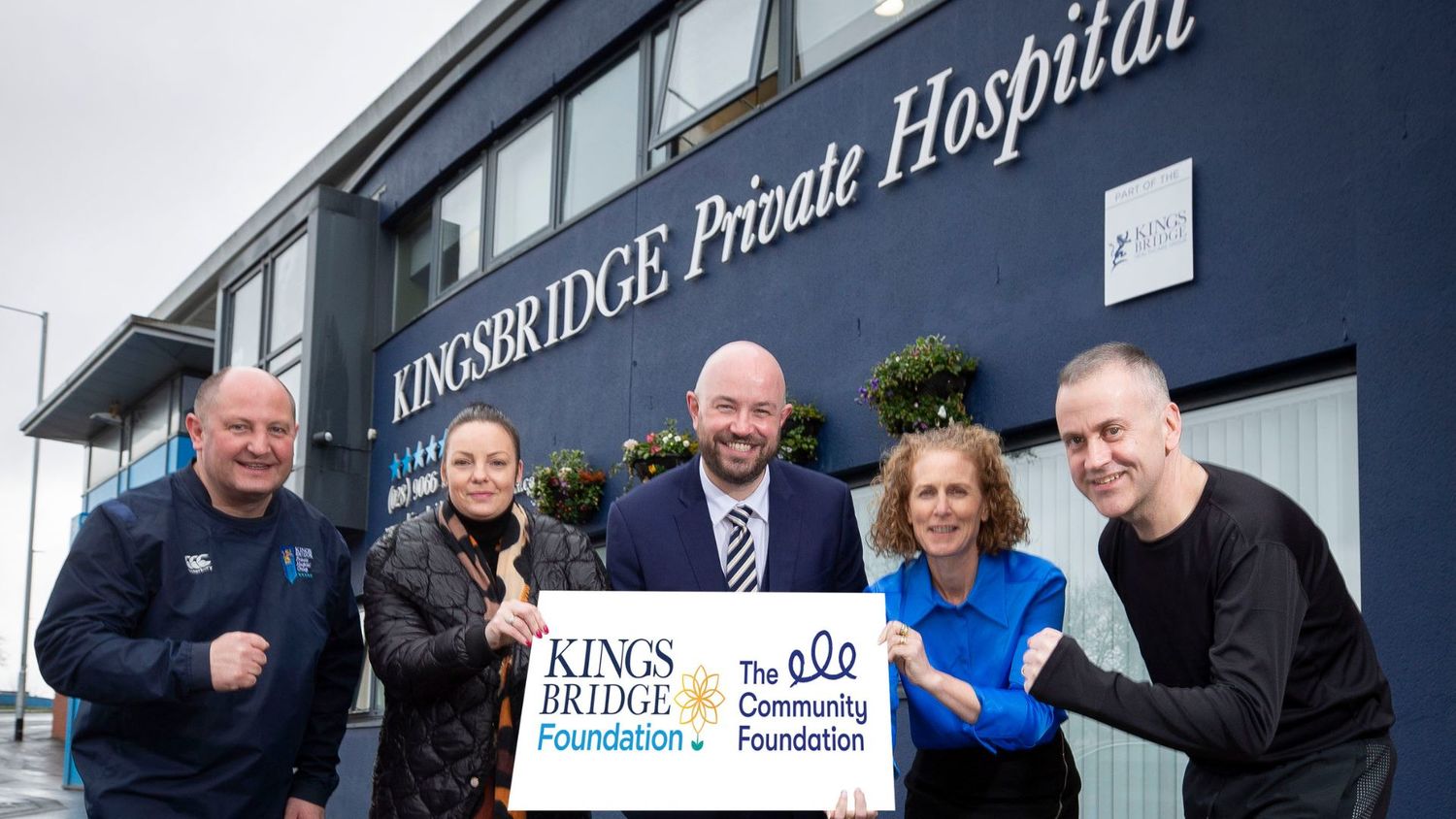
The Community Foundation is delighted to announce a new partnership with Kingsbridge Healthcare Group. This week saw the launch of a new charitable arm of the Group called The Kingsbridge Foundation which is a giving fund that will be managed and supported by the Foundation, alongside an internal advisory board of staff from across their hospitals and clinics in Belfast and Ballykelly.

The fund will initially focus on raising money for the local community through charitable work, fundraising and initiatives, supporting charitable organisations and causes in Northern Ireland working in the areas of health and wellbeing, including mental health, disability, and physical health.

Kingsbridge has made an initial contribution of £50,000 to a fund and other sources of funding will come from staff fundraisers and donations, including additional support from the Community Foundation.

Medical Director of the Kingsbridge Healthcare Group and Chair of the Kingsbridge Foundation Advisory Board, Dr Martin Shields said he was so impressed with the willingness from his colleagues and others, to help those in need.

“We are launching the new foundation by inviting staff, consultants and friends to take part in this year’s Belfast City Marathon. To date we have 5 relay teams, dozens of staff participating in the 8 mile walk and several others running the full marathon, all in aid of the Kingsbridge Foundation.


“There is quite a buzz amongst the staff within the Kingsbridge Healthcare Group who have been busy giving their own time freely to train for the Marathon and fundraise behind the scenes, to ensure that we keep the fund topped up before we allocate the next cohort which will have a focus on loneliness and suicide.

“Already we have donated £20k to Cancer Fund for Children for Rory’s Miles to Mayo, as well as other causes that the staff have approved funding for like the Christian Blind Mission, Lighthouse Charity and Positive Life amongst others”.

“We are delighted to be in partnership with the Community Foundation NI who will work with us each year to guide and advise the Kingsbridge Foundation Advisory Panel on how to award funding and assist us in making a positive impact on health and wellbeing in our communities,” said Martin.


Siofra Healy, Director of Philanthropy, Community Foundation commented:

“The Foundation is delighted to be working with the new Kingsbridge Foundation. The need for health and wellbeing support has been increasing as we emerge from lockdown and restrictions.  Giving together is an empowering experience, and engaging employees to support the causes that are the most important to them is an excellent example of how philanthropy can support causes at a local level.”

Belfast City Council has opened a fund in support of events taking place in local communities across the city over the Platinum Jubilee weekend.

Celebrations to mark HM The Queen’s Platinum Jubilee will be supported and constituted community groups within the Belfast City Council local government boundary can apply for a grant of up to £2,000.

The £100,000 fund which is now open for applications online is being managed by the Community Foundation and grants will be used for community-led events and celebrations during the 4-day jubilee bank holiday weekend (2 – 5 June 2022).

“We ‘re looking for events and programmes that are inclusive and that support participants to be active and involved in their community in positive ways, building relationships and fostering community spirit” said Orla Black, Grants Director at the Foundation

The fund will remain open for applications until 11th April and priority will be given to collaborative projects.

For further information we are running drop-in information sessions, please see below.


Duncairn Community Centre, Upper Mervue St, BT15 2J, Tuesday 29 March 1.00 pm
 
Olympia Leisure Centre, Boucher Rd, BT12 6HR, Wednesday, 30 March 10.15 am
 
Inverary Community Centre, Inverary Ave, BT4 1RN, Tuesday, 29 March 11.30 am
 
Spectrum Centre Café, Shankill Road Belfast, Wednesday, 30 March 6.00 pm

There will also be an online zoom session, Friday, 1 April at 11.30am, joining details are below. 

Join Zoom Meeting
https://us06web.zoom.us/j/6086313480\

Meeting ID: 608 631 3480


View fund criteria and apply here. 


The Community Foundation for Northern Ireland has awarded just over £1m to 22 groups here, through the Carers Support Fund established by Health Minister Robin Swann last year.  The funding has been allocated to groups that provide essential support including counselling, respite and activities to those with caring responsibilities.


This is the second round of funding from the Carers Support Fund, with £1.5 million allocated to date.

Róisín Wood, Chief Executive at the Community Foundation said:

“We know that there has been enormous pressure on carers as a result of the pandemic which will have impacted their physical, mental and emotional health.  Carers range from children and young people, to those caring for parents of every age, partners and sometimes friends.  All of these carers have different needs and often have to balance their caring duties with school or work.

“We are pleased to award this much-needed funding to groups who will now be able to offer support and respite to these carers who contribute such a huge amount to society.”


Minister Swann said:

“I am delighted to be able to announce another round of funding awards under the Support for Carers Fund. When I launched the Fund last year my focus was to support projects which would make a real difference to the lives of individual carers, on the ground.


“There’s a great mix of projects receiving funding, the provision of practical support, wellbeing events, respite, advocacy support, and mental health support. Projects also cover both adult and young carers. I look forward to see how they make a difference in the lives and experiences of individual carers in the coming months and years.


“I want to pay tribute to the many thousands of people in Northern Ireland who help look after a family member or friend without financial reward. Put simply, the health service could not cope without them and we owe them a debt of gratitude, particularly for their tremendous sacrifices, hard work and dedication during the past two years of the pandemic.”


The Happiness Café in Kilkeel runs a Memories Café, provide engaging and stimulating activities for those with Alzheimer’s and Dementia and their carers.   The Café has received £9,400 towards the delivery of their ‘Caring For Our Carers’ project.  The project includes Carer Support Groups to provide information, advice and health and wellbeing activities for carers of people with dementia in Kilkeel, Ballymartin, Rostrevor, Warrenpoint, Newry, Bessbrook and Markethill.


Marie Fintan from the Happiness Café said:

“Caring takes an enormous toll on the carer, physically and emotionally.    This very welcome funding will allow us to deliver ‘Caring For Our Carers’, to provide information, advice and health and wellbeing activities for those caring for people with dementia.  In parallel with this we will also provide specialist support for the people with dementia, so their carers can avail of the programme knowing their loved ones are being looked after.”

Orchardville Society based in North Down operates a specialist employment service and social enterprise, working in partnership with young people and adults with autism and learning difficulties.  They have been awarded £70,100 towards the expansion of services in North Down and Lisburn to provide weekend and extended weekday respite sessions, as well as a programme of carer support activities.


Lydia Lynas from Orchardville Society said:

“Carers provide such an important role in society, but it often goes hidden, unnoticed and can take an enormous toll on the individual.  We’re supporting carers who have family members with a learning disability or autism and this funding will help to provide additional respite care on weekdays and weekends, giving them some much needed time out.  It will also support a programme of activities which focus on the carer themselves and supporting and improving their wellbeing.”


The next round of the Carers Support Fund will open for applications in April 2022.

International Women’s day, 8th March is a chance to celebrate the growing contribution made by women in philanthropy. When we think of philanthropists, we immediately think of high profile people like Melinda Gates, or MacKenzie Scott, but let’s not forget all those whose philanthropy takes place very much under the radar.


Historically, women may not have had the financial independence or the means to give to the causes they care about but today we’re seeing many women giving more and independently supporting a wide range of causes, taking leadership roles in philanthropy. Take for example the Acorn Giving Circle, a giving circle at the Foundation where women give regularly and decide together where funds are most needed in their communities Women helping women, doing some fantastic work.


Philanthropy comes in many forms – Time, Talent and Treasure.  So do the projects powered by giving. One, in particular, is WOMEN’STEC in North Belfast.


Girls and young women in Northern Ireland are traditionally encouraged to enter employment in sectors (e.g. hospitality, childcare, hair and beauty) where wages are comparatively lower than ‘male sectors’ (e.g. construction, engineering), meaning lower incomes and a higher risk of falling into poverty.


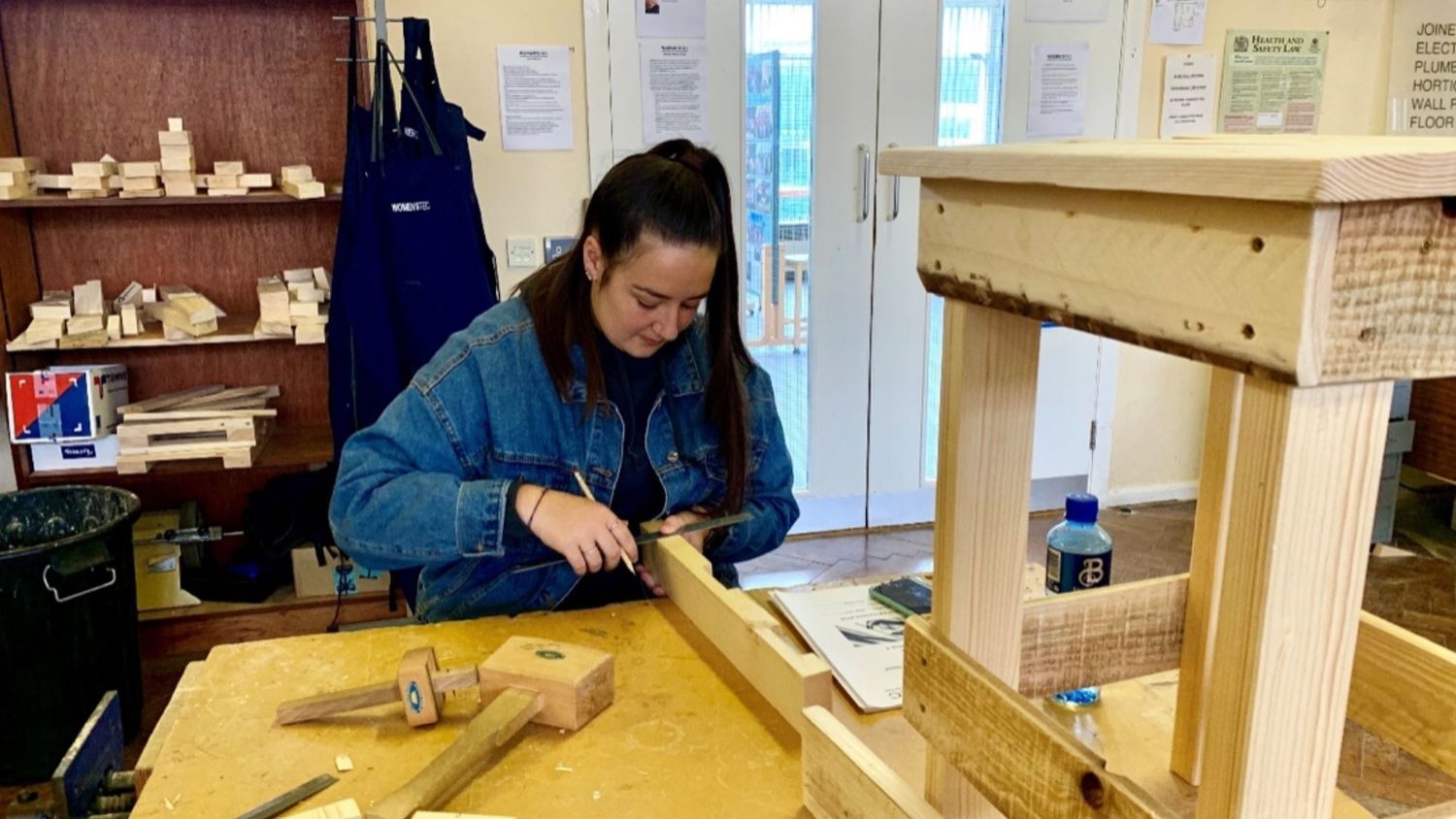
But what if this was different? WOMEN’STEC in North Belfast are challenging this stereotype with their popular ‘Not Just For Boys’ programme.


The project targets young marginalised girls who are at risk of falling into lower-income jobs or unemployment and encourages them to consider non-traditional career options by offering taster sessions and training courses in careers such as plumbing, joinery, electrician.


Nadine, 16 years old has just completed an OCN Level 1 accredited Carpentry course at WOMEN’STEC.  “I was so keen to attend I travelled all the way up to North Belfast every week from Portavogie. I loved the course and the #notjustforboys programme at WOMEN’STEC, which is a really brilliant stepping stone for young women like me who are interested in trades skills but want to get some experience before committing to a full-time course.”


“My classmates were girls my own age and the tutor was a woman who had so much experience, she was really inspiring.”


This programme has opened up doors for me that I wouldn’t have even thought about before. Although I completed my English and Maths GCSEs at school, I left after my 5th year as it isn’t the way I like to learn. I find it much easier to learn by doing things and experiencing them hands-on! I’m really excited to be starting a Level 2 Carpentry and Joinery at SERC, with an apprenticeship with Marlfield Joinery and Construction LTD in Portaferry. I’m looking forward to being onsite 2 or 3 days a week, and I know that I’ll pick up so much from being out on real jobs and construction sites.”

The Community Foundation for Northern Ireland has opened The Gill’s Charity Fund for applications of up to £2000, from groups supporting older people in the Carrickfergus area.

In 2021, the Fund awarded almost £9000 to six groups in the area, towards projects such as the Chicken Therapy Project at the Charles Shiels Community.  The funding allowed the construction of a large pen for the chickens with space to roost, scratch and lay, with residents of the community involved in their daily care.

Christine Harper from the Charles Shiels Community said:

“The Chicken Therapy Project has been a great success and the four chickens we have so far are well settled in.  It has certainly helped with mental health and wellbeing on-site with many residents saying it has lifted their spirits.”


Roisin Wood, CEO at the Community Foundation said:

“We know how much the physical and mental wellbeing of older people has been impacted by lockdown.  We strongly encourage groups in Carrickfergus to apply for support for activities that reduce isolation, support independence and enable active participation of older people in community decision-making.”

The Gill’s Charity was established in 1761 from the Will of Henry Gill and for 260 years the Charity has been supporting the Carrickfergus community. In 2020 the Trustees of Gill’s Charity took the decision to transfer the Trust to the Community Foundation who continue to ensure the funding supports the Carrickfergus community.

The fund is now open for applications, closing on the 28th of March 2022. Apply here. 

Building Leaders, Building Peace: A Grassroots Leadership Programme


We are seeking individuals from a range of communities across Northern Ireland to take part in our Building Leaders, Building Peace: A Grassroots Leadership Programme. An exciting programme that encourages individuals to challenge themselves, as they work with people from across political and religious divides, building their resilience and confidence to help transform local communities.

The programme will last 12 months and aims to support the development of emerging community leaders whose work is focussed on the regeneration of interfaces and/or communities where more concentrated peacebuilding efforts are needed. It will help develop their confidence and capacity to address division, segregation, prejudice and hate; issues that impact on community cohesion and hold communities back.

Participants will commit to a range of support and development opportunities including:

  • Completion of an accredited training programme such as an ILM Level 5 in Leadership & Management, sourced by CFNI and delivered by highly experienced facilitators and trainers (training is likely to take circa six months to complete and will incorporate online/face to face learning, completion of assignments/workbooks, tutorials etc)
  • Monthly one-to-one mentoring provided by highly qualified and experienced mentors/coaches and community leaders.  Mentoring will take place throughout the programme and will support participants to explore and develop their individual leadership confidence, style, and skills (mentoring will require a minimum commitment of 1hr per month, potentially 2 hrs in some months)
  • Opportunities for bespoke learning and development based on participant’s needs (where CFNI budget can facilitate this)
    Regular thematic workshops facilitated by experienced practitioners across a range of areas such as self-care & resilience in community activism, transformative leadership, conflict management, public speaking & presenting (participant commitment will require participation on at least three workshops during the programme lasting from 1.5 hrs to full days per workshop, depending upon the theme)
  • Networking with fellow participants and those from their respective community-based organisations (social distancing guidelines permitting)
  • Opportunities to participate in thematic workshops, webinars, conferences and learning through CFNI partner organisations including the Social Change Initiative
  • Development and leading on a Leadership in Action project, funded by the programme, linked to needs within their local community and connected to projects being developed by their peers on the programme cohort
  • Regular review and evaluation of personal progression, setting of individual leadership goals and milestones, sharing learning and development with CFNI


Interested participants must complete a programme Expression of Interest and return to lorraine@communityfoundationni.org on or before the end of March 2022.  For further information please contact Lorraine Morrissey McCann.


Read what past participants have to say, here. 

Overview of the programme and participant criteria, Download here.

Expression of interest form, Download here. 

Written by Anne Hailes for the Irish News.

21st February, 2022. 


You may not be aware of the Community Foundation here in Northern Ireland but chances are you will have benefited from their work. This is an independent grant-giving organisation distributing grants to hundreds of charities thanks to funds set up by donors. And they have a new woman at the helm.

Chief Executive Roisin Wood from Co Down worked with the Foundation several years ago before moving to London to become CEO for the Kick It Out campaign. At the time, this was mainly focused on racism in football, but expanded to tackle all forms of discrimination and build a more inclusive environment within the game.


A huge challenge for this Liverpool fan, but with a combination of education programmes, scholarships, mentoring initiatives and working with supporters as well as stewarding the situation, she feels there is an improvement.

She tells me: “It’s a tribal thing and taking away a season ticket has an impact, but sadly so many choose to hide behind online abuse and that is more difficult to address.”

The disrupters get the publicity, however there are thousands of true fans wanting to enjoy their sport in safety.

Roisin feels young supporters are the hope for the future: “Young people are informed, interested in the big issues like climate change, mental illness and social inclusion and they are often more tolerant and aware of where they are going.”

Today, her concern is for the Foundation and her determination is that it becomes an agile funder, cuts bureaucracy to the minimum, reacts to people’s requirements and makes sure grants are getting to the heart of need.

And it’s a wide range of projects: funding is supporting the wellbeing of the community in Northern Ireland, be it environmental, traditional crafts, community centres or refugee families and the homelessness, one area of immediate concern.

Working through groups representing their local community the money filters down to the grassroots fast and efficiently. Thanks to donations from multiple organisations and individuals, spending last year was almost £9m, but the demand is always there – be it the vital Covid response fund, cancer or mental health, the aim is to act quickly.

The local panels within the community have their ear to the ground, they then talk with Community Foundation and, if the project meets the criteria, the wheels will begin to move.

In 2017, local businessman Mervyn McCall set up a £500,000 foundation thanks to his own life experience.


“Coming from pretty humble beginnings to a successful life I had a lot of help along the way from different people who intervened in ways they didn’t know or realise but it had a big impact on my future.”

He wanted to support others on their journey especially the elderly and young people in local areas.

“The final piece fell into place following an encounter with Raymond, a Carrick taxi driver who ran a charity golf day every year raising money to help people in the local area.

“Seeing the impact that £1,000 or £2,000 had on people was immense – it really opened my eyes to how even a small amount of money can make a difference.

“I read that it was more fun ‘giving while living’. I was missing the buzz of making business deals and hoped to get the same buzz helping others. When I came across the Community Foundation they were just perfect for that.”


DIGITAL LANGUAGE

During lockdown the public fell into two halves: those who were au fait with digital communications and those who found it difficult to get their head round a laptop.

‘Digital poverty’ means people are often disadvantaged when they are isolated and need information or an interest. The Foundation continue to support this need, funding basic training for community groups to learn and pass on to others.

‘Techies in Residence’ is an innovation which enables these groups to consult with technology experts and this has, for example, enabled refugee families to overcome language barriers.

Currently supporting around one in three of the population, the Foundation makes a point of not assuming what is needed – they ask the community itself what is needed.

It’s a challenge indeed for Rosin Wood, and one she relishes: “To be able to do something for your own country is a great gift, especially when you see the difference it can make.

“Also, having lived in London for 18 years and now living in Bangor means I can walk along the Lough shore, which is a delight and keeps my head in the right place.”


The Foundation has this week announced the allocation of £6.8m in funding through the Mental Health Support Fund, which was established by Minister Robin Swann last autumn to support a range of charitable and community organisations providing mental health services.  The funding includes additional monies announced by the Minister on 1 February in response to high demand for support.

This is the second round of funding from the Mental Health Support Fund. In September 2021, 30 projects across Northern Ireland were awarded funding.  This week a further 77 projects will receive funding to support works within mental health and well being, as part of this latest round of funding.

The groups who have been awarded the funding for Mental Health Support will provide services such as increasing counselling provision and support services, expanding peer support networks, and provision of trauma support programmes. The projects are aimed at a wide range of ages from children through to older people.

Welcoming the grant payments the Minister said:

“As a society, the past two years has presented all of us with very serious challenges and there is evidence of a longer term increased mental health need associated with the pandemic. The very worthwhile projects receiving this funding are delivering vital person-centred care and support at a time when help is desperately needed.

“A key element of responding to this emerging mental health need has been the development of a new Mental Health Strategy which I published last June.  The Strategy promotes emotional wellbeing and positive mental health for everyone, supports recovery and seeks to reduce stigma and mental health inequalities.”

The Fund, which is being administered and managed by the Community Foundation for Northern Ireland, on behalf of the Department, aims to provide grant funding to organisations with charitable purposes that can deliver outcomes to improve the mental health and emotional wellbeing of the population.

Roísín Wood, Chief Executive of the Community Foundation, welcomed the allocation of this additional funding to the Mental Health Support Fund, saying:

“We always knew, given the impact on mental health and wellbeing as a result of the pandemic, that there would be an exponential interest in this fund, and we were right. Demand for the fund has been very high, with 198 applications having been received, so we know some groups will be disappointed, and there remains a need for further support.

“Naturally, we are delighted that we are able to announce funding to 77 projects as a result of the additional allocation by the Minister.  This will enable the Foundation to provide even more support for mental health services across a wide range of organisations.  To the projects who have been successful, we know you will make a significant difference to the communities you work in.”

Fiona Umetsu, Artistic Director with Foyle Obon who have received over £39,000 funding welcomed the support, saying;

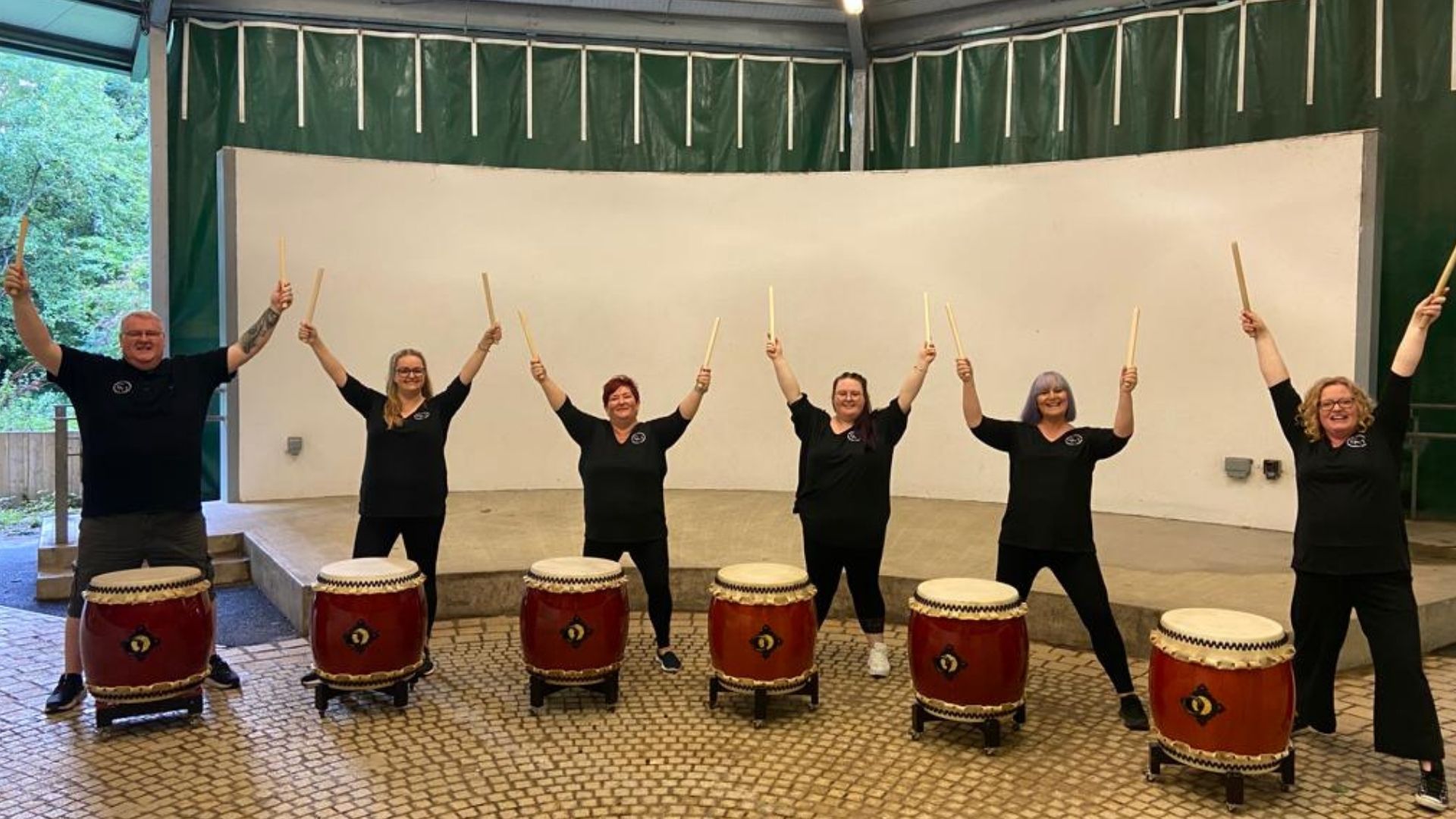
“Everyone is absolutely delighted to receive this funding from the Community Foundation. It will enable us to roll out a programme of Taiko drumming classes for people whose mental health and wellbeing has been affected by Covid 19 and the experience of the past 2 years. Participants will learn taiko and then have the option to perform at our community Obon Festival.

It has been a difficult few years for everyone and pressure on mental health services is immense. People need opportunities to connect, to belong, to be creative and to have fun. Taiko is a powerful tool for bringing people together, a form of self-care helping with stress, anxiety and depression through movement, rhythms, connection and fun. We are excited for the year ahead and can’t wait to stand together at the drum as a team.”

Dorothy Beattie, CEO at AGE north down & ards (AGEnda) who have been awarded over £69,000 added;

“The pandemic has undoubtedly affected every section of our community, but none more so than our older and more vulnerable residents.  Thanks to our dedicated staff and volunteers, AGEnda has continued to provide core services to older people throughout the crisis. However, there is no question that the longer-term effect on their mental health will continue to influence their lives even as society begins to reopen.

As a result of this funding, AGEnda will be able to play our part in identifying and tackling the issues which have directly affected older and vulnerable people in our community as well as providing services to assist them to re-engage completely with the community to which they have given so much throughout their lives.”

Gail Redmond BEM, Founder of Via Wings who will receive over £40,000 in funding said;

“Via Wings is beyond delighted to have been awarded these monies to help us run a mental health programme, which is very much at the forefront of all that we do. We truly believe that everyone suffers from mental health at some point in their lives, this funding will help us provide an opportunity to learn tools to live by each day.”

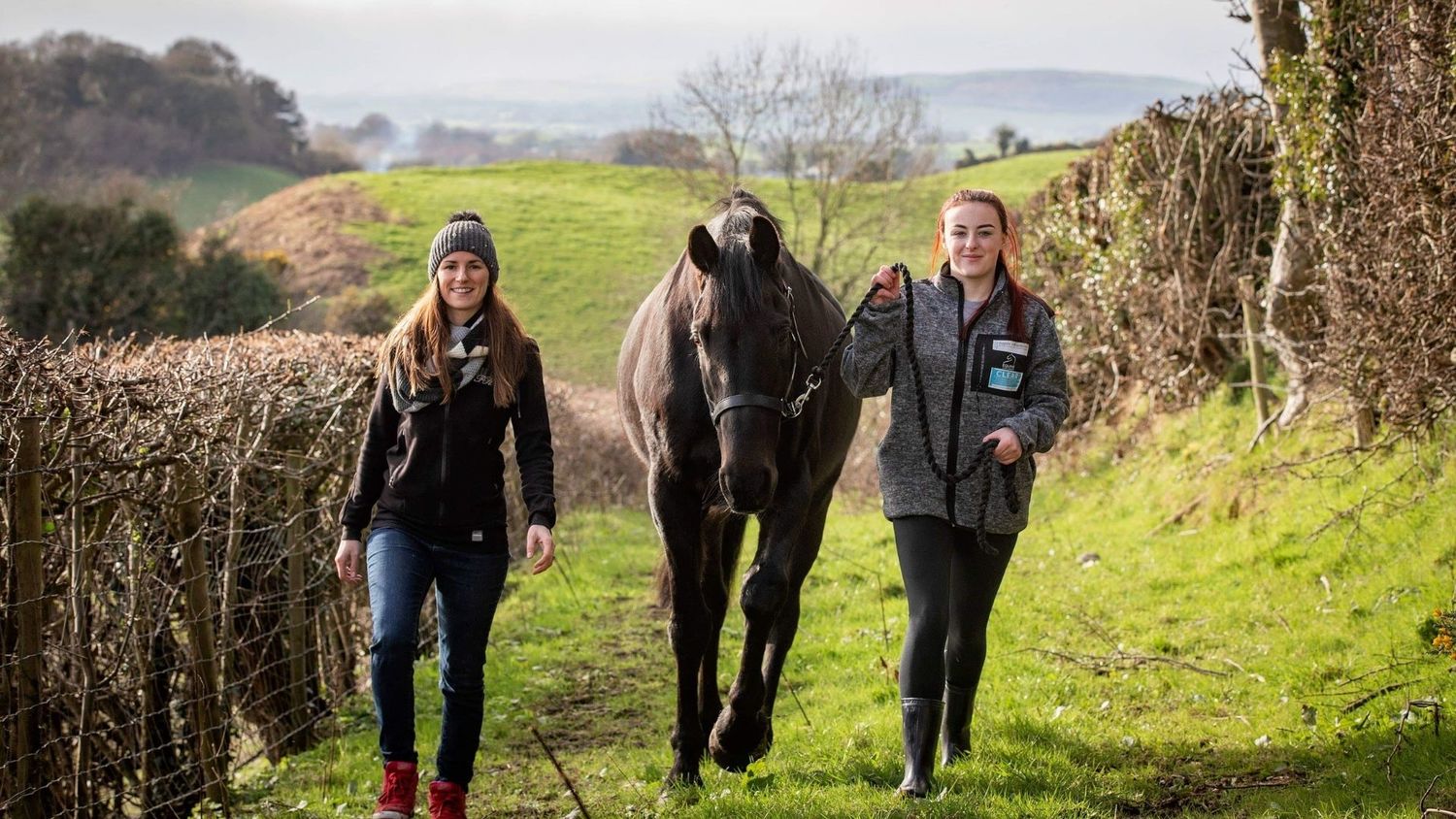
Louise Moorhead, Equine Assisted Psychotherapist at Equine Enrichment commented

“This funding will provide local people with the opportunity to spend time outdoors in nature taking part in equine assisted activities that will benefit their mental health and wellbeing. The relationship humans have with horses is calming and often healing. People become engaged in this unique interaction, and it brings them out of their inner cycle of negative thoughts. Working with horses may be the first time they have ever experienced an emotionally powerful bond of affection and acceptance that is unconditional. Experiencing this kind of unique, inter-species bond can have a life-changing effect.”

ENDS


Individuals with lived experience share five tips for impactful change.

Individuals with lived experience partnered with the Foundation and Comic Relief last year to address social injustices and inequalities uncovered and made worse by the pandemic.

The impact of the programme was positive with £594,000 of funding awarded to 36 communities, supporting over 7,000 vulnerable individuals. But the learning was wider-reaching with an even greater potential.  We asked people with lived experience to share with us what is needed for impactful change to happen at a community level. This is what they said ….

The voice of lived experience is critical 

“The person who wears the shoes knows where they pinch”. In essence, this means involving those with lived experience even more in the design, delivery and evaluation of our work.  This requires us as funders to be much more intentional about how we do things.  Rather than hoping that this just ‘happens’, we trust those with lived experience to know what works best, encouraging and actively supporting new approaches and processes, recognising that together we will have successes.


New ways of decision making 

As we move towards elections we’ll hear many promises of change for the future yet many fail to include those who have lived experience from critical conversations;   Conversations regarding what might be the necessary actions to make Northern Ireland a better place for everyone to live in.

Supporting new methods of decision making, including how budgets are allocated; participatory decision making,  creating new opportunities for regional and local community democracy and accountability.

“Those in power need to do much more than listen to minorities and marginalised communities;  they need to hear, to understand and act upon what is being said to them”


Commitment to shift the power 

A greater commitment to #ShiftThePower is needed,  not only from our political parties but also from society in general. The current power imbalance leads to poor programme development and decision making at regional and local government levels and does very little to create a society based on trust, relationships and mutual aid.

We should all expect society to address the issues of inequity, discrimination, exclusion, stigma and social injustice, irrespective of where this is found and who is impacted; and that diversity is respected and supported as a force for good.


Relationships 

Trust and human relationships are critical to success.  These flourished even within the operating context of Covid-19, zoom calls and lack of in-person meetings. Being intentional, taking time to listen, co-designing programmes and solutions to problems that emerged, demonstrated the huge importance of investing in people, an intentional act that takes time, energy, commitment and resources. It is the strength of the relationships that allow positive and sustainable changes to take place.

Diverse and Flexible Funding 

A commitment from all funders for more diverse and flexible funding,  recognising that it will take time for people and communities to understand what they need to move forward.  As our society emerges from the trauma of the pandemic, community needs will continue to change and funding must be flexible to allow these needs to be supported.

The programme highlighted many important issues facing our communities.  The building back of a stronger voluntary and community sector, the building back of a better funding environment and the building back of people and communities.

These ‘building back’ themes don’t sit in isolation; they are interdependent and are all supported by scaffolding of the hopes, dreams and aspirations of many people who quite simply want their place, community and wider society to be an even better place to live in.

Read the full report here.

Any questions get in touch with Michael Hughes – mhughes@communityfoundationni.org


Our economy is about people living, working, and thriving together. Building a fair economy or society is impossible if people are excluded from taking part.

In Northern Ireland, there are an estimated 800 people seeking asylum who are not allowed to work to support themselves and their families. Asylum seekers are individuals who have fled their homes to escape persecution and serious human rights violations. We all have a right to seek asylum.

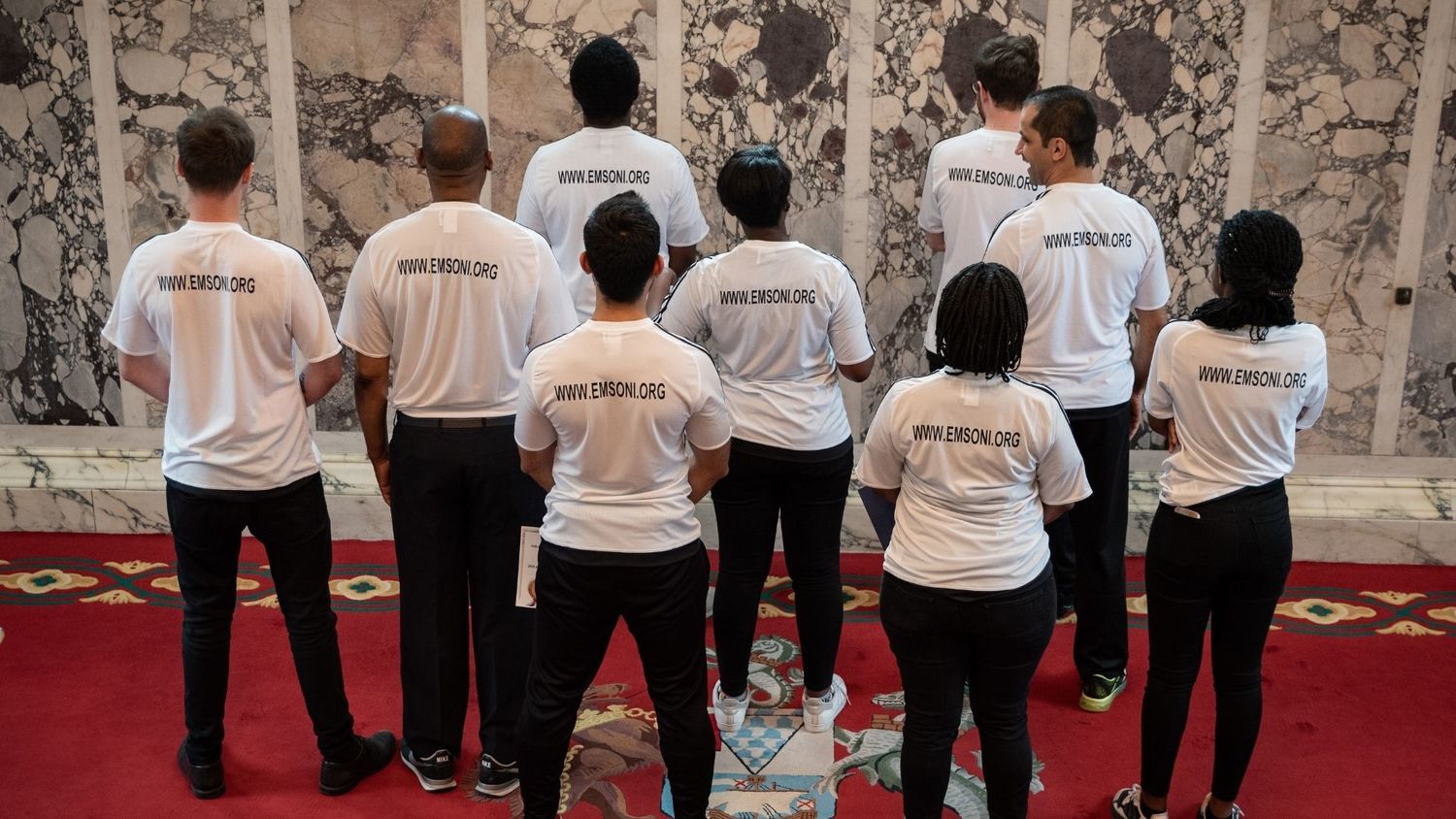
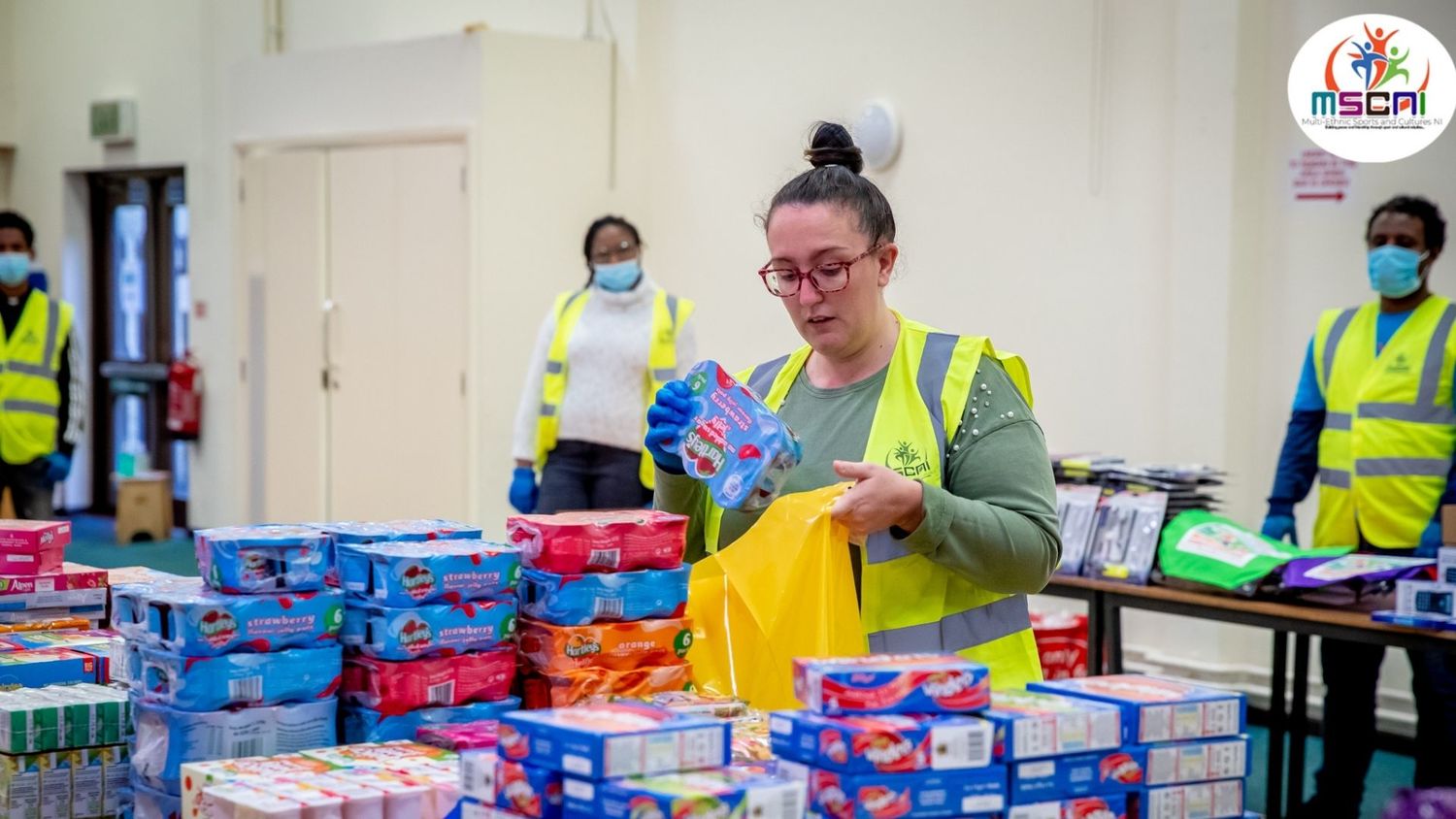
Ethnic Minority Sports Organisation Northern Ireland has been funded through the Social Justice Awards to support a new advocacy campaign. Not only raising awareness of the limitations of the current system but seeking change to treat asylum seekers in our community fairly, equitably and justly. Excluding them from playing sport professionally because of their status – is discriminatory – even as volunteers.

Many asylum seekers came to this country with developed skills either as players or coaches while some have the potential and interest to grow their talents to reach national sport development.

However, the current system limits progression for asylum seekers keeping these individuals at an amateur level without recognising their drive to develop. Asylum seekers want to progress to the next level just like others.

Adekanmi Abayomi, Founder and Chair, commented “Many of our asylum seekers are tired of participating in amateur sporting activities because there is no hope of advancing to the next level. So why the sacrifice? Their mental health has been affected as a result of exclusion, discrimination and frustration. The Asylum system was created to give hope to the hopeless – however, it puts these individuals in a position that is far from equal in our society.

Whilst we understand, at the same time we take grave issue with the ‘no work permission’ policy for asylum seekers. We strongly believe that asylum seekers (players and coaches) should be allowed to participate in the semi-professional and professional levels as volunteers. They want to participate at the right level because time waits for no one. The argument that asylum seekers should wait until they receive their refugee status before they can play at the right level – is unfair. The asylum system in this country is not only inconsistent but also unpredictable. It can take some asylum seekers 12 years before getting their refugee status – invariably a child of 15 years old when he/she claimed asylum will have to wait for another 12 years before such child can play at the right level while his/her contemporaries are already at their prime.”

The World Health Organisation revealed that children who are physically active when they are young, are more likely to adopt healthy lifestyles as they grow up. By limiting opportunities for asylum seekers to take part in sports this is having a longer-term effect on their physical and mental health.”

This project funded by the Social Justice Awards is to lead a campaign – raising awareness of this social injustice to the asylum community and to call for action. To apply to the Social Justice Fund click here. 

To many eyes, politics at Stormont doesn’t present a very rosy picture of the health of our democracy – institutions teetering on the brink again, a series of unfulfilled NDNA commitments and an Executive that often seems like a series of mini-governments at loggerheads with one another. Thankfully democracy doesn’t start and finish with elections and politicians – ultimately it’s about translating the ‘will of the people’ (all of the people) into decisions and actions that create and sustain the kind of society we want.

Our current model of representative democracy is simply our best attempt so far at making that a reality, or in the words of Winston Churchill “the worst form of government, except for all those other forms that have been tried from time to time”. But democracy has never been static – it was only a century ago that women didn’t have the vote and only fifty years ago in Northern Ireland that many Catholics and working class people were similarly disenfranchised.

The Good Friday Agreement was a breakthrough evolution of our local democracy, bringing decision making closer to people than ever before. But having delivered peace, devolution now seems stuck in a downward spiral of deepening crises. When democracy fails to deliver and then doesn’t adapt and progress, it becomes stagnant and people lose faith, making it even harder for democracy to succeed in delivering solutions to the challenges society faces. Northern Ireland is in that place right now. We need to evolve our democracy or we risk losing it.

I’m soon moving on to a new role but for the last 8 and a half years I’ve had what is, to my mind at least, one of the most interesting and enjoyable jobs in Northern Ireland.  Working with Building Change Trust and the Community Foundation for Northern Ireland, I’ve had the opportunity to experiment with, shape and fund a whole range of programmes and projects that aim to broaden and deepen democracy in Northern Ireland.

We’ve supported Northern Ireland’s first ever citizens’ assembly in 2018, bringing a representative group of the public together to explore the challenge of the future of social care for older people. We’ve supported Northern Ireland’s first experiments with participatory budgeting – a simple but radical process that gives local people direct decision-making power over public budgets. There have now been over 25 uses of participatory budgeting in Northern Ireland, encompassing every single council district, involving a wide array of voluntary and statutory organisations and thousands of people developing ideas and voting. And we’ve supported a whole array of other projects using creative approaches to public participation in decision making around education, climate change, the Irish language, social welfare and community division amongst others.

Work like this being delivered by individuals, organisations and statutory bodies across Northern Ireland can be a new source of democratic vitality and a path out of stagnation and crisis. But it needs political commitment and civil service buy-in to achieve sufficient scale and integrate it into the everyday business of government. The political parties have already committed to a new era of ‘structured civic engagement’ in New Decade New Approach but sadly for the moment, this commitment remains unfulfilled. The next mandate must be different.


By Paul Braithwaite.


Paul Braithwaite, Head of Innovation & Voice at the Foundation 

After eight and a half years, this week I’m moving on from a job I’ve loved, as Head of Innovation & Voice at the Community Foundation. Coming into the role in 2013 I didn’t even know what social innovation was (it turns out a lot of people are doing it without knowing it!). I’ve learned a huge amount through the privilege of collaborating with and supporting so many great organisations and projects. Here’s eight short reflections from my eight thoroughly enjoyable years.

Civil society, especially the third sector, is the natural home of innovation

Innovation is most likely to happen in conditions of scarcity and where diverse and passionate people work together on a shared challenge. That pretty much sums up the third sector. I came into this role as a dyed in the wool believer in the critical role of civil society in driving social change, and I leave the role ever more convinced of this. In fact, I can’t think of many examples of positive social transformations that haven’t been driven by civil society – from the abolition of slavery to the suffragettes, to the green movement to our own civil rights and peace movements. In all of these cases, it was civil society that led, spurring governments, politicians and business to follow.

Innovation is much more than brainstorming ideas

People often focus on innovation being about new ideas. Admittedly I’m a big fan of brainstorming, and anyone who has worked with me can attest to my tendency to get distracted by the next idea! However, through the fantastic (and fun) Creative Problem-Solving process that we use on our Community Innovators programme, I’ve learned that brainstorming, or ‘ideation’ in the jargon, is only one of four key stages in the innovation process. We also need clarification (identifying and interrogating what the challenge is), development (turning ideas into workable concepts) and implementation (testing small, learning, adapting). Everyone will have a preference for one or more of these key stages, and the best teams will have people with a mix of them all. So even if you hate a brainstorm, you’re still a potential innovator.


Innovation is not an elite sport – lived experience is critical

Whilst innovation work can take many forms and be applied to any issue, one of the most important uniting features of ‘social’ innovation is a belief in the primacy of the knowledge held by people with lived experience of the challenge at hand. In this way, true innovation work is fundamentally a democratic exercise. When insights from lived experience are combined with more traditional forms of ‘expertise’ (e.g. from academia) it opens new possibilities for solutions that can drive forward systemic change.


Funders can be massive enablers

The funding environment can be a critical enabler, and a blocker (see below), of innovation. There’s no such thing as neutrality in funding and philanthropy – through our values and processes we can support and incentivise innovation. One part of this can be simply getting out of the way as much as possible – reducing bureaucracy to a minimum, offering flexibility and long-term support where possible. Alongside this we can also run programmes that deliberately incentivise innovation, for example through investing in the pre-funding phase, before assumptions about the right solution to a challenge get baked in.

Funders can be massive blockers

The cardinal sins of funding are all too well known to many in the Northern Ireland third sector – bean counting, time-sheet filling, short-term grants, focusing on activities over impact, etc. When this becomes the predominant funding culture, the sector adapts to manage this as best it can, and its capacity to innovate suffers as a result.


Social enterprise and social innovation are linked but not the same

This might seem like a technical point to many, but hear me out! Many social enterprises are innovative, just as many innovations can be found in social enterprises. But one is a type of organisation and the other is an approach to change. It is not surprising that these similar terms are often conflated, however to me it’s important that an idea or project’s sustainability doesn’t simply get reduced to its business model. If a project or initiative can generate revenue to cover costs and help it scale up then all the better, but for some this will be impossible. I was once told that social innovations are “business model agnostic” – that is, they can and do occur within governments, in grant-maintained charities, in social enterprises and in private businesses – their defining feature is their impact not the type of organisation they’re housed in.

Innovating our democracy underpins everything else

If innovation is about transforming dysfunctional systems, then surely the effectiveness of our political and decision-making systems hold the key to change on nearly everything else. In Northern Ireland, as with many other places, our democracy is creaking and people’s faith in it could ebb away. If lived experience is critical to understanding and finding solutions to challenges, a more participatory and deliberative democracy is the innovation our politics needs. Thankfully there’s a whole field of democratic innovation driving forward new approaches like citizens’ assemblies and participatory budgeting that can be used by governments and communities anywhere.

Achieving scale is hard, especially without policy support

If “the best way to have a good idea is to have a lot of ideas” then continuous support for early stage innovation is crucial. However these ideas, once tested, need scaled up if they are to realise their potential. At the Community Foundation we’ve focused on early stage innovation to date but the resources needed to provide scaling support are harder to access. We need a functioning ‘ecosystem’ of supports in Northern Ireland for innovations at all stages and that is well beyond any single organisation or funder. Within government, there are plenty of advocates for innovation too, but without a supportive policy environment – particularly a more inclusive understanding of innovation as being about solving society’s challenges, rather than simply growing the economy – meaningful change will remain elusive.


Looking back at the great moments of social transformation, too many of them have followed a monumental crisis entailing much human suffering, not least here in Northern Ireland. Some might say this is just how human societies work and there’s nothing we can do to avoid this, but I don’t believe that. Social innovation can help us better understand the factors that enable social change to occur, so we can avoid repeating the mistakes of history.

Article from the Irish Times. 

People living along both sides of the Border have found the last two years of Covid a particularly exasperating experience in having to deal with different sets of regulations imposed by governments north and south at different times.

People who live on the northern side but work, socialise, look after family or shop in the south, or indeed vice versa, found it a practical nightmare in sticking to the regulations. One man said when the pubs in the south were closed, some pubs in Fermanagh just inside Northern Ireland were like “the wild west.”

In a sense, the failure of both jurisdictions to align the rules was particularly jarring because for the last quarter of a century the physical Border has become virtually invisible. While both jurisdictions were partners in Europe since 1973, it was only after the security hardware was dismantled in the late 1990s that the normality of people working and living effectively across the Border accelerated.

Since the Belfast Agreement of 1998, the natural coming together of both jurisdictions in north-south co-operation has grown significantly. Notwithstanding the sensitivities of a debate over potential constitutional change, there appears to be an acceptance of the benefits in transcending borders to improve lives. It’s estimated that there are 156 official points of north-south co-operation, with an alignment in a range of issues and interests from business, workers’ rights, sport, waterways, health, climate change and much more.

Despite the controversy over the Northern Ireland protocol, there can be no going back to earlier times of partition when both parts of the island had limited and difficult relationships. A project in Clones, Co Monaghan has been recording the experiences of people living along both sides of the Border, and one man recalls hearing his grandfather’s memory of the immediate effects of partition in 1921.

“It was like a hatchet coming down and destroying trust, friendships and neighbourliness.”

A book, Our Border Heartbeat, produced by the Clones Family Resource Centre, details the practical difficulties and hardships of everyday life caused by the sudden creation of two jurisdictions which then developed separately on a small island.

It’s often said that partition split Ireland into three; the north, the south and the Border, with many people along the new frontier describing their region as a place left behind, forgotten by the respective power bases of Dublin and Belfast.

For the first half of the century, whether in the south or Northern Ireland, the overwhelming sense is that people just got on with it, even when the Border became a hard one in the security crisis of the Troubles which saw numerous cross-Border roads physically closed.

One farmer built his own makeshift road, nicknamed the Khyber Pass, to get his milk to the creamery down the road instead of having to do a detour of several miles. It was simply the pragmatism of making life a little easier. People got things done and continue to do so. Indeed, perhaps even more so today.

When it comes to everyday issues people don’t have to give up their political identities or get stuck on political problems to co-operate in practical ways. Thousands of sports people traverse the island every week to engage in competition and socialise. The Irish Congress of Trade Unions is unique in Europe in representing workers in two different jurisdictions, and All Island Institute of Palliative Care partners say they learn from each other’s systems and ideas in helping make a difference to people across the island who face life-limiting illness. An Taisce, the National Trust for Ireland, has been taking an all-island approach to a number of environmental issues.

And the British Heart Foundation in Northern Ireland and the Irish Heart Foundation engage on many issues, including lobbying on the vital issue of the impact of air pollution on our heart and circulatory health. It is one of many projects to benefit from the the All-Island Fund, a collaboration between the respective philanthropic community foundations north and south.

The Community Foundation for Ireland’s work is informed by 5,000 voluntary, community and charitable groups working across the Republic. Some of the organisations have been highlighting the need for strong civil society voices in an all-island context – during 2020 this need came into greater focus as Brexit became reality. In addition to communities highlighting their desire for greater co-operation with those in Northern Ireland.

The foundation was contacted by donors keen to support work in this area.In late 2020 a partnership was formed with the Community Foundation for Northern Ireland with a view to making an all-island fund a reality which would support collaborations between like-minded voluntary, community and charitable groups on both sides of the Border. Partnerships would allow the sharing of research, knowledge and experiences which would deliver dual benefits.

In August, 30 partnerships received grants for joint work on issues ranging from climate action to women rights, migrant rights and an all-island ban on gay conversion therapy, and others focused on young people. Total funding was €410,000.

Health is also one of many topics being discussed in a series of dialogue events for the Taoiseach’s Shared Island initiative which has been an important vehicle for fostering greater understanding of all-island solutions for common problems.

Far too often the north-south debate is skewed by issues of identity, flags, emblems and a Border poll; all of which must be discussed. But under the radar, civic and social issues that transcend borders are being addressed.

On the ground across the island, the pragmatism of seeing tangible mutual benefit from working together, from fostering friendships to taking advantage of economies of scale often trumps wider political considerations. It’s a new future that’s taking shape, a very different scenario to the stand-off of the two jurisdictions years ago. But it’s vital in building relationships and connections to address today’s circumstances.

Article published by the Irish Times, written by Denzil McDaniel, former editor of the Impartial Reporter, is now writing for the Detail, a news and analysis website based in Belfast. 

I would like to say thank you to everyone for helping us to make 2021 a year of impact, perseverance and resilience!

Although the year has been hugely challenging, with many sectors particularly hard-hit by the Pandemic, we are proud of how the community sector responded rapidly, stepping up to the challenge and putting support services in place for those most vulnerable at a time when they needed it most.

As we look ahead to 2022, our learnings from 2021 will shape our priorities and grantmaking, enabling you to support your community needs. 2021 has reiterated just how important strong, independent, grass roots communities are in NI and the Foundation will continue to support you.

Our work will focus on many areas such as peacebuilding, philanthropy, poverty, climate change, innovation, inclusion and many more pressing issues in our communities. We believe collaboration with you and all of our partners is key to developing a strong voice, eliminating duplication and ensuring a diverse and inclusive society.
Last year we awarded over £8m through 1,600 grants across a variety of issues and causes. You helped us to ensure 1 in 3 people in NI benefited from this funding. We will continue to review our funding processes, streamlining to make it as accessible and relevant for applicants, ensuring our assessors are as flexible as they can be and supporting those most in need. Through collaboration with others, we will be reacting to new challenges arising and helping to grow even more resilient communities.

Mind, the mental health charity and many others have commented on ‘The dual pandemic’, suicide being fuelled from the effects of Covid. This was evident from a surge of organisations seeking funding for mental health projects. Highlighting a clear area of concern that we must focus on in 2022 not only by securing more funding but also by supporting and enabling community voices to make change where it is needed.

While community organisations can amplify the voices of the people they work with to speak truth to power, it is not solely their responsibility to make them heard. In this election year and as we build back from the pandemic, those in power, our politicians and influencers need to take responsibility for hearing and acting on what has been said and what we’ve learned. As a Foundation, we will advocate on behalf of communities to ensure commitments are achieved.

By thinking globally and acting locally, in 2022 we will look at ways we can help to achieve future climate goals. By using the UN Sustainable Development Goals we will explore how our work aligns with targets and make changes to meet these throughout all aspects of our work and beyond.

The pandemic widened the gap between rich and poor, creating greater inequality and more disadvantage than ever before. Recent news headlines reporting the rising energy costs have put greater pressure on people’s finances, particularly those most marginalised often forcing them into poverty. Whilst short term packages of support for those affected is welcome, it is not going to be enough and pressure must be put on our Executive to ensure longer-term plans that address these systemic issues.

There are challenges which we can anticipate in 2022 but also those which may take us by surprise. I have no doubt that the Community Foundation will be at the forefront of enabling Northern Ireland’s response to those challenges – connecting people who care to causes that matter; to help achieve our vision of a peaceful, shared and just Northern Ireland.

I want to thank you again for partnering with us, wish you a Happy and Peaceful New Year and we look forward to working with you in 2022.


Roisin Wood

We are aware of and understand the many challenges that people and organisations we fund and stakeholders we work with may be facing due to the Coronavirus. We want to be as supportive as we can be, adapt and play our part in responding to this ever-changing situation.  That is why we’ve put processes in place to ensure we can continue to operate the Foundation as usual. 

To help and reassure you whilst we all navigate our way through the coming weeks, please note that; 

  • If you are awaiting payment from us, be reassured that we will ensure this will go ahead as scheduled.
  • If you are concerned about meeting a reporting deadline or requirement, please get in touch and we will be happy to talk to you and make arrangements to support you.
  • If the situation is having an impact on your ability to deliver on a project we’ve funded, please get in touch with us and we can decide together what to do.

If you’re a grantee of the Foundation, our priority is always to support you to do your best work; we recognise that circumstances change and are proud to be a flexible funder who will adapt to the circumstances you are facing.

Our team are now working from home so we are recommending that you get in touch with us by email. To get in touch with the correct team, please select from the following:

General queries – info@communityfoundationni.org
Marketing and Communications – kmcmullen@communityfoundationni.org

In recognition of the emerging threat and the great contribution that communities are already offering, we developed a number of Funds. So far we have awarded £7m to over 1,000 communities across Northern Ireland to support communities to adapt as much as possible in the current situation.


If you would like to support those most critically affected by the virus, you should contact shealy@communityfoundationni.org 


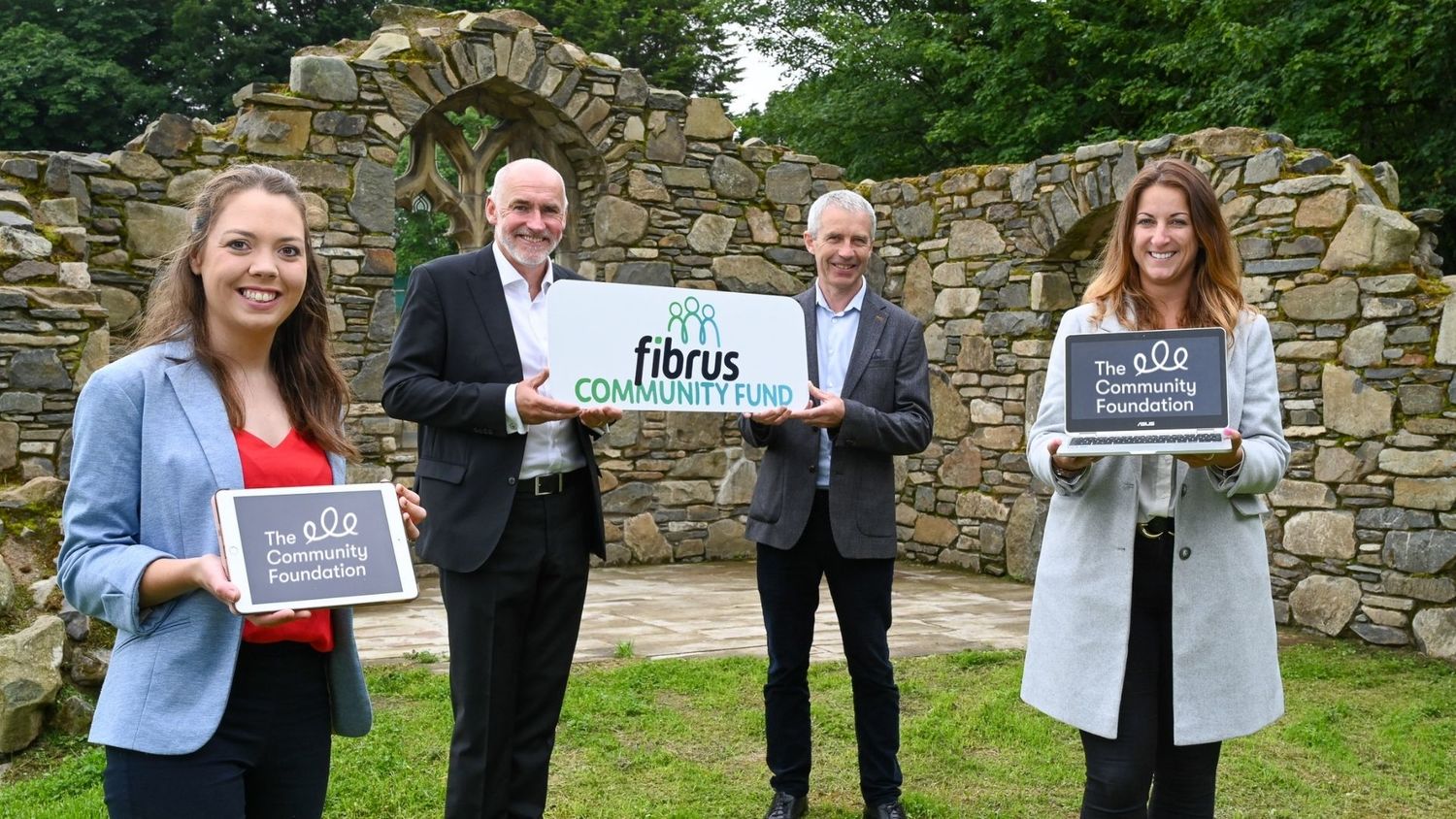
The Community Foundation for Northern Ireland is delighted to announce the first round of funding awards with their new partner, full fibre broadband provider, Fibrus Networks Ltd.


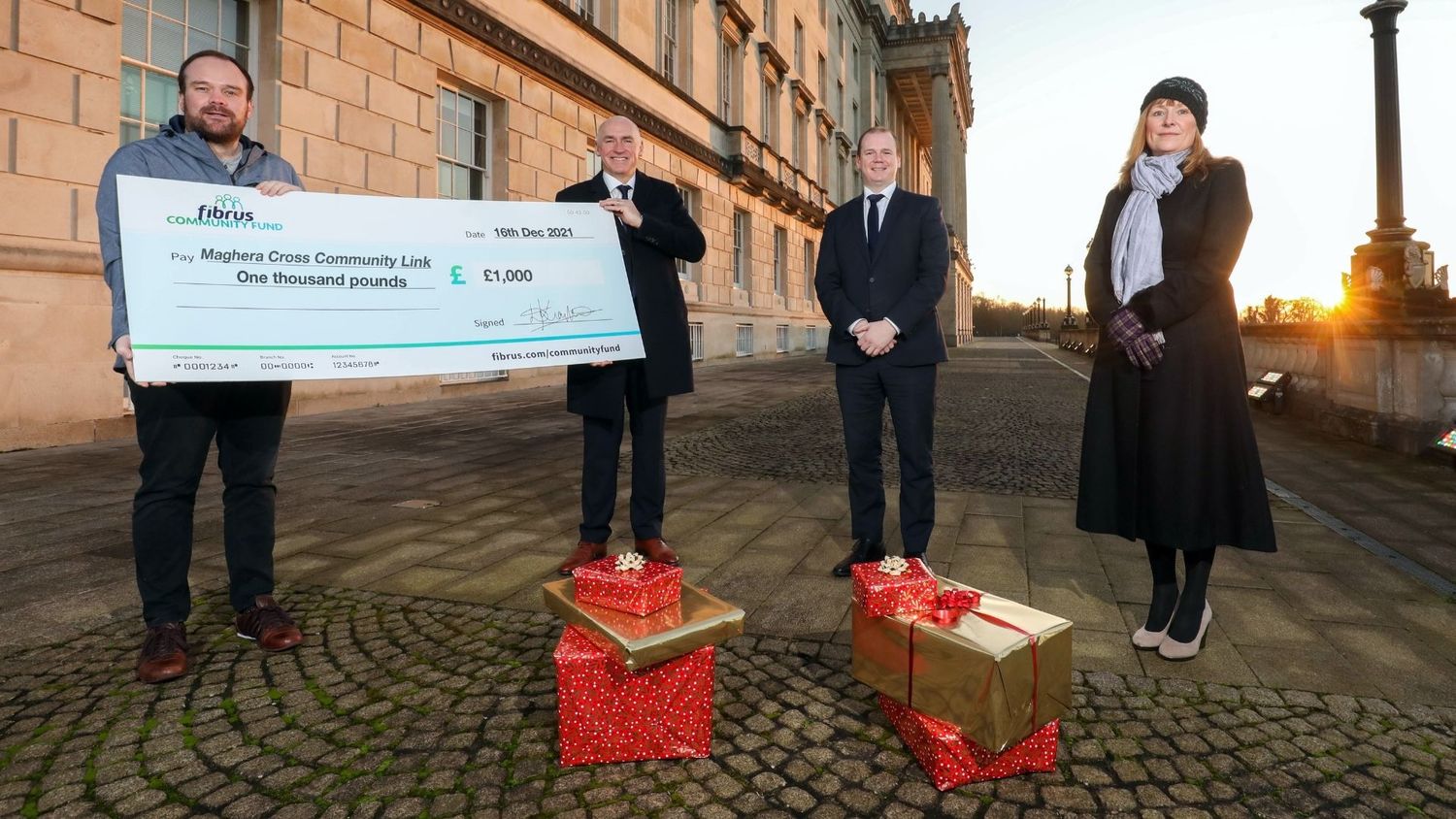
The Fibrus Community Fund, round one has supported 9 community organisations awarding £9,725, including Maghera Cross Community Link who will use the award to fund the purchase of hard drives and laptops to prevent disadvantaged young people from falling further behind in their studies.


A recent study of 2,000 adults who celebrate Christmas found that a third believe it’s more important than ever to feel close to loved ones following the isolation suffered last year. The Fund will go some way to ensuring people in rural communities have a very “connected” Christmas.


Enabling rural communities to stay connected online, the Fibrus Community Fund awards grants of up to £1,000 to support local groups and organisations, to provide access to digital technology for the most vulnerable. Particularly focusing on supporting grassroots organisations that support older people and young people aged 18 and under.


Roisin Wood, CEO of  Community Foundation for Northern Ireland commented:

“We are delighted to be rolling out funding supporting rural areas to stay connected. Coronavirus has highlighted the need for communities to remain connected and many groups and charities working with those most vulnerable in our communities are telling us that a strong and sustainable broadband connection in rural communities is vital. This funding enables local organisations to provide access to digital technology for the most vulnerable, especially  those individuals in rural areas and begin to address the digital divide.”


Economy Minister Gordon Lyons said: “The pandemic has changed the lives of us all and for many, this has included how we work, live and socialise. There is now more than ever a great reliance on digital connectivity and ensuring everyone has access to fast and reliable broadband.


Fibrus Managing Director David Armstrong commented: 

“Fibrus is committed to supporting and investing in the communities in which we operate.  The awarding of our first round of grants is particularly pertinent as we reach the height of the festive period when the vulnerable or disadvantaged in our communities feel it most. 


With recent research finding that almost a fifth of people feel lonely during the festive season without any access to technology we are delighted to be connecting communities this Christmas through the Fibrus Community Fund.”


This fund is now open for applications, apply here.

Commoning Possibilities is a partnership between Garvagh People’s Forest,  St Columb’s Park House in Derry/ Londonderry, poet Anne McMaster and the Rural Community Network. Through this partnership, they are inviting, connecting and inspiring citizens and supporting institutions in the care of Garvagh Forest, St Columb’s Park and surrounding communities.

Their vision is to engage with members of the public about the management and care of shared natural spaces and resources in their community, which are contributing to the challenges surrounding extractive economy, wellbeing, biodiversity loss and climate change.


The project runs a participatory budgeting process involving local citizens and groups imagining, designing, voting on and delivering projects in and around Garvagh Forest and St Columb’s Park. These projects are focusing on ideas that are either about contributing to ‘caring communities’ or supporting the ‘care of the forest or park’ or both. The learning from the project will be used to develop insights about how communities can work towards great co-management of natural heritage for the common good.

Grainne O’Neill, the project officer at St Columbs Park House, said “Participatory Budgeting can be described as local people deciding how to allocate part of a public budget, it is a way for citizens to have a direct say on how public funds can be used to address local needs’ This is a really exciting opportunity for us to hear from our communities about ideas they have to address some issues that they as a community face. We put out an open call for ‘project ideas’ to our local community of Park Users asking them to submit a bid for an idea that would benefit both the community and their shared spaces.”


Grainne said that the three key criteria for submitting a bid was that they were safe, legal and viable and that there was a connection with St Columbs Park. “There are some amazing ideas that range from the Praxis group becoming Climate Ambassadors in the Park, Oakgrove PS who want to create a forest school area in their grounds, to a 15-year-old young person who wants to use artwork to highlight environmental issues within the park and many, many more.


The Participatory budgeting process provided a pot of £7,500 to invest in the ideas of the people who live, work and care for St Columb’s Park. Twenty-five ideas were submitted seeking £500 per project bid but the decision to fund didn’t lie with St Columbs Park House, Grainne explained, but with the community. A community vote event was held, where all idea creators presented their ideas and the community voted. The bids with the most votes were awarded funding.


You can view the project bits here. 


Find out more below.

The Community Foundation has been on a journey and it has been a pleasure to be along for the ride.  When I took up post 6 years ago I saw an opportunity for me to develop an ambitious strategy, build the Foundation’s brand and make it the ‘go-to’ organisation for philanthropy whilst ensuring we never wavered from facing the edgier work and continued to support people on the edges.

The Foundation is such a well-respected organisation and I have felt like a custodian as well as a Chair but the common spine running through everything I have been involved in with the Foundation, has been good people with amazing knowledge, and a heart for the hard work that’s needed to make sure the money in our society touched the sides.

There are too many inspiring stories of projects and visits to detail here but my parting sense will be of the small volunteer-led organisations in villages I had never heard of before, who told me that they felt heard and appreciated by the Foundation and its wonderful staff team.  As someone who comes from one of those towns it has been great to be involved in an organisaiton who works tirelessly to make sure their funds are dispersed across Northern Ireland and get to the people who need them with as little fuss as possible.

I often read reports from other Chairs extolling the virtues of their fellow board members but I mean every word of it with the Foundation.  From my very first introduction to the Board, it has been a meeting of brilliant minds and strong hearts.  Everyone brings their own experience, passion and expertise but there is a joined-up focus on driving the mission – connecting people who care with causes that matter.  I have been changed by this experience and cannot move on without a special recognition of Joe Mc Knight (past Vice-Chair) and Fred Bass (past Chair of Grants Committee) who both sadly passed away during my term.  I learned so much from both these men and feel that their legacy lives on in the Foundation.  I suppose that’s all any of us can ask after our time with the Foundation or in life in general that we – touch the sides – and that our passion and time makes an impact.

As I step down as Chair I have the utmost confidence that I do so with an amazing new CEO, Roisin Wood and a new Chair, Adrian Johnston who are the very best people to lead the Foundation into the next stage of its growth.  We have managed this succession process with care and attention and these two individuals will be a formidable team.  We see big challenges ahead and emerging pressures on resources but the Foundation has positioned itself well to be able to support the sector and our communities to develop the tools and resources they need to be their own change agents.  I worry about the level of need and any funder’s ability to meet the need and this has been seen most recently with the Mental Health Support Fund being heavily oversubscribed. That’s a strong indicator of the need for extra resources and funding to support those who need it most. But I will rest assured that the Foundation has the right people in the right seats and they are clear on their direction of travel and the areas that are most in need.

What I will miss most about the Foundation is the people and that feeling of leading an organisaiton with such integrity and care for people often forgotten in our communities.  I am leaving it in safe hands and will always remain a friend and supporter of the Foundation, and I would encourage everyone to do the same.

Maeve

For the second year running, the Community Foundation has awarded Philanthropist of the Year to an individual who has made a significant contribution to philanthropy in Northern Ireland.

Today (Thursday 2nd December) at the Institute of Directors Awards (IOD) Dr Terry Cross OBE was awarded Philanthropist of the Year 2021.


A well-known businessman in NI who has supported local charities throughout his life. He has been President of The Red Cross NI since 2008 and has recently established his own charitable trust – The David Cross Foundation for Peace and Reconciliation, named in memory of his son, David, who tragically died at the age of 33 from malignant melanoma, an aggressive form of skin cancer.,


Terry continues to generously support research programmes at the University of Ulster around melanoma, As well as many early detection projects, highlighting the dangers of excessive sun exposure and other risk factors. He has also made a remarkable difference in bringing about social change in local communities. In the past two years, Terry has awarded over 20 grants to local charities and community groups through his trust. Young people and cross-community projects are a particular passion of Terry’s, especially supporting and improving the employment prospects of young people. He is guided by and keeps close to grassroots by his Trustees Rev Stanley Gamble, Rev Bill Shaw and Fr Garry Donegan.


Mervyn McCall, Chair of The Community Foundation Giving Network and judging panel, said “We are delighted to award Philanthropist of the Year 2021 to Dr Terry Cross OBE. An extraordinary individual who has shown outstanding leadership in the area of philanthropy and who, through their giving, has made a remarkable difference in bringing about change.”

Siofra Healy, Director of Philanthropy at the Foundation, commented “At the Foundation we encourage, support and facilitate giving in Northern Ireland. Awards like this are important for celebrating and recognising generosity. As the lead independent charity promoting and enabling philanthropy in NI we are delighted to award Terry, Philanthropist of the year 2021. Congratulations to Terry on behalf of the Community Foundation and the hundreds of people who are helped by his generosity each year.”


At our recent Giving Tuesday event, (30th November) we celebrated generosity and giving back to good causes.

Over 70 people attended the online event, to hear how three local organisations have been working together on various projects. The audience was given a pot of £1,000 to award collectively, after listening from each group and a video clip was shown to share a little more about their projects, enabling participants to make an informed vote. Once it was time to hand over, the vote was cast and Glenanne Community Association was awarded £1,000.

Following this, each organisation was awarded a surprise grant of £2,000 each to continue their work supporting others in their community.

Congratulations to:
Greenisland Football Club, Cuppa Club – £2,000
Edenderry Rural Community Association – £2,000
Glenanne Community Association – £3,000

Roisin Wood, Chief Executive at the Community Foundation, commented:
“Following another extraordinary year in which we managed 54 grant programmes, awarding almost £9 million to 1,660 organisations, it’s so important to celebrate the generosity of those organisations who do so much for people in their communities. We were delighted to be joined by three of these groups at our Giving Tuesday event who have shown immense community spirit and kindness towards others.”

Watch below to find out more about each organisation.

Greenisland Football Club, Cuppa Club – £2,000


Edenderry Rural Community Association – £2,000


Glenanne Community Association – £3,000

After an extraordinary 12 months of unprecedented challenges and change for us all. Evident through the level of achievement and number of people supported, we are proud to say that we have more than doubled our impact this year, awarding £8.8 million to 1,660 local communities.

(Please view in full screen, to do this hover your mouse over the annual report, a ‘screen’ icon will appear in the right corner, please select this.)

Download the report here. (Audio files will not be downloaded due to document size).

The Community Foundation for Northern Ireland has launched an innovative new match funding initiative to support giving to local communities through charitable gifts in Wills.  The £300,000 ‘Gifts in Wills’ match fund will match charitable gifts at 50%, up to a maximum of £50,000.


SÍofra Healy, Development Director at the Community Foundation explained:

“We’ve developed this new initiative, the first of its kind in NI, in consultation with professional advisors and in support of financial and estate planning.   The match funding initiative means that the impact of legacies or ‘Gifts in Wills’ to support local causes and places, will be significantly increased.

“We welcome and encourage any donation, large or small through gifts in wills and a legacy can be managed in perpetuity as well as more immediately.    Our fund for the future will also add a further 50% to a minimum £30k pledge to establish a ‘named’ fund.  This alternative to setting up a charitable trust enables multiple charities to benefit over many years.   Over the next months, we’ll be running information roadshows for solicitors and other professional advisors in towns across Northern Ireland about the match fund and the potential benefits to clients.


Speaking at the legacy match fund launch, David Lavery, Chief Executive of the Law Society said:

“We’ve partnered with the Community Foundation on the launch of their ‘Gifts in Wills’ initiative because we believe that it could help our members support their clients to make a huge contribution to the causes they care about.

“We’re supporting the rollout of information to members in local solicitor associations and we encourage them to take advantage of this scheme which will give significant added value to their clients.”


Find out more or get in touch with Marcus at marcus@communityfoundationni.org

The short film ‘After the Darkness’ is the culmination of a North West Carnival Initiative programme that engaged several groups from across the Derry City and Strabane District Council area in the production of light-based installations.  Groups taking part included Destined, St Columb’s Park House Youth, Out North West, the Focus Project and the Pink Ladies.

The ongoing Coronavirus has cast its long shadow across the community leading to increased levels of anxiety and a growing sense of isolation, this project sought to tackle this growing problem using the arts as a creative tool to support participants’ general well being and mental health as we gradually emerge from the pandemic.

The film documents the participants’ journey from creating beacons of light and the showcase of their artistic endeavours during this year’s Halloween Festival to huge acclaim. The project wouldn’t have been possible without the support from the Community Foundation for Northern Ireland.


Aoibheann (project participant): “I didn’t think that I was in any way artistic, I now know that I am, I can try anything. Life is good at the minute.”  After the darkness comes the light.


“Another fantastic project which has been supported through the Community Arts, Culture & Heritage Fund established with the Department of Health. In a time where hope is needed this project rejuvenated community spirit involving all ages and a diversity of participants within the community. After the Darkness comes the Light was a huge success helping to inspire and encourage the community to look more positively to the future and help heal and renew itself.” Orla Black, Grants Director

Housing and Homelessness Challenges Identified by People with Lived Experience for New Innovation & Grants Programme

Individuals with lived experience of housing issues and homelessness have identified 13 priority challenges that are not being adequately addressed by existing services, policies or legislation in Northern Ireland. The challenges will now be used to inspire the development of innovative projects as part of a new grants programme being delivered by the Community Foundation Northern Ireland.

The Housing and Homelessness Innovation and Voice Programme is funded by the Oak Foundation and aims to support the development, testing and delivery of new ideas and collaborations addressing the root causes of housing issues and homelessness. As the first stage of the programme, over the past five weeks the Community Foundation and partners engaged with 204 individuals through an online survey as well as conversations with individuals accessing homelessness services. Find out more about the programme here. 

Organisations and individuals with lived experience are now being invited to express an interest in working together to develop new solutions to one or more of these challenges through an innovation process. Ultimately the programme will lead to a series of grants being made to the most promising ideas, with the final decisions being made by individuals with lived experience of housing issues and homelessness in spring 2022.

Those thinking of applying should review the list of challenges and related themes on the Foundation website as well as information on how the programme will work before completing a brief expression of interest form online. The deadline for expressions of interest is midnight on Friday 26th November. 

In addition to the survey, the Foundation held a workshop to discuss some of the emerging themes in more detail and reviewed other local research that gathered insights from people affected, including groups with specific needs such as refugees and asylum seekers, the LGBTQ+ community and young people.

The Foundation’s Housing & Homelessness Programme Steering Group, which comprises individuals with lived experience as well as representatives of key organisations working on housing and homelessness, reviewed the results of the survey and the associated research and agreed on the following 13 themes as the basis for the next stage of the programme.

  1. Rented housing
  2. Mental health & complex needs
  3. Stigma & respect
  4. Hostels and temporary emergency accommodation
  5. Violence against women and girls
  6. Female homelessness
  7. Services/support for male and other victims of domestic abuse
  8. Relationship breakdown
  9. Homelessness affecting asylum seekers and refugees
  10. Homelessness affecting LGBTQ+ people
  11. Homelessness affecting young people
  12. Early Intervention support
  13. Agencies and organisations not collaborating enough


Paul Braithwaite, Head of Innovation and Voice said:

“This new programme is a fantastic opportunity for organisations and individuals to collaborate and develop innovative solutions that can get at the root causes of housing issues and homelessness in Northern Ireland. The programme utilises many elements of our other innovation programmes, such as creative problem solving, however, goes a step further, involving individuals with lived experience at every stage, from the steering group to the identification of challenges to participating in the decision-making for the grants. We at the Foundation believe that everyone has the right to participate in the decisions that affect their lives and shape the society they live in and are committed to supporting this through our approach to social change through grant-making. We’re excited to see who will come forward to take part in the next stage of the programme with us and what ideas will emerge in the coming months. We are grateful to our funders, Oak Foundation for embracing this creative approach to addressing the root causes of housing issues and homelessness in Northern Ireland.”


The programme will open for expression of interest from Monday 1st November to Friday 26th November 2021. A total of 10 project teams will be formed through collaboration amongst participants and seed fund awards of up to £25,000 will be made to the most promising project ideas that emerge from the programme.


Express your interest here. 

We’re delighted that our Techies in Residence programme won the Gold award in the ‘not for profit‘  category at the recent Chartered Institute of Public Relations (CIPR) Northern Ireland ceremony.  Entering the chartered body’s awards for the first time, the submission outlined the Techies in Residence programme’s achievements between 2019 and 2021, including research and planning, creativity and innovation, delivery and implementation of tactics and measurement, evaluation and impact.

In their feedback, the judging panel said:

“This campaign aimed to build capacity in the voluntary sector, engage social tech companies and build digital capacity in charities and it hit the mark. It stood out for its research, planning, and delivery with some impressive returns.”

Paul Braithwaite, Head of Innovation and Voice at the Community Foundation said:

“It’s great for voluntary organisations and techies to get this recognition for their hard work and dedication to solving social challenges.  It’s also great for our funders to see Techies in Residence being appreciated more widely for its societal impact.  There was some stiff competition in the category, which makes this all the more significant.”

Want to find out more about Techies in Residence?  Read Paul’s Blog on Digital Transformation in the Third Sector and a review of Cycles 1-5 of the programme.

Ends

The fifth round of Quality Accreditation, launched in October 2020, is now complete. Over the past year, the Community Foundation has undergone an internal audit of its policies and procedures, compiled a submission of documents for external review and participated in interviews with an independent assessor.

The assessment, which was carried out by Ideas to Impact, evaluated our ongoing practices and development trajectory within Core Standards on governance, finance, philanthropy, grant-making, community participation and organisational development. The programme is unique to the UK Community Foundations (UKCF) network, providing the only accreditation process internationally that is tailored to and designed by community foundations.

The Quality Accreditation assessment has revealed that:

  • The value of grant-making in the UKCF network more than doubled during the Covid-19 Pandemic
  • Total community foundation endowment across the membership has grown by 30% since QA4 in 2017
  • The highest average score QA5 was in the Core Standard on effective emergency response, reflecting the exceptional skill community foundations displayed in rapidly activating local philanthropy and delivering funding to support community-led responses to crisis.

“Being now in the fifth round of Quality Accreditation, we have seen community foundations throughout the UK raise their game and clearly demonstrate a high standard of governance, administration and financial diligence through external assessment across all ranges of team size and capacity”

John Gordon, Chair of the QA Commitee

“It is a mark of the commitment and diligence of our members that they have completed this rigorous accreditation process at the same time as distributing record-breaking levels of funding to their communities. The UKCF team is proud to support a network which reaches every part of the UK and whose good practice has been so clearly demonstrated throughout this process.”

Rosemary Macdonald, CEO of UKCF

“The team of assessors has been impressed by the creativity and tenacity of community foundations and their nuanced understanding of the needs of their communities and the commitment to their local areas.  This understanding and the ongoing relationships that foundations are able to build means that there is a reach into local communities that helps individuals and organisations from all sectors to work together in the places that it’s really needed.”

Becky Nixon, Director of Ideas to Impact

Quality Accreditation will last for three years until October 2024 and is an initiative designed to provide collective due diligence that confirms community foundations can deliver grants and programmes on a national level. It promotes excellent practice across the community foundation network to ensure that they can utilise their resources most effectively to listen, support and advocate for their communities.

The Community Foundation for Northern Ireland has awarded £61,910 to 46 community organisations across Northern Ireland through the Ultach Fund, to support them to use and promote the Irish language. Registered charities, voluntary and community groups applied for grants of up to £2,000 to deliver innovative projects including the development of podcasts and theatre productions in Irish, resources for pre-school children as well as Irish language classes, coffee mornings and social events across all traditions.

Orla Black, Grant Director at the Community Foundation for Northern Ireland explained:
“This was the first time we’d opened the fund and we were struck by the wide range of organisations who applied. In addition to community groups with many years of experience in promoting the Irish language, we also made awards to a pipe band, a social economy project and those looking to take their first steps in developing the Irish language within their community. Organisations were invited to make their funding applications in Irish or English and to support this we appointed an Irish language grants assessor. We’re looking forward to working closely with all the groups funded and
building relationships with them.”

The funded groups include, the North West Japanese Cultural Group who received £1,330 towards dramatizing and digitising a Japanese Ghost story in the Irish language; St Jarlath’s Independent Pipe Band in Co Armagh who were awarded £1,330 to produce a video in Irish and English about the history of the band and the piping tradition in Portmór and Altram in Belfast to develop a digital platform supporting parents and teachers.

The original Iontaobhas Ultach Trust was established in 1989 to promote the Irish language as part of Northern Ireland’s shared cultural heritage. During its lifetime the Trust invested over £2million in a wide range of Irish language projects, classes, social events, publications, competitions, research, resources, and education projects. The Ultach Trust formally closed March 2021 and its remaining assets transferred to establish a new fund within the Community Foundation.


Bronnann Fondúireacht an Phobail £62,000 ón Chiste Ultach

Tá £61,910 bronnta ag Fondúireacht an Phobail do Thuaisceart Éireann ar 46 eagraíocht phobail ar fud Thuaisceart Éireann tríd an Chiste Ultach, le cuidiú leo an Ghaeilge a úsáid agus a chur chun cinn. Chuir carthanais chláraithe, agus grúpaí deonacha agus pobail isteach ar dheontais suas le £2,000 le tionscadail nuálacha a sheachadadh lena n-áirítear podchraolta agus léiriúcháin Ghaeilge a fhorbairt, acmhainní do pháistí réamhscoile chomh maith le ranganna Gaeilge, maidineacha caife agus imeachtaí sóisialta de gach traidisiún.

Seo mar a mhínigh Orla Black, Stiúrthóir na nDeontas ag Fondúireacht an Phobail do Thuaisceart Éireann é :
“Ba seo an chéad uair a d’oscail muid an ciste agus bhí iontas orainn gur chuir réimse chomh leathan sin d’eagraíochtaí isteach air. Chomh maith le grúpaí pobail le blianta fada de thaithí i gcur chun cinn na Gaeilge, thug muid deontas fosta do bhanna píob, do thionscadal geilleagair sóisialta agus dóibh sin atá ag iarraidh a gcéad chéimeanna a ghlacadh i bhforbairt na Gaeilge taobh istigh dá bpobal. Iarradh ar eagraíochtaí a n- iarratais ar mhaoiniú a dhéanamh i nGaeilge nó i mBéarla agus le tacú leis sin cheap muid measúnóir deontas Gaeilge. Táimid ag dúil go mór le bheith ag obair go dlúth le gach grúpa a fuair maoiniú agus caidreamh a fhorbairt leo.”

I measc na ngrúpaí a fuair maoiniú bhí Grúpa Cultúir Seapánach an Iarthuaiscirt a fuair £1,330 le cuidiú leo scéal taibhseoireachta de chuid na Seapáine a chur i bhfoirm dráma agus a dhigitiú i nGaeilge; Banna Píob Neamhspleách Naomh Iarlaith i gContae Ard Mhacha ar bronnadh £1,330 orthu le físeán a léiriú i nGaeilge agus i mBéarla faoin stair atá le traidisiún na píobaireachta i bPort Mór agus Altram i mBéal Feirste le hardán digiteach a fhorbairt a thacaíonn le tuismitheoirí agus múinteoirí.

Bunaíodh Iontaobhas Ultach ar dtús in 1989 leis an Ghaeilge a chur chun cinn mar chuid d’oidhreacht chultúrtha chomhroinnte Thuaisceart Éireann. Lena linn d’infheistigh an tIontaobhas corradh le £2 mhilliún i réimse leathan de thionscadail, ranganna, imeachtaí sóisialta, foilseacháin, comórtais, taighde, acmhainní agus tionscadail oideachais i nGaeilge.

Dhruid Iontaobhas Ultach go foirmiúil i Márta 2021 agus aistríodh na sócmhainní a bhí fágtha aige chuig ciste úr taobh istigh d’Fhondúireacht an Phobail.

Roisin Wood, new Chief Executive of the Foundation shares her insights on going full circle (almost)..…..

My proclamation that “I’m not taking another CEO role” was turned on its head last year; when the opportunity to become CEO at the Community Foundation appeared I knew I couldn’t say no.

Near the beginning of my career, I joined the Community Foundation as a Programme Officer under the Peace II Programme. I worked primarily with the reintegration of political ex-prisoners and their families, as well as development projects in the centre of communities to encourage peacebuilding, guided by the vast experience and knowledge of Avila Kilmurray.

After meeting my husband, I then traded in the beautiful rolling hills of Northern Ireland for the bright lights of London, where we lived for 18 years. I worked in various roles and organisations, always supporting communities and campaigning for change and, for the last ten years in my position as CEO at Kick It Out, embedding equity, diversity and inclusion in English football.

I have always kept up to date with the affairs of Northern Ireland and followed the Foundation’s work, watching it grow and continue to support the VCSE sector. My passion for the work of the Foundation has never dimmed, and I am honoured to now be in a position to continue that journey.


Day One as the Foundation’s CEO was exciting and bizarre in roughly equal measure, as I walked into an almost empty office. I eventually met all of the team and Trustees and seeing their evident passion and commitment was great. It was clear that this is more than a job or trusteeship to them; they believe in the power of the Foundation to make a positive difference and strive to make this difference happen.

When I first joined the Foundation, Peace funding was the main focus of our work and it is critical that the Foundation continues its work in this area, incorporating all of the different and emerging communities.


However, it is important to acknowledge that the organisation has gone from strength to strength and now supports a vast range of causes with grants and programmes. For example, in March 2020, within just 24 hours the team had set up an emergency Coronavirus Fund which grew to £7 million to support over 1,000 communities. I was not surprised to learn about the team’s flexibility, expertise, collaborative approach and dedication to support communities where the need was immediate. The many learnings for us as a funder from this period include a genuine need to be more agile, less bureaucratic, and more engaged with not only the sector around need, but also our grant recipients through such conduits as our grantee network.

We have also scaled up our donor network to encourage more philanthropy and I will always remain proud of the generosity of the people of Northern Ireland.

It is not only the Foundation that has changed since I moved back home. Northern Ireland itself has developed new and vibrant communities and we are in a great position to learn from one another, explore new cultures and traditions, and to use our voice to help find solutions to contentious issues, such as Brexit and peacebuilding. Having a Community Foundation that includes all of our society and that can support, empower and where needed speak for those that are excluded, is one of the key building blocks to our DNA.


There remain significant challenges and no one can predict the full extent of the fallout from the pandemic, not only on our physical and mental wellbeing, but also on the economy, our society, the environment and the future of our young people.


Covid appears to have magnified the already profoundly damaging effects and impact of digital exclusion.  Sometimes, tech suffers from a poor image and has been described as ‘damaging’ to society. However it has significant potential to bring about positive change in all sectors, and we must challenge these understandable fears and preconceptions so that we can use it for good. We must address the digital poverty that exists so that we can all benefit from its positive impact.

I believe Climate Change/ Justice is one of the most critical challenges we all face. We cannot indeed must not, be scared about engaging with this challenge – I am only at the beginning of my journey in this area, but we must all try not to be overwhelmed or feel that it’s too big a challenge to tackle individually, otherwise, we will never achieve the required level of engagement to undertake this critical work. Similar to the work in the area of inclusion, our engagement with tech for good and climate justice can only succeed by building strong alliances with all other strategic stakeholders and communities. Challenges such as poverty, inequality and human rights will remain rightly at the forefront of our work, as we strive to work together with others to find solutions and balance.


We recognise the complexity of our society, but the Foundation needs to remain a relevant and impactful funder in Northern Ireland.  For over 40 years the Foundation has connected people who care with causes that matter and we want to continue this legacy. Together, we will help build thriving communities by supporting peacebuilding, giving a voice to communities who are not heard and encouraging innovation.


We need to challenge, campaign, engage and demand more for all of the communities of which we are a part. These essential discussions are needed to address honestly the issues previously mentioned, in order that we can strive for the positive future of an inclusive, peaceful and strong N Ireland.

Having returned home after almost two decades, it may seem as though I have almost come full circle; however, in many ways, the journey is only just beginning, and I am honoured to be a small part of this crucially important organisation.


To speak to the Community Foundation contact Kirsty Mcmullen, kirsty@communityfoundationni.org

Since its first cycle in 2015 the Techies in Residence Programme (TiR) has built 32 digital products for social impact.  This has provided direct benefit to at least 33,000 people affected by challenges including medical conditions, mental ill-health, housing deprivation, social isolation and learning difficulties. Along the way, we’ve supported 32 charities and social enterprises to build digital skills through working in partnership with 22 different tech firms and experts.

After five cycles we thought it was time to take stock and look back on the programme’s achievements, identify areas for improvement and think about our plans for ‘tech for good’ work in future. To support this we commissioned Gauge Impact to conduct an independent evaluation of the programme. Here are some of the report’s key findings.

Innovation

TiR is the only programme of its kind in Northern Ireland that focuses on harnessing technology for social impact.  It is one of the very few that supports genuine collaboration between the private sector and the VCSE sector. Many of the projects that have emerged from the process may not have done so through a traditional grants-only approach with a focus on more immediate outputs and outcomes.

“TiR creates the space for creativity and the capacity within the sector to allow this to flourish.” 

Public sector interviewee

Diversity

TiR has supported a diverse range of organisations over the five cycles, ranging from small community-based initiatives to large UK-wide organisations. TiR has facilitated the design of digital solutions to address issues relating to mental health, independent living for people with disabilities, money and debt advice, young people’s rights, optimising community assets, bereavement, human rights, integration of ethnic minorities, workplace well-being, living with chronic conditions, homelessness, inter-generational connectivity, digital inclusion for older people and social isolation.

“I wanted to vote the last time, but I was not sure what to do and was a bit nervous. Going through it all on the screen just makes it so much easier to understand and you can experience what you have to do at each point before you vote. So now I will vote for the very first time in my life and I will do it by myself, I feel excited and proud that I will vote just like everyone else in Northern Ireland.” 

User of Mencap’s Virtual Reality polling station

Impact

All 32 participating organisations achieved the main programme goal of having a working prototype at the end of the 12 week ‘build’ phase.

TiR was a catalyst for cultural change within organisations towards a greater appreciation of the potential of digital technology and the importance of innovative and robust co-creation and co-production processes. Increased awareness and understanding of digital technology made participant organisations more resilient to shocks such as Covid19.

“Our knowledge and awareness of Tech for Good increased significantly, it (TiR) transformed our mindset towards digital development, I also think it made us more resilient to COVID-19 as we were already doing stuff online through the learning from TiR” 

VCSE participant

VCSE staff who worked alongside the techie in product development were upskilled through monitoring and observing the work. For some it created a niche within their organisation, and they now have responsibility for digital service development.  “We can now manage content and upload internally as a result of the experience and knowledge that I gained from working with the techie.”

VCSE participant

Techies also gained professional and commercial benefit from participation, highlighting that the TiR approach was much more collaborative than the approach within the private sector, with the techies seen as valued partners.

“We now get contacted by a level of client that wouldn’t have happened before TiR and we’re not daunted by that. It’s helped move us into a ‘different league’”

Techie participant

Value for Money

The high proportion of projects either ‘in active use’ (11) or close to being launched (14), the number of end users being reached through the Tech for Good solutions (circa 33,000), stakeholder impact and the amount of additional funding leveraged (£250k+) to scale up are robust indicators of value for money.

“We have always had an interest in developing technology in the organisation, but we really had no idea of where to start in terms of connecting our service-users to digital supports.”

VCSE participant


Enablers for Success

Access to additional seed funding was highlighted as a critical enabler for progression. It enabled prototypes to be tested and to become live in the guise of websites, chatbots, downloadable apps or virtual reality programmes. The importance of access to additional funding to progress beyond prototype stage was recognised in the 2020/’21 cycle where all participants were granted some seed fund capital.

Access to funding from other philanthropic and statutory agencies leveraged from TiR participation has also been a crucial enabler in scaling up and upgrading the products in response to new and emerging needs.

“I think it’s a really good initiative. Supporting Tech for Good and making these sorts of connections can make a big difference to some of the smaller charities.”

Techie participant

The importance of commitment from the participating organisation’s senior leadership to Tech for Good and having a focal driver for the TiR initiative within the organisation from the senior leadership team was also evident.  The most successful organisations in sustaining the impact of TiR have been able to utilise and develop skills among their staff to manage and expand their digital offerings.

“We are in discussions with senior leadership on where our project sits within the grand scheme of our new digital strategy and organisational priorities. I think there is a recognition now that if we want to continue to develop and promote there needs to be a commitment to fully resourcing it.”

VCSE participant

Recommendations

Alongside their findings, the evaluators made a number of recommendations for the future, including:

  • The programme should continue
  • Make the most of collaboration between TiR and other ‘tech for good’ programmes across the UK/Ireland, especially CAST and the Catalyst Programme and opening up learning opportunities for participating organisations beyond Northern Ireland
  • Work with local partners and infrastructure bodies to promote the programme to more rural organisations
  • Consider developing a parallel programme – a ‘digital fund’ that could develop the capacity, skills and possibly hardware of the VCSE sector, as well as acting as a feeder programme for TiR
  • Explore collaboration with universities and the possibility of student placements to boost digital capacity of the VCSE sector

As an investor in innovation in the sector, there’s always an element of risk with programmes such as TiR and it can take time for the impact to emerge. So we’re delighted the programme has had such clear benefits for participating organisations and the communities they serve. We’re determined to continue this work and to go even further to support the sector, especially in light of the shift to digital that’s been accelerated even further by Covid19.

Watch this space!

We’d like to thank Comic Relief who have provided funding for each of the past three cycles of TiR and our longstanding and excellent delivery partner Innovate-NI who have been involved right from the very start.

If you would like to read the full evaluation report, you can download it  here.

More information and case studies can be found in our website’s Techies in Residence section here.


It could be argued that the Covid19 pandemic has done more for digital transformation in the voluntary sector than any capacity building programme or fund could ever have achieved. Zoom meetings and workshops are now standard procedure, like it or not. Necessity is the mother of invention as they say!

Despite this unplanned skills boost, which came about in a way that no-one would have desired, the VCSE sector remains well behind in terms of digital capacity. There are probably many factors contributing to this, including lack of suitable funding, the fact that two-thirds of organisations have an annual income of £100,000 or less and perhaps even the relatively older age profile of sector trustees compared to the general population (24% of trustees are under 45, compared to 57% of the general population). In the past, when the sector has engaged with digital, it has tended to be to highlight the risk of digital exclusion for vulnerable members of our communities when services move online, and rightly so. However, the other side to that story is that the digital transformation of our society is, for better or worse, inevitable and unstoppable. If the VCSE sector is not itself equipped with the necessary digital skills, knowledge and tools, it will not be in a position to support those same vulnerable members of our communities to make the transition.

The irony is that this is the same Northern Ireland where the digital economy has been rapidly expanding for more than a decade – hardly a week goes by without a new digital jobs announcement, often with government funding attached. So how can the VCSE sector tap into this local bank of tech know-how, and why are the government and others not investing in the digital upskilling of the sector in any meaningful way?

Since 2015 the Foundation, initially through its partner Building Change Trust, has been investing in ‘tech for good’ through its Techies in Residence programme. The programme matches VCSE organisations with technology partners to build digital products that can have direct benefits for individuals and communities. For example, young people with arthritis are better able to manage their condition with Versus Arthritis’ symptom tracker app and people living in housing deprivation are better able to seek redress from statutory bodies through PPR’s digital human rights complaints tool.

We’ve supported the development of 32 ‘tech for good’ products like these over the five cycles of the programme to date. Our recently completed external evaluation found the programme to be a highly effective way of not only producing innovative tech products, but also sparking a more wholesale and strategic engagement with digital within participating organisations.


“We have always had an interest in developing technology in the organisation, but we really had no idea of where to start in terms of connecting our service-users to digital supports.” – TiR past participant


We’re proud of the projects we’ve supported and plan to continue Techies in Residence with further cycles in future. However the ‘digital innovation’ approach which is the focus of the programme, that is, creating new tech products for direct social impact, is not only limited by the scale of funding we can secure for the programme, but also by the fact that this is only one dimension of what is needed for the digital transformation of the VCSE sector. There are currently no programmes or funds in Northern Ireland that explicitly support the VCSE sector to engage with existing technology, upskill its workforce or upgrade its often ageing hardware.

We want to play an active role in redressing this in the years to come, but the challenge is more than any single funder or programme can cater for. We’re calling for a dialogue amongst government, independent funders and the VCSE sector to produce a shared strategy for digital transformation that can attract the prioritisation and resources it deserves.

Digital technology is bringing huge changes to our society – some positive, some undoubtedly damaging. It could tip either way in future and the balance will be determined by the intent and values of those with power in their hands. The ‘tech for good’ agenda is ultimately about social justice – unchecked, big tech and the digital advertising industry can leave people feeling disempowered and manipulated, with those already at the sharp end of inequalities being impacted most. It’s time for the VCSE sector to catch up and take its place at the table in ensuring tech is used for social good.

The Community Foundation has announced the allocation of nearly £9m in funding through the recent Mental Health Support Fund which was established earlier this year. The fund, which was established by Health Minister Robin Swann, will allocate over £8.8m in support grants to a range of charitable and community organisations
providing mental health services.

Across Northern Ireland, 30 projects will receive funding to support works within mental health and well being as part of the initial round of funding released through grants from the Mental Health Support Fund. The announcement forms part of an overall £24m package of funding made available by the Minister and his Department in response to the COVID-19 pandemic to support carers, cancer charities and mental health organisations.

The groups who have been awarded the funding for Mental Health Support will provide services including increasing counselling provision and support services, expanding peer support networks and providing trauma support programmes. The projects are aimed at a wide range of ages from children through to older people.

Welcoming the initial grant payments the Minister said:

“The negative impact of the pandemic and restrictions on people’s mental health and wellbeing is undeniable. When I launched the Mental Health Support Fund earlier this year my aim was to equip and enable our local charity sector to help ensure they continue to provide important and vital mental health services in our communities”

“These grants are only the first allocation from the £10m Fund and, alongside the 10- year Mental Health Strategy published at the end of June, we will work to ensure that anyone who needs help receives the help they need.”

The Fund which is being administered and managed by the Community Foundation NI on behalf of the Department aims to provide grant funding to organisations with charitable status that can deliver outcomes to improve the mental health and
emotional wellbeing of the population. Earlier this month the Foundation announced the allocation of over 590,000 to support carers in the community and a further £3 million to support cancer charities and groups here.


Roisin Wood, Chief Executive of the Community Foundation, welcomed the allocation of monies to the Mental Health Support Fund and said:

We always knew given the impact on mental health and well being as a result of the pandemic that there would be an exponential interest in this fund, and we were right. Whilst we have today announced funding to 30 projects, we could have multiplied this fivefold with 104 applications having been received requesting £33.5m. This meant the Foundation has had to be really stringent in our criteria so I appreciate that some organisations will be disappointed by today’s announcement whilst many will be very happy.

To those who have missed out, I would encourage them to continue to look at where the other funds including small and medium grants which are already open can provide support. We realise that alongside the launch of the recent mental health strategy there is so much work to be done in this space and so to the projects who have been successful we know they will make a significant difference to the communities they work in.”

Orlaith Bradley, Manager of Belfast project, Kids Together, who have been awarded nearly £300,000 said:
“This funding will support those children living with ASD and their families who due to their additional needs have been further disadvantage by the pandemic, addressing their health and wellbeing through a range of programmes tailored to each families needs.” 

Welcoming the announcement of nearly £250,000 towards their projects, Shane Coulter, Operations Manager Clare CIC added:

“This funding will be a game-changer for CLARE-CIC. The Voluntary and Community sector has always struggled to get consistent and adequate funding leading to problems with recruitment and retention of staff. With this funding, we can plan ahead for the next 2 to 3 years and respond to the Mental Health crisis caused by this pandemic. COVID 19 and restrictions have been difficult for everyone but especially for the older population, we support. There has been a huge impact on social isolation, loneliness and people’s physical and mental health. This funding from the DOH will allow CLARE-CIC to recruit more staff and enable us to respond flexibly and effectively to the huge need out there.”

Further small grant (from £5,000 to £30,000) and medium grant (from £30,000- £100,000) applications have opened since 20 September 2021. Further information can be found here

View all organisations supported through the mental health support fund here. 

On the seventh anniversary of Ann’s passing, 11th September, The Ann McGeeney Charitable Trust held a special memorial mass to celebrate the work of the organisations funded by the Trust, which support women working on peacebuilding in and across communities in Northern Ireland.

The Trust was set up in 2015 by her family, friends and work associates in recognition of her life and work.  Since then it has awarded over £20,000 through the Community Foundation for Northern Ireland to small rural community groups making a positive difference in their area.

To mark this anniversary the Trust has awarded funding to four rural organisations who are achieving impact in their communities, supporting vulnerable women and children. The Cabbage Patchers in Warrenpoint have been awarded £1,000 for their Women’s Shed project. Blackwater Watersports are using their funding to encourage women to get involved in water sports, giving them the confidence and opportunity to try something new. Women’s Aid Dundalk and Armagh Down have both been awarded £1,000 each to continue their work providing safety to support women and families.

Holly McGeeney Murray, Ann’s daughter said:

“We haven’t been able to get together for the past 18 months to carry out any of our usual fundraising and celebration activities, so on the 11th of September we wanted to mark the occasion of Mum’s anniversary and the work of those community groups we’ve supported over the past six years.”

Ann, a South Armagh woman, was a community worker who continued to empower women and ethnic minorities to make a difference right up until her death in 2014.  She also loved being physically active and enjoyed running, kayaking and walking with her family and friends.

Earlier this year, Ann’s youngest daughter, Daisy, took part in a podcast with the Community Foundation about how setting up the Trust has helped them to feel connected to their Mum and to carry on her work.  Listen here. 

Colette Ruddy from Warrenpoint Community and Social Club, home of the ‘Cabbage Patchers’ which has been supported by the Ann McGeeney Trust said:

“We’re hugely grateful for the funding we’ve received from the Ann McGeeney Trust which will enable us to establish a ‘She Shed’.  This is somewhere that women can come to feel supported, to relax and be creative and just get away from it all.  We hope this is something that Ann herself would have approved of.”

The Community Foundation works to connect people who care with causes that matter by supporting those who want to give and empower the local community.

We are very excited to announce the launch of the Comic Relief Empowering Change Programme. This 24 month programme is responding to the growing need for small locally led groups to gain flexible support to enable them to continue to work and support communities. The total amount of funding available will be £680,000. £510,000 initially allocated towards the Core Funding, and £130,000 towards the Micro Fund.

In the previous two years we have awarded over £1 million to 196 communities through Comic Relief funding supporting a range of pressing grassroots issues.

The Crisis Cafe CIC, funded last year through Comic Relief, has made a significant impact in the Newry community. Creating a safe and welcoming place for young people who find themselves in crisis or in need of mental health support. The team empowers young people to seek help with a range of early intervention services to support them.


“The cafe has created a space for young people including myself, where we can use our voice to be heard. We can directly talk about youth worries and injustices in our society, no matter how small or large. Having this space allows us to raise awareness around school issues, LGBT+ matters and the overall mental wellbeing of young people in lockdown, has made us feel seen and validated in many ways” (young person aged 17)


This new Empowering change programme aims to recognise the importance of local community organisations. The fund offers both small and large grants which focus on supporting one of the four priorities:

  • Children survive and thrive
  • Global health matters
  • A safe place to be
  • Fighting for gender justice

Core Fund Aim:

The aim of the core fund is to provide funding for the essential costs that the group needs funding for.  This could include core costs, and can include expenditure that may not be connected to delivering projects e.g. venue hire, employee costs.

Grants of between £15,000 to £30,000 will be available, to be spent over a period of 2 years.

Micro Fund Aim:

The aim of the micro fund is to fund locally led organisations with income levels of £30,000 or below, to begin to tackle issues that may have been further exacerbated as a result of the covid pandemic, and that align with at least one of Comic Relief’s strategic priority areas. See here.

Grants of between £1,000 to £3,000 will be available, to be spent within a period of 12 months.

Orla Black, Grants Director, “We are delighted to be managing yet another round of Comic Relief funding to communities across Northern Ireland.  This fund highlights the importance of local grassroots communities and the vital role they play. That is why we have developed this exciting programme to provide two flexible funds, offering both small and large grants, to enable organisations to support their local communities.”

Clare Kiely Head of Funding & Approaches at Comic Relief. “We are excited to continue to work in partnership with the Community Foundation for NI for the next two years. Making sure that Comic Relief funding continues to reach communities across Northern Ireland. We believe in the power of flexible funding and support. The Foundations approach to listening to local organisations led by local people and helping them to access funding to make real and lasting changes for communities is vital when ensuring that funding is available at the right time in the right place.”

Apply here. 

The Community Foundation Northern Ireland is offering individuals the opportunity to have their say on the development of a new programme that will address the root causes of homelessness and housing issues in Northern Ireland.

The three-year programme funded by the Oak Foundation will provide opportunities for organisations to collaborate around specific challenges within housing and homelessness and develop new solutions that can be put forward for grant-making.

A public engagement process has been launched to capture the voices of those with lived experience, so that those affected by the issue can inform the challenges to be prioritised by the programme. An online survey is available on the Foundation’s website for people to share their views on what the key unsolved challenges within housing and homelessness are. Interested participants can also express an interest in attending a workshop where there will be an opportunity to discuss the issues identified in more detail.

Paul Braithwaite, Head of Innovation and Voice at the Community Foundation said:

‘We would really encourage people with lived experience to participate in this consultation. At the Foundation, we believe that innovation begins with the insights and involvement of people affected by the issue. Through listening to the voices of those impacted, we will identify a series of priority challenges and themes related to housing and homelessness.

Following the public engagement process, organisations will then be invited to develop a project idea in response. This will involve exploring collaboration with other local organisations and participation in a  facilitated creative problem solving process. The ideas developed will be eligible for a grant of between £15k and £25k and decisions on funding allocations will be made by individuals with lived experience, through an innovative Participatory Grant-Making process to take place in Spring 2022.”


Complete the online survey here. 

The survey will be available from Monday 13th September – 22nd October 2021.


For more information on the Housing and Homelessness Innovation and Voice programme, visit communityfoundationni.org or contact:

Paul Braithwaite, Head of Innovation and Voice on paul@communityfoundationni.org

Gemma McCaughley, Innovation and Voice programme officer, on gmccaughley@communityfoundationni.org

The Community Foundation for Northern Ireland is delighted to announce a new partnership with Broadband provider, Fibrus Networks Ltd.


This week saw the launch of the  Fibrus Community Fund enabling rural communities to stay connected online. The fund is aimed at addressing digital poverty and will award grants of £1,000 to enable local groups and organisations, to provide access to digital technology for the most vulnerable.


The fund has a particular focus on supporting grassroots organisations that support older people and young people aged 18 and under.


The Fibrus Community Fund will open in four phases in tandem with Fibrus’ build programme of new hyperfast full fibre broadband, with phase one opening at the end of September.


Marcus Cooper, Fund Development Manager commented on the importance of keeping rural communities connected.

“Coronavirus has highlighted the need for communities to remain connected and many groups and charities working with those most vulnerable in our communities are telling us that a strong and sustainable broadband connection in rural communities is vitally important.  The pandemic has massively increased our use of technology and it now plays a vital role in our daily lives. Our learnings from Covid highlight digital poverty as a major concern in rural areas, negatively impacting isolation and loneliness, especially among young people and older people. The Fibrus Community Fund will support those individuals in rural areas and begin to address the digital divide.”


Fibrus Managing Director, David Armstrong added:

“Fibrus is committed to supporting the communities in which we operate. By investing £55,000 through our new Fibrus Community Fund, we will be able to give back to some of the organisations doing wonderful work to enhance and support our thriving towns and villages across Northern Ireland.


“We’re looking for projects specifically aimed at young people who need greater access to technology or connectivity, as well as initiatives that combat digital exclusion amongst the elderly or those more vulnerable in our society. We hope as many local groups and community organisations get involved and look forward to hearing more about your good work.”


County Down Rural Development team joined the Community foundation and Fibrus for the launch. Nicholas McCrickard, County Down Rural Community Network, Manager commented:


“County Down Rural Community Network welcomes the launch of this fund. Access to the world of digital services is no longer a luxury. It is becoming a necessity and people in rural areas are particularly vulnerable. With the ongoing closure of banks and other rural services, people very often have no option but to use digital devices. We hope local groups in the Down area will make applications on behalf of older and younger people. We urge groups to think about how they can help rural residents and CDRCN is available to help with applications if required.”


This fund will first open for applications in Geographical area 1 at the end of the month. More details to follow.

The Community Foundation Northern Ireland has this week allocated over £590k in funding from the Department of Health to support the community here in response to the Coronavirus pandemic.

The Support for Carers Fund will provide grants to 16 local projects, a number of which are already underway or starting later this year/ month. The funds were announced by Health Minister, Robin Swann in May as part of a £24m funding package to support carers, cancer, and mental health organisations.

The Support for Carers Fund will provide grants ranging from £2,000 to £75,000 to groups working for and with carers, over the next three years. Those successful include Kinship Care, Action for Children and Sunflower Support NI. Organisations working with people and their carers will now deliver initiatives including supporting employment, research well being, care, and creative initiatives.

Welcoming the initial grant payments to Carer charities, amounting to over £590k, the Health Minister said:
“I want to pay tribute to the many thousands of people in Northern Ireland who help to look after a family member or friend without financial reward.  Put simply, the health service could not cope without them, particularly during the COVID-19 pandemic when their role was absolutely vital.

“When I launched the Support for Carers Fund earlier this year my focus was to support projects delivering on the ground to make a real difference to individual carers. I have therefore been pleased to hear of some of the practical supports that the Fund will allow through this first set of awards.

“The awards that have been confirmed are only the first tranche of the overall funding pot of more than £4m. This represents a very significant financial investment and I look forward to seeing how it brings about a sustained improvement in the lives and experiences of individual carers in the coming months and years.”

Commenting on the success of the Carer Support Funds, Community Foundation Chief Executive, Roisin Wood said:

“The Foundation is thrilled to be granting these monies to projects here helping in the Care sector. Like the Cancer Fund, there was a massive response to the funding, which will provide over £590k to organisations supporting Care groups locally.

The funds will all be available for three years, making an impact over a longer period of time, which we know will create a meaningful difference in the lives of many. A second round of grants to support Carers, will open in the New Year.”

We realise some projects will be disappointed today, and we would encourage them to bid if they can for the new round of funding in the New Year, and to really think about how they undertake their applications to ensure they meet the criteria for funding.”

Richard Best, Deputy Chief Executive with Crossroads Care NI, who received over £70,000 to improve the overall health and wellbeing of Young Carers, added:

“This funding is a lifeline and will focus on supporting Young Carers aged between 5 and 23 years old. Young Carers provide significant care, assistance, or support to a family member with an illness, mental health problem, drug/alcohol addiction or disability. These young people have a level of responsibility well beyond that of their peers, which can negatively
impact many aspects of their life including their own mental health.”

Using this funding we will provide practical support for these young carers reducing the negative impact of caring. Covid-19 has had a significant impact on their mental health with many reporting that they are more worried than ever about the family member they care for. It is therefore crucial that supports are put in place to help our Young Carers balance their caring role alongside their educational and social needs.”

A full list of awards can be viewed here. 

The Community Foundation has at its core a focus on ‘Connecting People Who Care With Causes That Matter’. As a leading independent, grant making trust here in Northern Ireland, we focus on inspiring generosity and achieving impact. In a society where everyone can prosper and live in peace, we encourage and support those who want to give and empower the local community to effect change.


In March 2020 when lockdown began the Foundation was one of the first funders to open a Covid Response fund, initially an emergency fund which grew to over £4m and developed into supporting New Needs identified by communities across NI. We are particularly proud of how our communities responded to covid at the grass roots of our society and we were privileged to be able to work in collaboration and partnership with other funders to support them.


What we did… 

The process to apply to the fund was streamlined to enable applicants to submit key information through a simple application form. We adapted our processes, from signed hard copy contracts and documents, to accepting online signed acceptance. This enabled us to pay grants out within one to two days of awards being approved.


Our assessment process also became more flexible and easier for applicants.

  • We didn’t seek information from applicants that was available to us from elsewhere, such as Companies House, and/or the Charity Commission.
  • We employed freelance assessors to enable us to process applications quickly and build the capacity of our team to deal with the significant volume of applications.
  • We encouraged assessors to be as flexible as they could to support those most in need at that time, and at pace.
  • Our internal panels met regularly to make decisions as quickly as possible with many grant applications receiving notification of success within 24 hours, and payments made within 48 hours.

What we continue to do… 

Since the pandemic, we continue to adapt and do things online. We now use DocuSign to enable online acceptance of terms and conditions of funding. We have signed up to the following eight commitments around more risk-taking and open and transparent grantmaking.


  1. We will not waste applicants  time
  2. We will only ask relevant questions
  3. We will accept our share of risk
  4. We will act with urgency
  5. We will be transparent about our decisions
  6. We will enable grantees to respond flexibly to changing priorities and needs
  7. We will be clear about our relationship from the start
  8. We will commit to light touch reporting


In addition…

  • We have used our experience of a more flexible approach to encourage our donors and funders to support more core and unrestricted costs, and to support what community groups say they need financial support for rather than what funders think they should need. We have had significant success and have since established a number of new funds providing core and unrestricted costs.
  • We have further developed our working relationship with our grantees, through the establishment of a grantee network. This network is helping inform our strategic direction and consulting with local communities around the needs that they are facing, and to encourage the sharing between communities of best practice.
  • We now facilitate monthly chat to the funder events to support organisations both pre application, and post application helping them with their monitoring and rollout of their projects.
  • We encourage all of our applicants to seek guidance from our staff, and we have been open to changes and amendments to projects and costs associated.

Whilst our strategic priorities have not changed as a result of the pandemic we are particularly proud to have prioritised supporting people on the edges, and encouraging community innovation and voice, areas that are never more needed since the pandemic.


At the Foundation we encourage consultation with those who have lived experience of particular issues to ensure that our funds adequately support their needs, and to involve those with lived experience in the design and delivery of funding and programmes through participation in design making panels.


We have expanded the representation of our Grants and Impact Committee to include the BAME and LGTBQ+ communities.


In the future we want to continue with our flexible approach to grant making, and ensure that our funds are accessible to all, focussing our efforts on the issues and thematic areas that have been further exacerbated as a result of the pandemic

New funds we’ve developed since covid include a focus on mental health, housing and homelessness, supporting children to thrive, food and digital poverty, capacity building for people on the edges, support for carers and support for patients and families living with cancer.

Our learnings recognise…

  • The value of the sector to deliver at times of need is significant, and the Community Foundation should think more about how we further enable this.
  • The ability of the VCSE sector to adapt has been significant and that we too should consider how we too can further adapt.
  • Some duplication of provision – both as funders and support organisations and we will consider how we manage this in practice
  • Core and flexible and longer-term funding is needed and we have already started to develop programmes around this.
  • The importance of embedding learning and knowledge in our organisation to informing practice
  • The importance of building on our commitment to agile and flexible processes
  • The need to encourage and support collaboration in the VCSE sector
  • The importance of developing new relationships between funders
  • The need for creating a new narrative between government and the VCSE sector

Meet the Funder – Henry Smith Charity – Strengthening Communities Programme 


Tuesday 5 Oct 10am – 12pm

Register here


We will be joined by Mary Mosinghi, Grants Manager at The Henry Smith Charity to explore the Strengthening Communities grants programme.


About this event

There has never been a greater need to get-together and share knowledge and experience.


This Meet the Funder event is with the Henry Smith Charity. By attending this session, you will have the opportunity to learn more about the charities’ Strengthening Communities Grant Programme, which Mary manages.


The aim of this grants programme is to fund grass roots, community-led organisations located in and working in the most deprived areas in the UK. This grant programme funds organisations supporting communities in the most deprived areas which are physically located within, or immediately next to the most deprived areas according to the Indices of Multiple Deprivation. Please visit The Henry Smith Charity website for more information.


By attending this Meet the Funder event we aim to give you the opportunity to:

  • Ask questions about the Strengthening Communities Grant Programme, including the application process.
  • Hear about who the programme is focused on supporting.
  • Better understand what is currently being funded by the programme, and whether your project fits within this.
  • Gain an insight into the decision-making processes led by the funder.
  • Receive advice direct from The Henry Smith Charity.

This Meet the Funder event is suitable for Community-led charities and not for profit organisations who are:

  • Based and working within or immediately next to an area within the 15% most deprived areas in Northern Ireland. Check here
  • Have an income of between 20k and 500k
  • Need funding (including running costs) over 1 – 3 years

Register here.  

If you’d like more information, would like to let us know of any access requirements you have, or have any questions, send us an email at info@communityfoundationni.org – we’d love to hear from you!

View more details on the grant programme here.


All-Island Fund issues £350,000 in grants to thirty cross border Community partnerships

Thirty cross border community partnerships including clean air initiatives, sanctuaries for refugees and migrants, women’s rights and a ban on LGBTI+ conversion therapy are being supported by grants from a new All-Island Community Fund.


Launched by The Community Foundation for Northern Ireland in partnership with The Community Foundation Ireland, the funding is being provided to strengthen the voice of communities across north and south.


Thirty partnerships that pair communities and civil society groups to work together to achieve goals on an all-island basis are receiving funds. The projects are being supported under a pilot operated by the All-Island Fund which has attracted support from private donors as well as other foundations in an effort to ensure all voices are heard in deciding the future of the island.


Under the pilot scheme funding of €410,197 (Approx £351,078) has been awarded.


Partnerships cover a broad range of issues and challenges including:


Climate Action collaborations on clean air to benefit people with underlying health conditions, bicycle recycling and use, the development of an all-island manual on climate justice as well as increased advocacy to influence and drive policy for the benefit of all communities.


Migrant and Refugee Rights projects will see improved access to services for migrant women, research on cross border human trafficking for sexual exploitation, support for schools and universities of sanctuary and the development of an all-island response to global emergencies.


Equality work will include a focus on barriers facing women in pursing careers in engineering, the development of legal policies for an all-island ban LGBTI+ conversion therapy as well decolonising education systems to ensure all identities and traditions are represented.


Other projects will see groups working together on penal reform, civil liberties and policing as well as young voices being heard on challenges post-Brexit and post Covid-19.


Roisin Wood, Chief Executive of the Community Foundation for Northern Ireland announcing the grants said:


“As the implications of Brexit, the associated loss of EU membership and the Covid crisis continue to unfold, there are challenges presented to people and communities north and south of the border. The All island fund is vital for increased dialogue and collaboration between communities north and south. We are proud to be partnering with Community Foundation Ireland and leading the way encouraging collaboration, open lines of communication and knowledge learning, all which will play an increasingly important role in building a more stable future for everyone.”


Denise Charlton, Chief Executive of The Community Foundation for Ireland, added:


“Every voice must be heard in deciding the future course of our island if we are truly to recover better from the challenges of the past 18-months. For too long groups like young people, women, migrants and many others have been pushed aside or ignored. The success of this pilot funding shows that communities and civil society are strong and vibrant on both sides of the border. There is a thirst and desire to work together. The challenge for us now is to ensure continued support not just from private donors but also from Governments.”


A list of funded projects can be viewed here.

Community Foundation Northern Ireland awards over £7.95m in grants to 14 projects for Cancer Charities’ Support Fund.

The Community Foundation Northern Ireland has today allocated £7.95m in funding from the Department of Health to support the community here in response to the Coronavirus pandemic through the Cancer Charities’ Support Fund. A number of the 14 projects funded are already underway or starting later this year. The funds were announced by Health Minister Robin Swann in May as part of a £24m funding package to support carers, cancer, and mental health organisations.

The Cancer Charities’ Support Fund opened for applications of between £30,000 and £1m and will provide support grants to 14 projects. The funding will support prevention through awareness raising, further develop palliative care, and enhance the provision of support for cancer patients and their families.

Welcoming the initial grant payments to cancer charities, amounting to £7.95m, the Minister said:
“I know this funding will make a real difference to the lives of people living with cancer, and their families. Cancer charities across Northern Ireland provide vital services to so many people and I understand the very serious impact that the pandemic had had on their ability to sustain and expand services.

“Alongside the current public consultation on the ten-year Cancer Strategy, launched earlier this week, and my Department’s cancer recovery plan, there is a renewed focus on ensuring that everyone in Northern Ireland has equitable and timely access to the most effective, evidence-based referral, diagnosis, treatment, support and person centred cancer care.”


Commenting on the success of the funds, Community Foundation Chief Executive, Roisin Wood said:

“The Community Foundation is delighted with the phenomenal response to these important funds, which will provide £7.95 million to organisations supporting people with cancer here. The funds will be available for three years, thereby making an impact over a longer period of time, which we know will create a meaningful difference in the lives of many. Smaller grants across the Cancer Charities’ Support Fund will open in September, and applications can be
made online.

Not surprising in the current climate, we were heavily oversubscribed with applications and the projects seeking support clearly highlight the need for this fund and more support for carers and people with cancer. In total 75% of those who applied have received funding. However, we realise some projects will be disappointed today, and we would encourage them to bid when the next rounds of funding open next month, and to really think about how they
undertake their applications to ensure they meet the stringent criteria for funding.”

Simon Darby, from Young Lives vs Cancer (formerly CLIC Sargent), who was awarded monies from the fund added:

“This is wonderful news for us to have received this support locally to deliver a new digital resilience tool for young people on cancer treatment, as well as expand our award-winning exercise programme to other CrossFit gyms across Northern Ireland. The monies over the next two years, will enable us as a charity to continue to reduce the impact of cancer on the lives of children, young people and their families.”

Imelda McGucken, MBE Charis Cancer Care Centre Director said:

“Through this funding, we will be able to offer our counselling, aromatherapy, massage, reflexology and a range of mindfulness and meditation sessions as well as group yoga to clients. Our services are available to any adult at any stage of their cancer journey via a personal or loved one’s diagnosis completely free of charge.”

In addition, new funding applications for the next round of support from the Cancer Charities’ Support Fund of £5,000 to £30,000, will open next month. Interested organisations who wish to apply can access applications and criteria via the Community Foundation website from September.

A full list of successful organisations can be viewed here.


The Foundation was delighted to hold their first physical Seeing Is Believing event this week as some of the team visited Crisis Cafe, Newry to meet the young people empowering change.

The Crisis Café, a social enterprise allows young people to access facilities that help safeguard their mental health while interacting with people their own age. A safe and welcoming place for young people who find themselves in crisis or need of mental health support. The ethos of the Crisis Café is to maintain an inclusive space that is non-prescriptive but is facilitative in empowering young people to seek help in a safe and non-stigmatising way.

“I have never felt more heard as I do here at the Crisis Cafe. You switch off as you enter through the doors, there is no judgement, mental health issues are normalised, there is no shame.” Fionntán, Crisis Cafe Ambassador

Explaining how the event came about Louise Quinn, Crisis Café said

“The Crisis Café received funding from the Community Foundation. They were distributing funding from Comic Relief and New Needs and today we hosted a Seeing is Believing event for the Foundations staff to hear first hand the experiences of young people, the benefits of the Crisis Café and the difference it has made to the lives of young people in Newry.”


Speaking after their visit Michael Hughes, Head of Building Sustainable Communities at The Community Foundation for NI said

“The Community Foundation and Comic Relief feel privileged to have been able to invest in Crisis Cafe, helping them, to support young people who in turn support each other with their mental health. What we experienced today was powerful and thought-provoking, demonstrating the passion, skills and genuine goodness of young people in creating a more caring, safer and inclusive community in the Newry area. Crisis Cafe must be commended for giving young people these opportunities in a space where they know that there are no judgements, just possibilities.”


Louise adds “We got the Comic Relief funding to support digital poverty. It was looking at young people who didn’t have access to mobile phones or laptops, nothing to do their homework on, or connect with friends, therefore impacting their mental health. Young people’s lives is online and social media, so really we were creating a space for them where they could come in and use the laptops and do their homework or print things off or use the internet if they didn’t have that at home, but while they came through the door to do that they could also access one to one mental health support as well.”

“When there’s digital poverty, there’s going to be poor mental health, they’re interlinked,” Louise explains.

The funding supported the Crisis Cafe to buy digital cameras through which they completed a photo art programme learning to use the cameras and portraying mental health through the lens. Aiming to eliminate stigma, normalise mental health issues and encouraging those when need help to reach out.


Older people with dementia in deprived areas throughout Northern Ireland are benefitting from the ancient art of storytelling.

The Armstrong  Storytelling Trust are using stories to inspire reminiscence and exercise the long term memory of participants on the project, reducing social isolation and increasing activeness for those taking part.

Funded by the Foundation’s Telecommunity Fund, the Armstrong  Storytelling Trust, storytellers have visited Residential Care Homes and Activity Centres in Belfast, Derry, Newry, Armagh, Coalisland, Larne, Ballymena and the Causeway area to deliver “D’ye mind the day?”

Liz Weir, Project Coordinator for the Trust and Storyteller in Residence for Libraries NI is convinced of the healing powers of the ancient art of storytelling. “Even when short-term memory is greatly impaired, our clients can be inspired through stories and music to recite poetry learned by heart in their youth. They will share memories of school days, the war and other personal anecdotes and particularly love singing all the old songs, when again they amaze us by knowing them word for word.

“We have anecdotal reports from staff members of how the mood of their group members has been uplifted by the storytelling sessions and how conversations have continued for days after the storytellers have left. This has been a productive and rewarding project with which to be involved”.

“D’ye mind the day” has benefited groups in nine deprived areas of Northern Ireland, reaching a total of 169 people with dementia and their carers.

The Armstrong Storytelling Trust was set up by Roger Armstrong in memory of his parents Peg and Jack Armstrong, who were passionate about the ancient art of storytelling and started an adult storytelling group, Tullycarnet Yarnspinners which has been meeting on a monthly basis since 1991.

To find out how you can apply to the Telecommunity Fund, click here. 

Watch the Armstrong  Storytelling Trust, storytellers online here. 

Aspire NI, exists to work with children in Northern Ireland in poverty to help close the educational attainment gap that exists between rich and poor. Based in Craigavon, Aspire NI works alongside local youth workers and organisations to provide free services for children from lower-income families to support and equip them in education through 12 schools in the area.

“The young people we work with living in the Portadown, Lurgan and Craigavon area are just like any other young person in the UK, only they come from low-income families (Recipients of Free School Meals – FSM) which means that statistically, only 49.5% of them will achieve more than 5 GCSEs A*-C. This is 28.6% lower than their peers.” Explained Andrew McGuire, Charity Coordinator.

“The only difference leading to their lower academic achievement is their family’s level of income. Through the Aspire program, we have met many young people who through situations outside of their control have been disadvantaged and struggled through school. In our program, 91% of the young people on FSM’s achieved 5 GCSE’s or more in 2020. These young people are bright and able, however, their backgrounds hold them back. We want to change this.”

“The Pressure Group funding supported us to launch the ‘Stop Poverty Now’ social media lead campaign, running in cooperation with End Child Poverty. We are a coalition of over 60 charities and together we are working to put pressure on the UK government to make two poverty commitments.

1. To create a poverty policy with clear aims of eradicating child poverty in the UK.

2. To add ‘socio-economic background’ to the Equality Act of 2010. So that an individual’s financial situation cannot be held against them or used discriminately against the individual.


“Our media team at Aspire NI run the @stoppovertynowuk social media accounts sharing

information and stories about UK wide poverty. The campaign directed individuals to ‘support

the cause, sign the petition’ a government petition with our two aims. We plan to launch a petition around our two aims asking the Government to have a clear child poverty strategy and to add Socio-Economic background to the Equality Act 2010. We are aiming to get at least 10,000 signatures. We will share this on our social media and encourage our partnering charities to share also.”


“Change in this area will see young people from disadvantaged socioeconomic backgrounds achieve more readily in education and work. This will benefit not just the young people we work with, but every young person and adult in the UK.”

This is just one example of how the Pressure group fund can be used to support your community to make change. Up to £1,000 of funding is available for projects that are trying to address social injustice and what the impact of their work will be. In particular, how they will encourage civic action, working with groups and individuals to get their voices heard by decision-makers. To find out how the Pressure Fund can support you, click here.

“Overcoming poverty is not a task of charity, it is an act of justice. Like Slavery and Apartheid, poverty is not natural. It is man-made and it can be overcome and eradicated by the actions of human beings. Sometimes it falls on a generation to be great. You can be that great generation. Let your greatness blossom.”
Nelson Mandela

The Foundation works in partnership with the International Fund for Ireland to deliver Peace Impact Programmes (PIP) across the whole of Northern Ireland. PIP is designed to deliver real and positive community transformation through sensitive interventions in communities that have not previously, or only partially, participated in peacebuilding and reconciliation activities. These interventions are critical to building a truly integrated, shared and peaceful society.

One project, in particular, based in the Waterside area of Londonderry / Derry is working hard to remove the negative influence of anti-social behaviour and other symbols such as flags and bonfires. Resolution North West is a newly funded project through the Peace Impact Programme (PIP). Its outreach work has used bonfires as one way to promote better understanding and build relationships between younger and older generations within the local community.

The project worked with the local community to re-image a prominent Loyalist mural. The new mural has the support of residents and now highlights the dangers of drugs.

The Peace Impact Programme delivers real and positive community transformation, working in areas that typically suffer from high levels of economic and social deprivation where there are low levels of engagement and where the Peace Process has delivered limited benefits.

Stephen Finlay, Project Coordinator at Resolution North West says: “We are working in an area that has suffered severely from a lack of investment, high unemployment rates and low engagement over the years. This has had a real knock-on effect on younger people. Unfortunately, the lack of opportunity has created a vacuum and can often lead to anti- social behaviour.

“Drugs and alcohol abuse have increased tenfold in the area, which is concerning. Parents of secondary school children contacted the project about drugs such as spice and cocaine being readily available in the school.”

Stephen’s experience and passion is a testament to the good work that the project is carrying out in the area, understanding Protestant culture, and how working together can ensure that everyone benefits in the community.

“I started volunteering years ago and even then, there was antisocial behaviour linked to bonfires, parading and so on. We engaged with several partners including the local council, fire brigade and the community to put together a plan that would allow bonfires to work in a more positive way for everyone. People bought into the plan because they fundamentally weren’t bothered by the bonfire but by the anti-social behaviour that went along with it.

“Bringing everyone on board from the outset, listening to concerns and finding resolutions together meant that the bonfire went ahead without trouble. Some of the young people I worked with then, who would have been heavily involved in anti-social behaviour, now work with me to reach out to others, which is great. This successful bonfire model is now being used as the blueprint by the local council for other bonfires in the area.”

The Project has three elements, which work to help build relations and understanding in the local area. Community Engagement is an important part of the project between residents, youth groups and other local organisations. Workshops and engagement around Culture and Identity look at elements of Loyalist culture including bonfires and murals. Mediation is also used to engage with harder to reach members of the community. Engagement, especially with young people around culture and identity has had a positive impact on the community.

“Last year, we worked with young people and held a flag workshop. The purpose of this was to work towards the removal of illegal flags on bonfires. They were invited to design their own flags for the bonfire that were appropriate and in agreement with what the community wanted. This worked well and is something we plan to revisit this year.”

As the band parade and marching season returns shortly, Stephen is concerned that those intent on raising tensions could use this as an opportunity to promote further unrest but not at levels witnessed in recent months. “There is no appetite for rioting in the community, but I do recognise that events like former IRA Commander Bobby Storey’s funeral has raised tensions. My main concern would be if they get involved the chances of getting a criminal record will increase significantly. And, that will damage their futures.

“We’re here to show them there is an alternative to that and it isn’t the path to take. We have had success in getting them into employment on building sites and in many cases, they now come to us asking if there’s a possibility that they could do different courses. Getting them away from anti-social behaviour towards full time employment is a priority.” Thanks to the work of the project, a core group of 15-20 young people are actively engaged.

Better relationships and trust have also been built between older members of the community and younger generations too. And, encouragingly 104 reports of anti-social behaviour around the bonfire in recent years has been reduced to five, which is a massive achievement.

“We’ve taught our young people that culture can be celebrated in a more inclusive way and having a sense of pride in their community is a good thing. It’s important that we continue the work we have done and keep momentum growing. The next goal is to educate people around the dangers of drugs. “Young people are now approaching us to get involved and we are keen to help make them more employable and find new opportunities. The same individuals who were involved in anti-social behaviour around the bonfire before now take great pride in it. They look after the field where it is held and on occasions leading up to bonfire night have cut the grass of the neighbours who would have complained about anti-social behaviour previously. This is lovely to see and proof that what we are doing is working, long may it continue.”

To find out more about the International Fund for Ireland click here. 

Over the past year, many of us have become mini climate heroes through growing our own fruit and veg. Nothing more satisfying than watching the first strawberries appear, or those tomatoes finally beginning to turn red!

Apart from having delicious food ready to pick from the garden, ‘growing your own’ is also a great way to get kids involved in a fun activity and can even encourage picky eaters to sample the fruit and veg they have helped to grow.

The planet benefits as well when we find ways to live more sustainably. It can help to reduce our carbon footprint and even make us more aware of where our food comes from.

It’s small things like this which can add up to making a positive difference to the environment – as over 250 families living in the North West have discovered!


The Acorn Farm, I Can Grow project is a new environmental project led by the Foundation, delivered in partnership with Derry City and Strabane District Council. It is also supported by the National Lottery Community Fund’s Climate Action Fund – designed to help communities living throughout the UK reduce their carbon footprint.

Families participating in the I Can Grow project have received equipment and mentoring from Derry City and Strabane District Council’s horticulturalist.

The project has brought together young and old – from the little ones who are passionate about doing their bit for the environment, to those who wish to pass on their experience to the next generation.

The Kivlehan’s are just one of the families participating in the I Can Grow project.


As a Primary 1 Teacher and mum of an energetic 9 year old, Aine Kivlehan, has a great grasp of the positive impact on children and family life of growing your own food.

Having done a little bit of growing in the past, Aine was so excited to see the Acorn Farm, I can grow Project’s call out for interest to people in the Derry City and Strabane District area and signed up to be part of it.

Since then, Aine and her son John have really embraced growing together; reusing old wiring and containers to nurture their very own fruit and vegetables and taking great care of the seeds in the raised bed supplied by the Project horticulturalist.

As Aine says “John really loves checking on the veg and watering the plants and I’ve enjoyed getting some tips from the horticulturalist which I’ve passed onto friends. It’s lovely being able to lift something from your back garden and bring it into the kitchen to cook for dinner.


It has been catching too with neighbours popping over to have a look and being inspired to give growing a go themselves.

Aine looks forward to the time when, as a community, they can begin to come together, share produce and have little tasting sessions in each other’s gardens.

“We have to take care of our community and ‘I can grow’ is empowering us to be more self-sufficient while cutting out all the pollution involved in transporting food.

“As a family, we hope that the I Can Grow project is the start of a wider movement saving families money, helping them eat a bit healthier while caring for our environment & instilling that ethos within our children.”

To find out more about the Acorn Farm ‘I Can Grow Project’ click here. 

The foundation is delighted to continue and encourage tech for good and more investment of tech into the VCSE sector in Northern Ireland. We had the privilege of sponsoring the Tech for good category at this year’s Digital DNA Awards, a celebration of the best tech in Northern Ireland.

We’ve seen some amazing innovations through our Techies In Residence programme over the years and it is great to see a number of them shortlisted for this award. Invisible Buildings and Damego, two tech companies who have been very supportive during the programme joined us at the awards and we’d like to extend our thanks to both of them for their leadership and support.

We continue to be amazed at the innovation, drive and passion behind each tech for good project which works to improve the lives of individuals and wider society.

Congratulations to Liopa on winning this year’s tech for good category with their LipRead platform. A new initiative which overcomes the challenges of poor performance of ASR (automatic speech recognition) systems in noisy and real-world environments, LipRead uses VSR (visual speech recognition) improving the accuracy of voice recognition and an aid for those hearing difficulties.

TriMedika collected a highly commended award for their tech solutions to healthcare challenges protecting people and the planet through meaningful technology.


“There is no doubt that tech plays a vital and powerful role in everyday society, and now more than ever since Covid. Bringing together social challenges from charities and social enterprises with digital technology to produce innovative digital solutions, that solve various social challenges must be further encouraged” Paul  Braithwaite, Head of Innovation & Voice


You can find out more about our Techies in Residence programme here.

The Community Foundation Northern Ireland has opened the final of three health-related funds to support the community here in response to the Coronavirus pandemic. An online launch was held this morning (5th July 2021) with over 130 participants.


The Mental Health Support Fund will provide support across three categories ranging from £100,000 to £500,000. The second series of small grants of £5,000 to £30,000, medium grants of £30,000 to £100,000 will open in September. The grants will support community and voluntary sector organisations with charitable purposes offering services for people with mental ill-health throughout Northern Ireland over the next three years.


The £10m fund, which is now open for applications online, was announced by Health Minister, Robin Swann as part of a funding package to support carers, cancer and mental health organisations.


Welcoming the Mental Health Support Fund opening, the Health Minister, said:


“The Covid-19 pandemic has brought dramatic changes in our lives and it’s had a very significant impact on the emotional wellbeing and mental health of many people across Northern Ireland. Last week I published a 10 year Mental Health Strategy which provides the strategic direction for the reform of our mental health services as well as building a strong mental health response to the pandemic.


“The Strategy was co-produced by my Department, service users, carers, professional, community and voluntary sector groups and many others whose work is invaluable in efforts to improve mental health outcomes, particularly in these challenging times.


“The Mental Health Support Fund will equip and enable charitable organisations to provide a wide range of support services for people with mental ill health and will help to ensure that those who need to can continue to access mental health support services in the community.


“In April, I announced a £24m package of grant schemes for cancer and mental health charities and for organisations working to support carers. I am delighted that all three funds are now open and I look forward to seeing their positive impact in the community.”


A consultation on the Mental Health Support Fund has been undertaken by the Community Foundation.  This has enabled organisations and individuals supporting mental health and wellbeing to contribute to the shaping of the funding criteria and to ensure that those who are most in need are able to access support from the funds.


Commenting on the launch of the Fund, Orla Black, Director of Grants with the Community Foundation, said:


“We are delighted to be opening the Mental Health Support Fund today which will provide millions of pounds in support to community and voluntary sector organisations with charitable purposes offering services for people with mental ill-health. The fund will be available for three years which means that it can make an impact over a longer period of time, which we know will create a meaningful difference in the lives of many. Now open online we are aiming to provide the first round of grants within a two-month period, as we are really keen to get some of these monies issued and making a difference as soon as possible so they can make an impact for the people who need it most.”


Action Mental Health service user Mark Kincaid who has  been supported by the charity, added:


“I am so pleased to hear this news for charities and organisations who work in the mental health space today, and I know from personal experience how important it is to have support when you need it.  As someone who has suffered mental health issues from an early age, my life was drastically improved working with the ‘Good Ship Action Mental Health’, who have provided unending help when I needed them.  These funds will absolutely help to address and make inwards into the needs of families and individuals currently living in need of support across therapies, peer support and projects to help when things get difficult”.


Speaking on the importance of the fund, Northern Ireland Mental Health Champion, Professor Siobhan O’Neill said:


“The community and voluntary sector is vital to the early intervention, prevention and treatment of mental illness in Northern Ireland, and it’s integration with Statutory mental health services is an important element of the new mental health strategy. I am delighted to hear that the fund is now live. This £10million is a much-needed boost to help ensure groups and charities supporting mental health and treating mental illness can continue to do this important work over the next three years. The pandemic has had a devastating impact and as demand for services continues to increase, I welcome the launch of the Mental Health Support Fund today”.


The Mental Health Support Fund is now closed.

Fiona Donohoe opens Noah Donohoe Fund in memory of her son Noah on his first anniversary.

The mother of Noah Donohoe has this week made the first of a series of donations in memory of her son Noah who tragically passed away last year after going missing in Belfast on 21 June 2021. Fiona Donohoe, who has committed to keeping Noah’s memory alive, this week met with and presented a donation to Belfast Community Rescue Service (CRS) who helped search for Noah during the 6 days he was missing, to thank them for their support. Fiona further announced the allocation of monies to 3 other local organisations. They are:
– St James Swift Football Club
–  Sandy Row Football Club
– St Malachy’s College, Music Department

This initial round of funding grants will provide support to groups in Belfast across music and sport, two areas which Noah was very passionate about during his life. Further grants will be made available to groups who wish to undertake works to benefit their local communities in these areas of interest.

Making the first grant to the Community Rescue Service (CRS), Fiona Donohoe, mother of Noah said;

“Loosing Noah has been hugely difficult for my family and I, and every day we think of him and his amazing young life’s achievements. I will be forever grateful to the hundreds of people who joined with the Search and Rescue team during the 6 days we searched for Noah and this donation will help them continue to do their wonderful and very difficult work. I know Noah would have wanted this as a thank you too, it was the kind of boy he was – very kind and generous of spirit.

“In creating this foundation in Noah’s memory, I want to support children from all communities across Northern Ireland in as many diverse ways as possible. As Noah taught me in his short life, there is no limit to what any child can achieve given the right opportunity. Noah crammed so much into his life, and his passion for arts, sports and learning will live on through this foundation. It helps me immensely knowing Noah’s legacy and presence is making an impact for other young people locally,” Fiona added.

Commenting on the grants being announced from the Noah Donohoe Fund, Siofra Healey, Director of Development with the Community Foundation, said:

“We were really pleased to be able to help Fiona and her family organising this fund in memory of Noah who was clearly a very special young boy and much loved son. This fund embraces Noah’s many academic, sporting and artistic talents alongside his huge generosity of spirit. This same generosity of spirit was so evident from the community of North Belfast to Fiona and her family in the search which ensued in the difficult days after Noah went missing. In the autumn it was announced that Fiona has set up the Noah Foundation in his memory, and this week the fund has made its first award. For more information on the fund, click here. 

The Community Foundation opens first dedicated Irish language support fund. 


The Community Foundation for Northern Ireland has today, (17th June) opened the Ultach Fund for applications from communities across Northern Ireland who wish to use and promote the Irish language.   Registered charities, voluntary and community groups can apply for grants of up to £2000.

Orla Black, Grant Director at the Community Foundation for Northern Ireland explained:

“We look forward to supporting Irish language projects across Northern Ireland. This is the first dedicated Irish language fund we’ve managed and we are looking forward to working closely with the community and building relationships with them.  In support of this, we have appointed an Irish language grants assessor and groups can choose to submit funding applications in Irish or English.”

The fund is open to registered charities and constituted grass roots community and voluntary groups based in Northern Ireland, who can apply for grants of up to £2000.  Priority is given to applications from small groups, typically with an annual income of less than £250,000.

Orla continued:
“The Fund will support areas including Irish language classes or social events for adults and will fund projects with a cross-community focus. Running costs, such as tutors and venue hire, will be eligible, as well as small capital costs, if they are essential to the project.

The original Iontaobhas Ultach Trust was established in 1989 to promote the Irish language as part of Northern Ireland’s shared cultural heritage. During its lifetime the Trust invested over £2million in a wide range of Irish language projects, classes, social events, publications, competitions, research, resources, and education projects. The Ultach Trust formally closed March 2021 and its remaining assets transferred to establish a new fund within the Community Foundation.

The closing date for applications is 7th July, 1pm.  For further information, click here. 


Osclaíonn an Fhondúireacht Phobail an chead chiste atá tiomnaithe don Ghaeilge. 


Osclaíonn Fondúireacht Phobail Thuaisceart Éireann an Ciste Ultach inniu le haghaidh iarratas ó phobail fud fad Thuaisceart Éireann ar mian leo an Ghaeilge a chur chun cinn. Is féidir le carthanais chláraithe, grupaí pobail agus grúpaí deonacha cur isteach ar dheontais suas le £2,000.

Thuairisc Orla Black, Stiúrthóír Deontas le Fondúireacht Phobail Thuaisceart Éireann:

“Tá muid ag tnúth le tacaíocht a thabhairt do thograí Gaeilge fud fad Thuaisceart Éireann. Seo an chead uair a dhéanfaidh muid bainistiú ar chiste atá tiomnaithe don Ghaeilge agus tá muid ag dúil le bheith ag comhoibriú agus ag forbairt nascanna leis an phobal. Le cuidiú linn chuige sin, tá measúnóir deontas le Gaeilge ceapaithe againn agus is féidir le grúpaí iarratas ar dheontas a chur isteach i nGaeilge nó i mBéarla.”

Tá an Ciste oscailte do charthanais chláraithe agus grúpaí pobail le bunreacht agus grúpaí deonacha atá bunaithe i dTuaisceart Éireann. Is féidir leo cur isteach ar dheontas suas le £2,000. Tugtar tús áite d’iarratais ó ghrupaí beaga, go hiondúil, a bhfuil ioncam bliantúil faoi £250,000 acu.

Dúirt Orla:
“I measc na rudaí a mhaoineoidh an Ciste, tá rangana Gaeilge, imeachtaí sóisialta do dhaoine fásta agus tograí a bhfuil gné thrasphobail leo. Beidh costais reatha, mar shampla, costais theagascóirí agus cíos ionad incháilithe, chomh maith le mionchostais chaipitil, más riachtanach don togra iad.”

Ba in 1989 a cuireadh tús leis an Iontaobhas Ultach bunaidh, leis an Ghaeilge a chur chur cinn mar chuid d’oidhreacht chomhroinnte Thuaisceart Éireann. D’infheistigh an tIontaobhas thar dhá mhilliún punt i réimse leathan tograí Gaeilge, rangannna, imeachtaí sóisialta, foilseacháin, taighde, acmhainní agus tograí oideachais. Dhruid Iontaobhas Ultach i mí Mhárta 2021 agus aistríodh fuíoll a chuid acmhainní chuig an Fhondúireacht Phobail le ciste úr a bhunú.

Is é 07/07/21 an dáta deiridh le haghaidh iarratas. Má tá tuilleadh eolais uait, gabh chuig www.communityfoundationni.org 


In September 2020, we launched our “Covid and Communities” storytelling publication. It captured 25 diverse stories of great community spirit, and tremendous on-the-ground response, connection and partnership working that came to the fore within and across our communities to meet the needs of people experiencing the impacts of a global pandemic. They uncovered the challenges, fears and uncertainty that suddenly gripped, disrupted and endangered our everyday lives, our future, and the wellbeing of our communities.


The Community Foundation for Northern Ireland (CFNI), the Social Change Initiative (SCI) and the St. Stephen’s Green Trust (SSGT) wanted to engage further with the groups being supported through our peacebuilding and social justice programmes to listen to their lived experiences and learning as this crisis continues, and hear their perspectives on what this means for the longer-term recovery of communities as we seek to build back fairer.

Read inspiring stories here. 


The Community Foundation for Northern Ireland has today (7th June) opened the Support for Carers Fund on behalf of the Department of Health.  Just under £4.1m will be provided in grants of between £2,000 and £75,000 to support organisations working for and with carers, over the next three years.  The Support for Carers Fund is part of a £24m funding package, announced in April by the Health Minister Robin Swann to support carers, mental health and cancer organisations.


Commenting on the opening of the Fund at the start of Carers Week (7-13 June 2021) the Health Minister said:


“It is encouraging to see this much needed new funding being made available to groups and organisations working to support carers throughout Northern Ireland. The focus of the Fund will include enhanced provision of practical supports and help for carers, improved availability of advice services for carers, including support available through new technologies, and support for improved physical and mental health and wellbeing of carers.


“In addition, the Fund will support future improvements for carers through projects which promote increased capacity to advocate for carers and advance issues with Government and statutory bodies, as well as raising awareness of the contribution of carers and improving the evidence base on carers to support and inform service provision and Government strategy.”


Orla Black, Grants Director with the Community Foundation said:


“This fund will run over three years, opening annually for applications and has huge potential to make a much-needed difference to carers in Northern Ireland.  It does not replace other statutory funds and can be used for either new or existing projects.


“Through discussions with the department of health and people with lived experience of caring it is clear that this group of people in our society are a priority for support.  Those that had access to services before covid, have seen much of this cut back and many have been shielding at home feeling isolated and with the immense responsibility of looking after a loved one.  Our priority through this fund will be to ensure services reach those most in need of support, involved in ‘heavy duty’ care and in the long-term.  Carers will also be supported to have a stronger voice and build greater advocacy and representation with government and statutory bodies through the fund.


“We expect there to be significant interest in the fund and while it is open for applications, we’ll provide opportunities to meet and speak with Foundation staff for charities that would like further information or support.”


Clare Anne Magee, Head of Carers NI said:


“The past 15 months have been extremely challenging for carers who have found themselves having to provide more care, and more intense care, than ever before. As a result, the community and voluntary organisations who work with and support them have seen an increase in the numbers of carers coming forward for help, expressing greater levels of stress and increased need than pre-covid. Even though much of society is beginning to slowly re-open, carers feel they are being left behind and this is having a huge impact on their mental and physical health.


“Many community and voluntary organisations have gone above and beyond to fill the gaps left by covid restrictions however, the impact of covid on carers continues to be immense and without interventions, the long-term implications for carers and those they care for could be dire.


“This much-needed fund will go some way in supporting those organisations working directly with carers to continue to, or begin to, provide some of those interventions.”


Apply here. 

Each year we celebrate Volunteer week, 1st – 7th June. A week to say thank you to the millions of individuals who give up their time across the UK to support others.

On social media this week we have been shining a light on volunteers who have been making an impact in their community. Whether you volunteer, donate or help out in another way your kindness makes a huge difference to people in yoru community. The quick reaction of the community to the Coronavirus crisis was a prime example as communities and individuals rallied together in an amazing response to support those in need.

Here at the Foundation, we value our volunteer Trustees and their role in setting the strategic direction of the Foundation. Their wealth of knowledge and expertise is invaluable to us as we continue to deliver support and react to the changing needs in grassroots communities.

Below David McCurley shares with us a little on his volunteering role and his ambitions for the Foundation.


Our annual celebration of charitable giving explores, encourages and celebrates generosity to causes and communities across NI. As we come to the end of the 9th anniversary of Philanthropy Fortnight – and  (we hope the end) of a disruptive year for modern philanthropy, Siofra Healy reflects on the impact of Philanthropy on the community and charities in NI.

At the Foundation we connect people who care with causes that matter and the pandemic – a cause that matters and affects us all (although not equally) heightened the impact and shone a light on philanthropy here. Often described as the giving of treasure, time and/or talent we saw how philanthropy was first to respond, flex, pivot and adapt as well as support innovative solutions for our community.

Whilst covid didn’t cause all the issues we’re seeing philanthropy address today, it certainly exacerbated them and more so in less advantaged communities. Health, education, employment, poverty and inequality all existed pre covid in Northern Ireland and philanthropy has always played a part.

Trace back to the 1800’s when industrialists set up hospitals and ran poor houses out of concern for individuals and their standard of living.  Belfast’s first maternity hospital was started by a group of philanthropic women to provide accommodation, food and medical supervision during childbirth.  In Derry, the first children’s home was set up as a result of the generosity of local merchant, John Gwyn. All great examples of philanthropic initiatives responding to need and innovations at that time.

Fast forward to today and the picture is similar.  We have 100’s of stories and examples of how philanthropy and generosity supported those most in need in the past year. We’ve seen people and families, businesses and charitable trusts giving their time and money in support of their communities for both emergency responses and to build back from Covid.

The Community Foundation awarded over £8m in funding to 1,400 groups benefiting one in four people across NI. As charities struggled through losses of income due to limited fundraising opportunities and trading, alongside increased demand for services, philanthropic funds were awarded to where it was needed and in some cases to keep the doors open.

MYMY, a mental health charity in Newcastle lost substantial income as a result of fundraising that wasn’t possible during Covid and would have had to shut its doors if a philanthropic supporter hadn’t stepped in to help when they did. With a small team of counsellors, some of whom had to shield, plus restrictions on the use of their premises, services had to move to online or phone and the team needed to train for that and to purchase new computers to facilitate the change in working. MYMY has seen a dramatic increase in referrals and need for its services during Covid and according to Director Ray Cunningham, “Anxious people have got worse during Covid”

Much has been written about heightened inequality during covid and the effects on BAME communities. In Northern Ireland we witnessed how generosity responded. When Belfast Multi-Cultural Association centre was destroyed in a fire local people responded by donating over £70,000 to help rebuild the centre. Through the foundation, we were able to give NICONI funding to support the BAME community, many of whom are on the fringes of society as refugees and Asylum Seekers. When Covid hit, a number of its beneficiaries who were employed, lost their jobs, leaving families and individuals without income and struggling to cope. The group used funding to provide culturally appropriate food parcels and tablets to help children with online learning.  Michael Abiona says “Many of our members have language and communication difficulties, so we had a vital role to play in engaging with and supporting them in terms of food, toiletries and other items they needed when shielding. Many cannot work and most don’t have transport, so our support was critical. IT literacy was a challenge, so we have lost contact with some people.

Whilst philanthropy responded to immediate need it also fueled and enabled innovations. Money often follows the passion or interest of the donor and because it’s independent funding it can often be used to take risks, and fund projects other funding can’t. A great and recent example is how tech for social good is being funded through comic relief – money raised through people like you on red nose day. Just this week £67,000 of this funding was awarded to seven projects developing tech solutions to address social need.

MEAAP, one of the seven projects received £12,000 to further develop their ‘easy app’ tech solution. This app enables another user to have remote access to reduce digital barriers of navigation and literacy for older people addressing isolation and connectivity for these individuals.


As a result of the pandemic and peoples experiences, we’re seeing more philanthropic funding directed to health-related projects than in previous years.  This trend has played out in mass giving too in NI which has been disrupted with more people giving online, albeit less overall. It will be interesting to see if this trend continues and already at the Foundation we’re responding to donors requests to be connected to and support issues falling out from covid. Those issues include mental health, young people,  education and employment, loneliness, isolation and support for those on the edges.

In Northern Ireland we are well known for our generosity and this is to be celebrated.  We regularly respond to appeals, our personal passions, experiences and requests for support from our friends, family. It is amazing the difference a donation can make – large or small and during philanthropy fortnight we want to recognise this and encourage people to continue being generous when they can.

Another key impact philanthropy is making is in collaborations working together and within peer networks, where people and organisations come together to address an issue and or pool funds for participatory decision making. Our coronavirus community fund, our Circle of Change project and our Network of Philanthropists at the Foundation are great examples of this, and they have enabled us to more than double our impact within communities in the last year.


Going forward, some of the opportunities and challenges facing philanthropy will include the levels of disposable income available to people generally as we start to feel the effects of covid.  High unemployment rates and increased costs alongside an expected increase in demand for services. Just this week I’ve had the privilege of taking part in consultations with charities working within mental health, carers and cancer, large and small in NI and the needs within these communities are massive, all exacerbated by covid and all need to be addressed. The Foundation is well placed to lead and support a philanthropic response to these and other community issues in both the short and long term.

Our challenge will be to build on what has been good and accelerate opportunities for those on the margins. The speed and flexibility at which philanthropy was able to respond to the need has been good and positive for people and communities and we must aim to continue this.

By taking time out to recognise and discuss philanthropy, share learnings and celebrate impact we can only but continue to strengthen the foundations already in place.

A Thursday Throwback to 2018 when The Change Something Fund was established to give young decision-makers in the North West a real voice with over £120k of funding.

Supported jointly by the National Lottery Community Fund and Derry City and Strabane District Council, and managed locally by the Acorn Fund, the Change Something Fund panel members were recruited from across the district in an open recruitment call.

Following an application process, 15 successful young decision-makers were trained using design thinking tools to develop a flexible fund process and suitable grant criteria for young people aged 13 – 25 to apply into.  The Change Something Fund awarded 72 grants of £1k – £3k to local groups and organisations to deliver events and activities with young people in the lead.

Both funders strongly felt that the Change Something Fund would authentically demonstrate the valued voice of young people especially in relation to current issues, events and activities programmed for the Year of Youth 2019.

Matthew, one of  the young decision-makers stated that ‘the panel would like to put on the record that the majority of the applications were excellent – you can really tell when a young person is in the lead and that’s what we wanted to support.’

Another young decision-maker, Magli,  said, ‘Once we developed the process then the decisions to fund were more straightforward – we wanted to fund the projects which really were the best fit for the fund and helped young people in this area.’

James said that ‘ the unsuccessful applicants did not have a strong enough voice of the young person in the lead. The less polished applications were the best.’

Tom received £1, 090 to organise a 5k run through his school St Columb’s College to raise awareness of mental health issues in boys and young men – ‘activities like running really help to bring people together and highlight the issue that we need to mind our mental health’

Sean was supported by his local community organisation Strabane AYE and received £1,652.00 of funding to deliver fishing courses for young anglers, Sean said, ‘ I love fishing and this course will encourage more young people like me to take it up’

Sollus School of Highland Dance received £1,400 of funding to support costs of gaining dance qualifications. Emily said, ‘ I want to become a full-time dance teacher and gaining these qualifications will really help me.’


Philanthropy comes in all different shapes, sizes and sources. This year Philanthrphy fortnight (17th – 28th May 2021) is celebrating the outburst of generosity during a pandemic. Enormous things are being achieved today through Philanthropy in NI, things which simply wouldn’t happen without the generosity and involvement of local people. We witnessed this hugely through the pandemic and during philanthropy fortnight we will celebrate and recognise the value of what has been achieved, highlighting the impact on local lives and what we do next.

The Foundation’s Techies in Residence programme awarded almost £70,000 seed funding to five local projects following a virtual pitch and online showcase (Thursday 20th May).

With seven projects taking part in the showcase, five received a financial boost of £12,000 each to invest in the further development of their tech project, while the remaining two each received £3,500 development grants.

The tech-for-good initiative matches local charities and social enterprises with digital technology partners, to help the voluntary, community and social enterprise (VCSE) sector develop new innovative solutions to address challenges and issues they have identified.

Since 2015, Techies in Residence has awarded over £1m to 32 projects in Northern Ireland through a combination of programme and seed funding.

Previous successful projects include the NOW Group’s JAM (Just a Minute) Card and Versus Arthritis’ symptom tracking app for teenagers.


Paul Braithwaite, Head of Innovation and Voice at the Community Foundation said: “Over the past year, the sector has had to adapt and change very quickly to keep delivering services where they are most needed. Participants have applied that same innovation to Techies in Residence, learning to collaborate and work successfully in an online setting.

“It is apt that this showcase has taken place during Philanthropy Fortnight (17-28 May) which celebrates the generosity of people, businesses and foundations. The support of our funding partner, Comic Relief, has allowed us to award seed funding to participants for future project development. The programme is also supported by Innovate-NI as a delivery partner and the Centre for the Acceleration of Social Technology (CAST).”

Highlighting some of the key outcomes participants gained in Techies in Residence, Andrea Tierney from MEAAP, one this year’s participating projects said: “The whole Techies in Residence experience has given MEAAP a sense of hope, by knowing as we come out of the Covid-19 pandemic, we’ll still be able to support older people (via technology) who will never be able to return to face to face groups.”


Grainne fellow participant, St Columb’s Park House added: “The mentoring element of the programme really pushed us out of our comfort zone and that enabled enormous growth, in terms of the skills in the organisation…It also allowed us to look at our organisation from an external perspective, which has changed…how we see ourselves and how we present ourselves to others. That’s been a really interesting process.”

The Techies in Residence 2021 programme projects were as follows:

Northern Ireland Chest, Heart & Stroke (NICHS)
Northern Ireland Chest, Heart & Stroke (NICHS) aims to reduce disconnection and isolation between community health champions. NICHS and techie Johan Gant have developed a communication and information sharing platform for volunteer health champions active in workplaces.

Mid and E Antrim Agewell Partnership
MEAAP aims to reduce digital barriers isolated Older People face connecting to online community groups and support. MEAAP and Damgeo have developed a remote access app that will reduce digital barriers of navigation and literacy for Older People to easily access their vital community online services.

Young Enterprise Northern Ireland (YENI)
Young Enterprise Northern Ireland (YENI) aims to address low education and employability skills with young people. YENI and Zoo Creative have developed a Virtual Reality (VR) problem solving game that develops enterprise and employability skills.

Linking Generations NI (LGNI)
Linking Generations NI (LGNI) aims to reduce social isolation, poor mental health and a societal disconnection between older and younger people. LGNI and Metadeck have developed a bespoke platform that can be used to deliver intergenerational activities online, engaging and connecting generations together digitally and safely.

Aurora Counselling
Aurora aims to equip parents with knowledge and tools to support their child’s emotional health and wellbeing at home while awaiting counselling. Aurora Counselling and Kippie have developed the Kidz Xpress App with two main sections: Parentland – a library of useful content for parents and Kidz Xpress – an interactive therapeutic storytelling section for parent and child together.

Barnardo’s
Barnardo’s through a strengths-based approach, aims to promote self-advocacy enabling refugee families to report housing issues independently. Barnardo’s and Invisible Building have developed a bilingual reporting platform for directly addressing housing issues between landlord and tenant.

St. Columb’s Reconciliation Trust (SCRT)
St. Columb’s Park House (SCPH) aims to address social, emotional and mental health related to the societal disconnect from nature, for all ages. St. Columb’s Park House and Access Heritage have developed a virtual reality nature tour of the grounds at St. Columb’s Park House

For further information on Techies in Residence, how to apply or support the programme, contact Paul Braithwaite – paul@communityfoundationni.org

Termon Community Responders a team of 22 that is set up to support vulnerable individuals until the ambulance service arrives. Received £4,800 of funding from Energia, Tyrone three windfarm to purchase Automatic External Defibrillators. With the help of this funding the community in Beragh now has a new Defibrillator for public access.

First responders are exactly what their name suggests. They are a team of people in a local area, on-call with a target response time of eight minutes in a crisis.  “When the Northern Ireland Ambulance service receives an emergency 999 call, we are alerted by text message we can be on the scene in minutes” explains Paul Tallen, Coordinator of the Team.

“A vital service, especially for people with cardiac problems where rapid intervention with C P R and use of a Defibrillator can increase the chance of survival.  We are trained by N.I.A.S. and our role is to assist when a medical emergency arises until the ambulance arrives.”

Each on-call First Responder has a defibrillator with their emergency kit bag, providing a potentially life-saving contribution in an emergency cardiac situation.

This new defibrillator will make a huge difference in this rural community and we want to thank Energia for this support” he added

The responders hope that in the future they can expand this life-saving service and grow their Community Response team to further neighbouring rural areas. Some members of their team have also been trained in basic life support skills.

Orla Black, Community Foundation NI, “A unique and invaluable service provided for this rural area by local individuals. A true example of how communities can work together to create impact, in this case potentially saving someone’s life. We could not have funded a more well-deserving project, thank you to our partners, Energia Energy but most of all the Community Responders volunteers who are out on the ground saving lives!.”


The Community Foundation for Northern Ireland has appointed Róísín Wood as its new Chief Executive.

Róisín, previous CEO of Kick It Out, English football’s equality and inclusion organisation, has been pivotal in managing and leading the organisation’s equality work, and fostering a more inclusive, cohesive environment in English football since 2011.

Awarded an OBE in 2018 for services to tackling discrimination in football, in October 2020 Róisín took on a new challenge as an Inclusive Leadership Consultant, highlighting her passion and commitment towards an inclusive society.

The Foundation is delighted to welcome Róisín to their team. Originally from Ballynahinch, she is currently relocating to NI and will take up her post later this month.

Maeve Monaghan, Chair of the Foundation commented “On behalf of the staff, Board and stakeholders I am pleased to welcome Róisín to our committed team. She brings with her a wealth of professional and personal experience that will be invaluable in the role, including a deep understanding of the issues facing grassroots communities. Róisín has been proactively building a more inclusive environment in football, working with diverse communities and empowering young people. We have no doubt that she will continue to lead the Foundation from strength to strength, as we continue to thrive and support communities across Northern Ireland.

Róisín Wood, new CEO of the Community Foundation added, “I am delighted to be joining the Foundation as CEO at this exciting time. Earlier in my career I worked at the Foundation, focussing on a programme with ex-prisoners, and I have continued to follow and admire its work and progress.  It will be a privilege to lead this forward-thinking organisation to support  a peaceful, prosperous, shared and just society.”

A leadership training programme for young people in sport, supported by the David Cross Young People’s Fund, established in partnership with The Community Foundation and Department for Communities (DfC) was launched today (17th May) at Queen’s Playing Fields, as part of Philanthropy Fortnight 2021 (17-28 May).


The 12 month long ‘Inspiring Young Leaders Through Sport’ programme will be delivered in partnership through Ulster GAA, Ulster Rugby and Irish FA and will support 30 young volunteers (aged 17-25) from GAA, Rugby and Football clubs in Northern Ireland to develop their leadership skills and experience.  Participants can use these skills in their clubs and communities and to improve their employability and career prospects.


Dr Terry Cross OBE, Chair of the David Cross Foundation which established the Young People’s Fund explained:

“The fund recognises that we all face huge challenges to our way of life as a result of the Covid-19 pandemic. This is particularly true of young people, many of whom will have seen their education interrupted at a key moment, their future plans derailed and their employment prospects damaged. To help address this the fund has made a small number of awards, worth up to £15,000 each, to organisations working with young people to enable them to meet these and other challenges.”


Síofra Healy, Director of Philanthropy at the Community Foundation which match funded the David Cross Young People’s Fund, commented:

“Great things are being achieved today through philanthropy in Northern Ireland, which simply wouldn’t happen without the generosity and involvement of local people. We witnessed this through the pandemic and during Philanthropy Fortnight we will celebrate and recognise the value of what has been achieved, highlighting the impact on local lives and what we do next.

“Working with the David Cross Foundation on the Young People’s Fund has allowed us to focus specifically on giving young people the skills that will support their volunteering and career development.  We’re delighted to work with the David Cross Foundation, the IFA, Ulster Rugby and the GAA to enable this important project, one of a number supported by the Young People’s Fund.”


Gavin Nelson, Club and Community Development Officer with the Irish FA Foundation, which is coordinating the programme said:

“As well as building leadership and people management skills, participants will work with volunteers from all three sports, fostering and promoting positive relationships.  Working at grass roots level will influence the future of these young people and we are hugely encouraged by the recognition and support from the David Cross Young People’s Fund and the Community Foundation.”

Accolade a community association, which includes two community choirs and one Studio Voices choir, a community orchestra, a chamber ensemble and a ukulele group. Based in Newry, Mourne and Down District area and Armagh City,  Banbridge and Craigavon Borough area.

Accolade promotes good relations between different communities and cultures through community choirs, an orchestra and dance groups. People of all ages and from all backgrounds are welcomed to sing, dance and learn to play an instrument in the Ukulele orchestra.

Accolade Newry Ukulele group received funding towards their Golden Ukes project. This supported 31 elderly people through their Golden Uks Project. A programme of workshops to engage elderly people to learn to play a musical instrument (ukulele/percussion instrument) and accompany themselves when they sing their favourite songs.

Over 6 months the Accolade Orchestra took part in visiting workshops, visiting different senior citizen groups and care homes/folds sharing their songs and experience interacting with the “audience” in an open session/discussion.

Veselka Ivanova, Accolade orchestra conductor, “The project made a big difference in the participants’ life. 31 elderly people were part of a group, socialising, sharing, having fun, improving their life through music – singing. playing, dancing and discussions. One of the most valuable outcomes we have is the fact that these 31 participants took the chance to serve their community back as part of this project – it made them feel useful, important, playing a  part in the building of the community and helping others.”

“The 31 elderly people had six months engagement with different songs from different cultures. All songs were discussed in detail on the ukulele group workshops – who wrote them, how people react on them, what they bring to the local culture, how they make an impact on the participant’s life, what is the influence of such music in the daily life of the participants, of our audience, of people the participants know and meet. The built-up engagement with the musical culture of the area led to increased interest on the subject of local composers, local ukulele groups, national ukulele groups and their repertoire and culture, international ukulele groups.”


“I remember one lady in particular from the Alzheimer’s group we visited refused to talk to anybody. During the ukulele group’s visit, she was seen smiling and even trying to sing along with us. She was especially touched by one of the songs, the ukuleles were singing. For the first time in months after that visit, she spoke to her carer, just for a few seconds. The next day her family were told about the change. They started to sing to her – You are my sunshine and she started to sing along. After a week, she was speaking to her family and the carers. A connection that was once lost has now been revitalised through music. It is amazing for us what power this little music workshop was to make such a big change to one family’s life!”


View Digital have been recently awarded from Comic Relief Community Support programme to produce and publish journalism on deaf inequalities.

The UK Deaf community of approximately 70.000 people have had little access to public announcements due to a lack of the daily updates being translated into British Sign Language (BSL). If these individuals are to experience symptoms or contract the virus then daily updates on how to contact healthcare providers are often inaccessible to many Deaf people.

This issue was further highlighted in the recent appearance of Garda Sergeant Andrew Geary and his 12-year-old deaf son Calum on RTE’s The Late Late Show highlighting a section of our society who are often marginalised because of structural barriers.

Andrew’s comments, earlier in the week, on The Ryan Tubridy radio show, prompted a huge response from listeners.

“Something happened a few weeks ago, and it basically shook my wife Helen and I to the absolute core. Calum is such a bright, humorous boy.

“He loves his family, his dogs, his walks, cycling, but he said to us the other day, ‘Mum, dad, I’ve something to tell you. I’m never going to have a job, you know. And we said ‘why?’ You know, we always encourage our kids, we love education and we love our kids and we said ‘why?’.

“And he said ‘it’s because I’m deaf’ and he just walked off and left the conversation there.”

Andrew said that it would be easy to create a curriculum to teach students sign language as there are many experts in Ireland.

VIEW, with the support of guest editor Dr Bronagh Byrne, will profile a number of individuals and organisations within the deaf community in Northern Ireland, the Republic of Ireland, and Britain. Allowing their stories to reach a wide audience and raise awarness.

Bronagh, a deaf academic at Queen’s University Belfast, whose work is driven by her desire for society to do things better for deaf children and adults, has researched justice for deaf people in Northern Ireland and the need for a Sign Language Act in Northern Ireland. Her lived experience, research and policy background will enhance the depth and scope of this issue of VIEW.

View Digital will also interview people, who are deaf, about their struggles during the Covid-19 pandemic.

The edition, when finished, will be available to read on the VIEWdigital.org website. Print copies will be available in libraries.

Written by View Digital.


The Foundation is proud to announce a new £10 million Mental Health Support Fund, funded by the Department for Health, which will open for applications in the next few months.

The Mental Health Support Fund will be open to community and voluntary sector organisations with charitable purposes offering services for people with mental ill-health throughout Northern Ireland.

Mental health charities and groups will be invited to submit proposals on key themes, all of which are linked to improving the mental health and emotional wellbeing of the population. These include talking therapies, interventions that reduce pressures on mental health acute in-patient facilities for adults and children, advocacy and peer support work, and capacity building and sustainability in the delivery of mental health interventions and projects.

These interventions are key supports to tackling mental ill health as a result of the Covid-19 pandemic and will strengthen the person-centred care approach in the new 10 year Mental Health Strategy.

In announcing the scheme, Health Minister Robin Swann said: “I remain committed to supporting everyone’s mental health and wellbeing and doing everything possible to help ensure that those who need help, get help.  I am incredibly conscious of the impact the pandemic has had on people’s mental health and wellbeing.

“Our local charity sector provides important and vital mental health support services to many in our communities.  It is important that those services are maintained, particularly during these challenging times.

“The new Mental Health Support Fund will equip and enable these charities in providing a wide range of support services for people with mental ill-health and help to ensure that those who need to can continue to access mental health support services in the community.”
The allocation has been funded from Covid emergency monies made available to the Department of Health. The Mental Health Support Fund is expected to formally open within the next few months and will be accessible through the Community Foundation website.

Commenting on the Fund, Síofra Healy, Director of Philanthropy at the Foundation said: “Through our work and grant giving in Northern Ireland we are seeing a huge need and increased demand for funding of mental health services provided by charities and community groups. Communities are telling us that as a result of the pandemic, the issues have been exacerbated and it is vital that we act now.

“We’re pleased that the department is prioritising this issue and including capacity support for the charities that continue to deliver these services and are often the backbone of support for people who need mental health support. We will work with charities large and small within our community and across NI to ensure this funding reaches and addresses the needs identified.”


*Please note, this fund is not currently open for applications. Once the fund is open this will be announced on our website.*

The growth and success of the Community Foundation is due in no small part to the knowledge and dedication of our Trustees, past and present. Their contribution has been a key element in our journey that began in 1979. We caught up with Shelley Martin, Trustee and grants panel member to learn a little more about her role.

As one of the most charitable and generous regions in the UK, Northern Ireland is set to celebrate the positive impact of philanthropic giving in our community.  During May 17th-28th, ‘Philanthropy Fortnight’ will tell the stories behind modern philanthropy in Northern Ireland.

Despite declining numbers over 69% of us give every year to charity – more than any other UK region, a partnership between the Community Foundation, Fermanagh Trust, and Belfast Charitable Society, aims to share what motivates and inspires generosity and highlight the wide range of causes supported by philanthropy and the tangible difference it makes to our community.

Enormous things are being achieved today through Philanthropy in NI, things which simply wouldn’t happen without the generosity and involvement of local people. We witnessed this hugely through the pandemic and during philanthropy fortnight we will celebrate and recognise the value of what has been achieved, highlighting the impact on local lives and what we do next.

11 strangers from Northern Ireland joined together for the Foundation’s Circle of Change initiative. A unique group of people from all walks of life who come together for six months to talk and learn from each other about the root causes of issues affecting our communities. Together they raised and allocated £16,621 to seven excellent projects that are pioneering new ways to unlock potential in people from low-income backgrounds, tackle mental health issues, and support minority groups in NI.

Many Circle of Change members told us that the experience was a rich learning experience for them personally. Liza Wilkson shared with is ‘I’ve learned, laughed, made new friends, had my eyes opened to issues I wasn’t aware of, got involved in projects that will run long after this circle is complete and gained a level of self-awareness I didn’t think possible in such a short space of time’.

Belfast Charity Society philanthropic response to pandemic were direct and immediate – within a matter of a week of enforced homeschooling, Belfast Charitable Society had brought groups of independent funders together and purchased 225 laptops and funded an array of educational resources for students from post-primary school in North Belfast.

Philanthropy can come in all shapes and forms. Our hope is to encourage even more philanthropy, stimulate debate and highlight the joy of giving amongst the young and the old, individuals, families and businesses.

We’re asking everyone who has been involved with making a difference during the pandemic to share your projects of kindness and positivity online tagging @CFNIreland using the hashtag #PhilanthropyFortnight2021.

Siofra Healy, Paula Reynolds and Lauri McCusker

New Community Investment Fund launching, with support from Bank of Ireland UK, Community Giving Fund.


We are excited to be launching a new Micro-Community Investment Fund providing valuable funding for smaller, grassroots organisations delivering great work across Northern Ireland. Join us on May 12th to find out more about this fund, register here. 


The Micro Community Investment Fund, launched with support from the Bank of Ireland UK, Community Giving Fund, enables grassroots organisations who are making the lives of others in their communities better, by improving their financial, physical, and mental well being through new or existing community initiatives.


Up to £2,000 of funding available.


Community projects should focus on improving at least one of the following.

  • Financial wellbeing
  • Physical wellbeing
  • Mental wellbeing

Our colleague Michael Hughes is hosting an information session on Wednesday 12th May, 7.30pm. Join us as we discuss the fund criteria and application process, giving potential applicants an opportunity to ask questions. Register here. 


Applications to the Fund will open on Monday 17th May as a rolling call for applications. Applications will be submitted online through our website www.communityfoundationni.org


By Michael Hughes 

As we move towards some of the pivotal dates in the centenary of the formation of Northern Ireland (including 3rd May when one hundred years ago it was created as a separate legal entity under the Government of Ireland Act 1920) the discourse within and between our respective communities in many ways reflects the historical legacy of either the partition of Ireland or the important step in the formation of the United Kingdom.

Whatever the rights or wrongs of this historical fact, the unwillingness of many in our communities to look at this space in a way that is “ours to share” rather than ‘mine to hold on to’ or ‘yours to be thankful for’ continues to impact daily life in a way that presents barriers to sustainable development for the good of all.

But should this be a surprise given the impacts which cut across sectarian, religious and political boundaries? There are still many communities living in poverty, experiencing poor health, access to services, educational underattainment, paramilitary control/coercion and exploitation. Added into the mix is an ever present focus on needs and issues which promote a race to the bottom to access funds, services and support, much of which has had little input from those with the lived experience of walking in the shoes of those at the coalface.

Ironically in the midst of what appears to be an unbreakable circle, lies the solution which requires building on the huge sense of pride in space and place that many people in Northern Ireland have been and continue to be attached to. This paradigm shift to how we view our communities and spaces has a different starting point confirming what is good about an area, what could make it an even better place to live in, what are the skills and assets of our community that can help make this happen and then who else can support us in this journey of transformation and sustainability.

And therein lies the role of the Community Foundation in supporting communities to develop spaces that are inclusive, caring, welcoming and magnetic; where people want to stay, return to, move into and where none of our young people are ever again furnished with a suitcase and ticket for a plane or boat.

With many examples of where this support has resulted in positive outcomes for communities, the three year Space and Place programme with a focus on creating exactly such spaces, crystallised the most effective and inclusive approach which would maximise the impact of the end result.   With the development of the North Fermanagh Valley Park, launched in December 2018  and situated between the villages of traditionally unionist Kesh and traditionally nationalist Ederney the process of the park’s consultation and design opened up dialogue and positive debate between residents and led to cooperation and even friendships, where both communities had previously operated in isolation.  And the secret behind the cooperation?  In creating a shared space, both communities were empowered, had equal say and fundamentally, no one felt they were being asked to give up their identity.  In working together to create the shared space, neither community was required to give anything up.

Even so, it’s important to acknowledge the bravery of those involved in the process-it involved moving into the unknown, leaving comfort zones and engaging with the ‘other,’ often for the first time ever.  The Community Foundation was the enabler and the communities where the owners, taking risks and living out the ethos that ‘if we all stay the same, nothing will change.’

And the learnings we took from the Space and Place programme and other programme evaluations allow us to keep supporting such unifying activity by:

  • Changing our own narrative from awarding grants to making investments into communities;
  • Developing a range of capacity building materials with associated training and support to assist communities to look deeper into their locality identifying the assets and opportunities that are present. Some will be obvious, others will be hidden or inactive waiting for an investment (money, time, a welcome, an invite) to spark their growth. Assets tend to deteriorate when unused. Our work should be allowing them to be exercised and as a result, strengthened.
  • Providing a dedicated “Shaping Our Future” investment pot that communities can tap into and take advantage of which recognises that change is constant, but as we shape it this will determine the future of our communities
  • Learning from and linking both the Foundation and communities with international experience including the Global South which has many simple but hugely inspiring examples of how this can be achieved
  • Continuing to connect people who care with the causes that matter through demonstrating how this new process unleashes the abundance of local assets and with inspirational charitable investing how we all can work together to build stronger communities and a greater sense of pride in place.

None of the above threatens identity or from what side of the fence one views the historical events of 1921. What they do is present new and inspirational opportunities to develop our areas and communities as vibrant, sustainable and most importantly shared. And in our togetherness and ubuntu (I am because you are) the Foundation has a major role to play in how we give and share with each other.


Written by Suzanne Lagan.

It seems fitting to reflect on one year since my family and I set up the Kate Lagan Fund as we mark our seventh year without our loving mum.

Our mum, Kate, was a great listener and always had time to help others, dedicating a lot of time to a number of voluntary jobs between raising the five of us.

Mum was passionate about helping young people to reach their potential. She helped out a homework club in a local primary school for children living in care. She also volunteered for the Samaritans – something we only learnt years later, often wondering why she was leaving the house at 8pm with a sleeping bag in tow.

Since mum’s passing, our dad sold most of his construction business and as a family, we agreed it would be nice to set up a charitable fund in memory of our mum with some of the proceeds.

Mum would have organised fundraising events for international charities and Trocaire boxes had a firm place on the mantelpiece so we set up a fund to donate to similar causes.

However, as mum was also very involved in the community, we wanted to support locally too and to remember her through continuing to support the causes she held close to her heart, and closer to home. We spoke with the Community Foundation Northern Ireland about the giving options and agreed to set up a fund. As a family, we knew we wanted to support local groups working with mental health and young people, just like mum. Through a number of conversations with the Foundation’s Director of Philanthropy Siofra and Grants Director Orla, we were able to focus on the types of charities and most efficient processes to make this happen. The Foundation’s longstanding expertise working with thousands of local charities has been invaluable in helping us reach some charities that we may not have encountered otherwise. For example, we were delighted to be able to support The Buddy Bear Trust in Dungannon to provide additional safe space for children with cerebral palsy.

We’ve enjoyed the opportunity to attend a number of online events to hear first-hand from charities about their work. This really brings to life the difference a grant can make and it’s been nice to see how charities can connect even with current restrictions.

Through the Foundation’s annual Giving Tuesday event in December, we heard from a number of charities on how they’re supporting young people with improving their skills and experience for employment, particularly relevant at this time. On hearing the impact these charities are having on the lives of young people, we were delighted to offer support to the three charities through the Kate Lagan Fund: Portadown Wellness Center, Women’s Tec and Tools for Solidarity. The Foundation holds various events like these which are useful in helping to inform us about what we may want to support in the future too, as we hope to continue the fund for many years to come.

Seven years on, grief can still catch you off guard but having something really positive to focus on and knowing Kate’s legacy will continue, goes some way in dealing with this. We know our mum would be proud and happy to know she’s still making her mark supporting others in our community.

The Community Foundation for Northern Ireland’s Civic Innovation programme has awarded funding of more than £500,000 to seven initiatives that put people at the centre of decision-making in Northern Ireland.

Each project comprises a collaboration of voluntary and community groups, individual contributors and in some cases statutory bodies. Using a variety of creative approaches to public participation and deliberation such as citizens panels, digital engagement and participatory budgeting, the projects developed over the course of 2020 and early 2021, through a co-design process alongside ‘prototype grants’ which were used to test, evaluate and develop their ideas. The issues covered by projects include educational segregation, climate change, Irish language rights, community planning and peacebuilding.

The ‘Dare to Dream’ project, led by St Columb’s Park House in collaboration with Currynierin Community Association and Tullyally Community Partnership, will work with Derry City and Strabane District Council to build relationships between local communities and statutory bodies and improve community involvement, participation and democracy.  Their programme of activity will also use participatory budgeting processes to improve community participation and confidence in decision making in the Tullyally and Currynierin areas of Derry~Londonderry.  The group was awarded over £85,860 towards the delivery of ‘Dare to Dream’.

The ‘Building a unified civic society voice and vision in a divided society’ project is led by Community Dialogue in collaboration with Dialogue Now; Youth Action Northern Ireland, Avila Media and Academic Activists, Leonie Disselkamp and Aisling Bishop.  The group was awarded £74,952 towards the project which will use a series of structured consensus-building dialogues and capacity-building political education workshops across Northern Ireland to ‘build and agree a unifying, shared vision for our future.’

The ‘Idir sráid agus stát’ (from Street to State) project is led by Conradh na Gaeilge in collaboration with Glór na Móna, Comhaltas Ceoltóirí Éireann and Participation & the Practice of Rights. The group was awarded £67,065 towards ‘Idir sráid agus stát’, which is focused on empowering communities to understand, design and access language rights in the ‘New Decade New Approach’ era.

The ‘Commoning Possibilities’ project is led by Garvagh Development Trust in collaboration with the Rural Community Network, independent artist Anne McMaster and St Columb’s Park House.  The group was awarded almost £87,795 to engage diverse groups of residents in two localities (Garvagh and Derry) in dialogue and local action around living well together, with the land and with nature.


Meanwhile, the ‘Growing Food, Growing Community’ project developed in partnership between Holywood Transition Town, Holywood Shared Town, Derry City & Strabane District Council and the  Acorn Fund was awarded a grant of £81,467 to develop and deliver a new process that provides a democratic and participatory way for communities to engage with the food system and its climate impacts, to encourage community growing initiatives and effect policy change.

The Newry, Mourne and Down Citizens Panel ‘Living well Together’ project is an initiative led by Development Trusts Northern Ireland on behalf of its member organisations in the Newry Mourne and Down Strategic Stakeholder Forum. The project will be delivered in collaboration with Newry, Mourne and Down District Council, South Eastern Regional College, Southern Regional College, the Department for Communities and Belfast City Council. The Living Well Together project was awarded £62,127 towards designing and developing a new online platform for engaging the residents of Newry, Mourne & Down District in decision-making, linked to priorities in the local Community Plan.

The ‘Future schools: Empowering parents, schools and communities’ project is a partnership initiative between the Integrated Education Fund and Ulster University. The project was awarded £60,900 towards developing and testing a toolkit to encourage and support parents, schools and communities to work together and act as a catalyst to build political momentum for structural change. Rural communities will be supported through a Community Conversation engagement process initially, so that specific resources, guidance and training can be established to enable genuine parent-led area-based solutions to local school provision.

Paul Braithwaite, Head of Innovation and Voice at the Community Foundation explains:

“The Civic Innovation programme is the only independently-funded programme of its kind in the UK or Ireland.  The programme uses a combination of intensive project design support, expertise on public participation and grant-funding to support the delivery of new initiatives that aim to deepen local democracy.

“Following a presentation day, each of our groups has been awarded between £60k and £90k to invest in their project delivery over 18 months.  They will be supported throughout the process with regular check-ins and progress reports with the final results of their projects to be presented by Autumn 2022.”

As well as the Community Foundation’s own resources, funding for the programme is provided by independent charitable foundations including The Paul Hamlyn Foundation and the Esmée Fairbairn Foundation.

The Community Foundation are proud to be partnering with the Department of Health to support unpaid carers with a new £4.4 million fund, which will open in the next few months via the Foundation website.

Today (Monday 19th April) Health Minister Robin Swann announced the new fund, entitled Support for Carers’ Fund.

The fund will be open to the community and voluntary sector organisations with charitable purposes offering support to carers and operating within Northern Ireland.

In launching the scheme, Minister Swann said, “I am delighted to announce £4.4m which will provide support for charities working for and with unpaid carers in recognition of the significant impact that Covid-19 has had on them and those they care for. Unpaid carers are the backbone of society, supporting and caring for many that may otherwise struggle without that help.  The role of unpaid carers can often go unrecognised and this funding will provide much-needed help and support at a time when many have increased their caring role during the COVID-19 pandemic.

“I am full of admiration for carers and their tremendous dedication. They make many sacrifices and its right that they should be given our support and thanks for all they do.”


As a Foundation, we will engage with carers and those working at the community level to ensure funding reaches the areas of need in Northern Ireland.

Commenting on the Fund, Siofra Healy, Director of Philanthropy at the Community Foundation explained: “We are delighted to be managing this much-needed fund for carers. Enhancing access to and availability of advice services for carers, including support available through new technologies. This fund will also enhance the skills of carers to advocate for the needs of both themselves and the person they care for, supporting improved physical and mental health and wellbeing of carers.”

“In the past 12 months, we have been working closely with the Departments to ensure swift support reaches the areas of need enabling communities to significantly enhance their services at this time, and that is our focus via this fund.

“We are proud to be working with the Departments once again to support communities in need, and grateful that they fully recognise our close trusted links with community groups and our ability to connect and deliver funding where it can make an immediate impact at the grassroots level. We look forward to supporting carers with this fund.”


*Note*, this fund is not currently open for applications, we will announce the fund open date in the next few months. 

Image, from left to right, Health Minister Robin Swann with, George McDowell, his mother and carer Emma McDowell, and Siofra Healy, Community Foundation.

PEACE PLUS is a new funding programme designed to support peace and prosperity across Northern Ireland and the border counties of Ireland, building upon the work of the previous Peace and Interreg Programmes. It will offer a wide-range of funding opportunities across an extremely diverse range of sectors.

The purpose of the public consultation is to provide citizens, and other key stakeholders, with an opportunity to share their views on the content and administrative arrangements of the PEACE PLUS Programme, findings from its Equality Screening exercise and Strategic Environmental Assessment.
The consultation commenced on Wednesday 10 March and will end at 5pm on Wednesday 12 May 2021. Only one submission per organisation or individual is permitted for the consultation.

All information relating to the consultation including: an animated video; infographic, comprehensive consultation document; and link to the on-line consultation survey is available here. 

The Community Foundation for Northern Ireland and Community Foundation Ireland have launched a new All-Island Community Fund. The fund which was launched on a pilot basis will be providing €500,000 (Approx £425,671) to support partnerships between community, voluntary and charitable groups on both sides of the border. It represents a unique partnership between all involved.


Announcing the new fund, Siofra Healy, Director of Philanthropy at Community Foundation for Northern Ireland said:


“We are excited to be a partner on the All Island Fund.  We already work on an East~West basis, with funders at a UK and global level so it makes absolute sense to support opportunities for North~South collaboration at grass roots level.”


“This fund aims to build our relationships and knowledge of civil society on an all Island basis, support the sector with flexible funding to engage in innovation and new collaborative ways of working and to build relationships and work with new funders and other Foundations, learning from each other as we progress.”


Denise Charlton, Chief Executive of The Community Foundation for Ireland commented:


“Covid-19, Climate Change and the impact of Brexit have shown us that that the challenges we face do not respect borders. This fund is a coming together of donors who believe communities are more important than borders. By supporting partnerships, collaborations and working relationships we hope communities will benefit through the sharing of information, experiences and advocacy work. We are going to strengthen civil society and the people it represents so that all voices will be heard in shaping the future of our island.”


For more information click here.

Apply fr the All Island Fund here. 


Shauna Deery has been appointed PIP Programme (Peace Impact Programme) Development Officer at the Community Foundation for Northern Ireland based in Derry.  She will be responsible for managing the relationships with groups and projects throughout Northern Ireland funded under the Peace Impact Programme which the Foundation manages on behalf of the International Fund for Ireland.


After 18 years with Creggan Neighbourhood Partnership, during which she completed a degree in Professionalised Community Development from Ulster University, Shauna saw the role with the Foundation as a natural career progression.  She said:


“Much of the work I was doing at the Partnership directly related to the Peace Impact Programme.  Peacebuilding is an area that interests and excites me and is so important here, so when the opportunity came up, I knew I wanted to work with the Community Foundation.


“In the short time I’ve been working with them, I’ve been struck by the scope of the IFI Funded programmes, their reach and sensitivity.  In my first week, I met all the leadership team at the Foundation to understand what they did.  I’ve been so encouraged by the professionalism, the structure and the support available to me and I’m very excited about the future.”

Dawn Shackels, Director of Peacebuilding and Communities at the Community Foundation for Northern Ireland said:

“This is an exciting role in the Foundation and we are delighted to welcome Shauna. We are passionate about achieving our vision for a peaceful, prosperous, shared and just society.  Our mission of connecting people who care to causes that matter is making a real difference and we want to do more.  We want a society where everyone can prosper and live in peace; we want to encourage and support those who want to give and empower the local community to effect change.  We want to help communities thrive after the conflict and our work under the Peace Impact Programme and the role of Development Officer is key in helping us achieve this.”


As grassroots sport once again begins its phased return in NI it is now essential we use the power of sport to build back better for our young people, who have been blighted by this pandemic.

We believe sport is a vital tool to help young people develop and overcome social issues such as mental health, fight crime and anti-social behaviour, increase employment skills and pathways and to bring communities together.

As Northern Ireland begins to plan for a post-pandemic future, sport and community clubs need to play a vital role in our recovery.

It is estimated that in the UK sport returns £4 for every £1 spent on reductions in spending on crime, truancy and ill health. Young people who are physically active thanks to their local sports clubs and organisations can show up to seven times better levels of teamwork, six times better levels of greater resilience and five times better communication skills.

Research also conducted by Newton for Made By Sport revealed that before the pandemic, over 40% of local community sports clubs were either in deficit or just breaking even. The pandemic has put over 25% of community clubs at risk of permanent closure.

With sport returning (April 1st), now is the time to invest in grassroots sports and give our young people the best opportunity to thrive. That’s why with UKCF, we’ve been working hard behind the scenes to create something which will leave a long-lasting, positive legacy for the future of your young people.

From 12 April, the Made By Sport #ClubsInCrisis fund, supported by the Cash4Clubs scheme, will open to funding applications from community sports clubs and organisations across the UK.

Unrestricted grants of up to £2021 will be made available for those groups who do so much to use sport as a vehicle for social good for young people in the local area, and allow them to develop a range of life skills and knowledge that bring a benefit to not only the individual but also to their local community.

We know this money is needed now and that’s why we’re thrilled to support this fund alongside Made By Sport, the leading organisation that raises awareness of the power of sport and raises funds for sports clubs and organisations.


Applications open 12th April 2021 under our ‘available grants’ webpage. 

Find out more about the #ClubsInCrisis fund, visit Made By Sports here.

Jane Coyle, writer and originator of the project, little Stranger shares with us how the project came about and her passion to change individuals perceptions of migrant families coming to Northern Ireland.

Inspiration comes from all kinds of influences, what we hear, our background, our family. For Jane, it was something she saw.

On a winter’s night in Paris in 2018, Jane and her daughter, who lives in the city, were walking along the Avenue George V near the Arc de Triomphe. There on the side of the street huddled together, was a family of four. They stopped to talk to them.

“A father, mother and two young children were sitting on the pavement, leaning against the railings of a luxury hotel,” says Jane.

“We stopped to speak to them for a few minutes. In their own country, the father had had a good job. Now he was no longer able to support his family.  This was the heartbreaking reality of refugees and migrants fleeing their homeland for a better life, only to land in an infinitely more difficult situation.

“As I said my goodbyes, the little girl, who was called Asha, put out her hand to me, with a smile that could have lit up Paris. I will never forget the touch of her small, warm hand, dry with the grime of the street.  Little Stranger has been conceived for Asha and children like her, who are seeking refuge and support in privileged countries like ours.”

Often society is unaware of the hardship of refugees and migrants abandoning their own country in the hope of a better life in another. Little Stranger is a dance-theatre project, whose co-producers are DU Dance (NI), Tinderbox Theatre Company and Powerstone.

The central theme of the project is migration, specifically, the experience of a child migrant pitched into a strange, intimidating environment far from home. The project’s development base – and the film location – is the town of Dungannon, which has welcomed many families from countries across the world and enabled them to settle and make productive new lives.

The aim of Little Stranger is to challenge individual perceptions of migrants. If we were to leave our country and relocate to another, how would we wish to be treated? The project is an example of how art is frequently able to tackle difficult, contentious issues, stimulate discussion and change hearts and minds.

This project has been funded by the Department of Community Arts, Culture and Heritage Fund, managed by the Foundation.


We are deeply saddened to hear of the passing of our friend and long-standing Trustee of the Foundation, Fred (David) Bass. Fred played a huge role at the Foundation, ensuring that we stayed true to our values and listening to communities that we work with. As Chair of the Grants Committee, he recognised the power of community support and ensuring innovative ideas were noticed. He was also a member of our Finance Committee, where his expertise and knowledge in the stewardship of funds was greatly appreciated.

Fred encouraged us all to maintain drive for change.

We are forever grateful to Fred for his dedication, passion and wealth of knowledge that he shared with us here at the Foundation. We will work hard to ensure Fred’s legacy continues, steering us in the correct direction of change. Our thoughts are with his family and friends.

Maeve Monaghan

Chair


Below some of the Foundations board members with Fred in 2019.

Techies in Residence (TiR) has supported over 25 groups since its inception and is focused on creating powerful change within communities through digital technology. We believe that digital technology holds huge potential to help the VCSE sector develop new innovative solutions to address community challenges and issues. This has become even more evident in light of the outbreak of COVID 19 with many organisations grappling with the shift to digital working – and how best to respond to it.


Young Enterprise NI and Zoo Creative are just one of six groups taking part in this years TiR programme, together they are combining VR and the A Team to inspire students into STEM careers.


With a target of 30,000 primary and post primary students to engage with this year, even during the pandemic, the education and employability team at Young Enterprise Northern Ireland spotted an opportunity in the mass movement online for many aspects of daily life to develop a new way to introduce young people to potential careers in STEM.

Signing up for the 2020-21 Techies in Residence programme, the team outlined their ideas and were matched with programme veteran, Richard Walsh from Zoo Creative with whom they have worked closely since last December. This is the fifth iteration of the Techies in Residence programme and is being delivered entirely online.

Barbara Edgar, Development Manager at YENI explained the rationale behind their Techies in Residence project.

“We’ve just reached the halfway point in the project and we’re delighted with its progress.  The team has gelled really well and when we’re finished, we’ll have a really useful tool to engage with students in a practical way.  

“Our challenge lay in the fact that exposure to potential STEM careers is the remit of a school’s careers team.  If the team is strong and sufficiently resourced that works really well.  Where they’re not, it means the young people have no reference point and don’t think STEM subjects are relevant to them.  It can be a real challenge in some schools, especially all-girls schools, so our aim is to help them consider science as an option.  

“We wanted to create a real-world experience, so students could see how STEM subjects can be used in many aspects of everyday life.  The digital masterclass we’re creating includes a talk and practical activity.”

The YENI and techies team is developing a Virtual Reality experience, entitled “Brakeout” that will challenge groups to solve a challenge by working in a team.  One team member will wear a VR headset while the others will use the information provided to guide the headset wearer to escape the locked facility they’re in and reach the final destination ahead of other groups.

Barbara continued:

“We wanted to make programmes interactive.  The focus is on problem solving with a competitive element and teams will need to communicate, construct and complete the task.  The entire module takes 30 minutes with the actual group activity taking 15 minutes.”  

Richard Walsh from Zoo Creative is a big fan of both the Techies in Residence programme and Virtual Reality.

“We’re delighted with what’s been created so far and there’s lots of flexibility and potential to create different learning scenarios in the future.  The skill sets demanded to cover off things we would be looking for in a future employee.  

“I’m a personal advocate of VR and I think it is underutilised to solve real world problems.  That’s the thing I like about the Techies in Residence programme; very few people would look at VR as a commercial opportunity outside the world of gaming and here we are using it to get young people excited about STEM as a possible career path.  Brakeout reminds me of the challenges faced by the A -Team back in my youth, which I love.  Even better at the end of the programme we’ll have a VR showcase to share with potential clients looking to solve a business problem.”

The pandemic has created opportunities for the Young Enterprise team to reach new schools, with many being funded through their council to take part in a digital youth programme.   Confident that the product can be brought to schools at the end of the Techies in Residence programme, the education and engagement team has worked hard to develop their skills so regardless of whether they receive additional funding, they will be able to maintain and build on the assets they now have.   

Barbara concluded:

“We’re futureproofing our work as far as possible.  Brakeout was built using the tool MagicVoxel, and has a similar look and feel to Minecraft and Roblox.  We’re learning how to use free software to add new features. 

“This process is incredibly enjoyable, we’re learning so much as we go and we’re so appreciative to the Community Foundation for the experience we’re gaining through Techies in Residence.” 


The Foundation would like to thank Comic Relief for funding this year’s Techies in Residence programme and their invaluable support.


You can find out more about the Techies in Residence programme here. 

International Women’s Day, 8th March, is celebrated globally sharing the outstanding achievements of women building a future that is sustainable, peaceful and inclusive. Today we thought we would shine a light on the Acorn Giving Circle, a group of women who are a positive contribution to improving the lives of people from Derry~Londonderry in a small, but meaningful way. Today we celebrate the difference you’re making in shaping our future.


They formed in 2012 as a response to the formation of the Acorn Fund, a bespoke fund within the Community Foundation. Giving Circles are an accessible way to ensure that giving is directed to support a specific issue or cause.


Typically individuals pool a monthly amount, agree a target and then spend down the fund either through an open call or a solicited approach through awards. As one member stated clearly at the first meeting ‘ We are not a savings club, let’s spend down every penny for good’. Committee structures for Giving Circles can be as flexible as the donors decide but due diligence checks and references are an important aspect to ensure the support gets to where it is most needed.


The Acorn Fund chose to support projects which improve the lives of children, young people and older people through cultural, sporting, environmental or educational activities. To date over £30k has been awarded to support need in the local community. Some examples include: Foyle Parents and Friends Association, Cruse Bereavement Care, Extern Local Youth Service, UV Arts C.I.C.

Amanda Doherty, a committed member of the giving circle shares with us why giving is important to her, no matter what the size.

“It always makes me proud to see the difference a small group of people can make when they focus their efforts, to me that’s the very foundation for philanthropy.

I work for a grantmaker so am reminded daily about how even a small amount of money can make a major difference. That’s what attracted me to join the Acorn Circle several years ago when I moved back to Derry. I liked the structure of it and the social element.

We have women from all walks of life, and different sectors who are part of our circle with a common goal – to make connections and to make a difference in the communities where we live and work.

Not everyone makes the meetings, for some donating is the important part and for others, like me, meeting to discuss the projects that we can potentially support is really important.

And the role of the Community Foundation of Northern Ireland is key to this as they have the knowledge and information about the areas that might need support and the structures to get money to them.

I love the fact that we’re so flexible and can respond quickly to particular issues or demands. To me that’s the essence of philanthropy.

The ‘Seeing is Believing’ sessions that happen as part of philanthropy week also give us the chance to see the difference that this type of giving can make. I’d encourage other women to take part – not only do you get the chance to make a difference but the connections made with like minded women is fantastic!”

To find out more about the Acorn Giving Circle please contact Shauna on skelpie@communityfoundationni.org  or visit us online to see how your giving will make an impact, here.

On this International Women’s Day (8th March) let’s celebrate the women in philanthropy in NI, their leadership and the increasing impact they make.

Women are most likely to engage in charitable and social activities, generously giving each year and are quickly catching up with male counterparts. Mainly through independent financial means which may not always have been the case historically. In the past women’s philanthropy would have been the privilege of those in the upper-middle classes or confined to the wives of rich men, but today we see women supporting a wide range of causes and with more exposure to paid employment and financial independence, taking leadership roles. Take for example our women’s fund at the Foundation, a giving circle set up for women by women. Chaired by Joan Smyth, the fund has made grants to over 50 women, to empower and support them in the last 5 years. Give Inc, is another great local example of a giving circle where women in NI make a regular donation and individually propose where funds should be awarded. This model enables reach into local communities, networks and need, which otherwise simply wouldn’t happen.


An increasing number of donor advised funds at the Foundation are led by women, most recently, The Hobson Fund, set up by retired school teacher Jennifer Hobson who wanted to give back to disadvantaged young people in NI. This year The Hobson Fund will support seven organisations who look after children and young people, and those transitioning from care. Nearly £80,000 has been awarded to ensure these young people are given the care and support they need.


Women in NI are also inspiring Philanthropy throughout NI. Through the Kate Lagan Fund, her children continue their mum’s passions, including supporting children. Set up just a year ago in memory of Kate, the fund celebrates her life and leaves a legacy of hope to local charities and organisations. Bangor and North Down Samaritans are just one of the much-needed organisations that have benefited recently.

“Covid has created a lot of anxiety with many callers anxious about catching the virus.  Normally, volunteers do one day a week but in the height of the pandemic, they were doing much more to fill the gaps left by those who were self-isolating highlighting just how important this service is to individuals in need.” Wesley Wilson, Director of the Samaritans branch in Bangor.

Organisations such as these are pillars of hope in their communities, providing a lifeline for many vulnerable individuals.

More recently, women are increasingly more likely to leave a charitable gift in their will (12% compared to 9% of men) a source of support for our community that ensures the future of those places and people they care about.

At the Foundation, women play a central role, on our board, on our panels, staff, leadership team and as ambassadors. Congratulations to all the women in philanthropy in NI today, you are making a huge impact building a peaceful, prosperous, shared and just society through your generosity of time, talent and treasure.


Siofra Healy, Director of Philanthropy, CFNI

The Community Foundation is delighted to welcome The Ultach Fund to its family of managed funds. The original Iontaobhas Ultach Trust was established in 1989 to promote the Irish language as part of Northern Ireland’s shared cultural heritage. It was a groundbreaking organisation and during its lifetime invested over £2million in a wide range of Irish language projects, classes, social events, publications, competitions, research, resources, and education projects.

However, in recent years the organisation had been finding it difficult to continue to support projects at this level. Cuts in funding had made it more challenging to deliver all these aspects of its work. In situations such as these, the Charity Commission for Northern Ireland recommends that trusts approach ourselves initially to see if we can help.


Réamonn Ó Ciaráin, Chair of the Trust, recounted,

“From our first conversations with the Foundation we could see that there was a shared set of values. A hugely important part of our work was the support of voluntary activity and our grants programme gave recognition and encouragement to groups and individuals who were working on the ground. This included a geographically diverse range of community groups running classes, Irish language social events and talks. It was exactly the type of work that the Foundation is involved in and we knew that this was a common ground to build upon”.

After further exploration and discussion, it was agreed that an Ultach Fund could be established through a ‘Trust Transfer’. This would see the original Iontaobhas Ultach Trust formally close and its remaining assets be used to establish a new fund within the Community Foundation. Importantly with no need to run a separate organisation, and all administration and governance now taken care of by the Foundation, it meant that there would be more funding available to support groups on the ground. The Ultach Fund will continue to meet the objects of the original Trust by supporting the work of communities across Northern Ireland who wish to use and promote the Irish language, through the work of registered charities, voluntary and community groups

Maeve Monaghan, Chair of the Foundation said,

“The Foundation is proud to establish its first, dedicated Irish language grants programme through the Ultach Fund. As a Community Foundation, we have always sought to reach and support every community in Northern Ireland and it was clear from the start that there was a shared understanding between the two organisations as to what the Ultach Fund could achieve.

“We are delighted to help increase the amount of funding available for Irish language activities by all communities within Northern Ireland and we are very much looking forward to seeing the impact of the Ultach Fund over the next few years”.

The Ultach Fund will open for grant applications in May. The Foundation is currently seeking to recruit a freelance Irish translator, to apply please click here.


Fáilte roimh an Chiste Ultach

Tá lúcháir ar Fhondúireacht an Chomphobail fáilte a chur roimh an Chiste Ultach chuig a theaghlach de chistí bainistithe. Cuireadh Iontaobhas Ultach ar bun sa bhliain 1989 leis an Ghaeilge mar chuid chomhrannta d’oidhreacht chultúrtha Thuaisceart Éireann a chur chun cinn. Eagraíocht cheannródaíoch a bhí ann lena linn a d’infheistigh thar £2 mhilliún i réimse leathan tionscnamh Gaeilge, ranganna, ócáidí sóisialta, foilsiúchán, comórtas, taighde, acmhainní agus tionscnamh oideachais.

Le blianta beaga anuas, áfach, ba dhoiligh don eagraíocht leanstan léi ag tacú le tionscnaimh ag an leibhéal seo. Ba dhúshlánaí ag an eagraíocht gach gné dá cuid oibre a chur i gcrích de dheasca ciorraithe maoinithe. I gcásana dá mhacasamhail molann Comisiún na gCarthanachtaí I dTuaisceart Éireann go rachadh iontaobhais I dteagmháil linne I dtús ama le go bhfeicfeadh siad an dtiocfadh linn cuidiú leo.

Arsa Cathaoirleach an Iontaobhais, Réamonn Ó Ciaráin,

“Ón chéad chomhrá a bhí againn leis an Fhondúireacht ba léir dúinn go raibh na luachanna céanna againn. Ba chuid rí-thábhachtach d’ár cguid oibre í tacaíocht a thabhairt don ghníomhaíocht dheontach agus thug clár na ndeontas againn aitheantas agus uchtadh do ghrúpaí agus do dhaoine a bhí ag obair leis an phobal. Ina measc siúd bhí réimse grúpaí pobail scaipthe go forleathan a bhí ag reáchtáil ranganna, imeachtaí sóisialta Gaeilge agus cainteanna. Seo go díreach an sórt oibre a raibh baint ag an Fhondúireacht leis agus bhí a fhios againn go dtiocfadh linn tógáil ar an chomhthusicint eadrainn.

I ndiaidh dúinn an cheist a ríomh agus a phlé, socraíodh go gcuirfí Ciste Ultach ar bun trí ‘Aistriú Iontaobhais’, D’fhágfadh sé seo do ndruidfí Iontaobhas Ultach mar a bhí go formalta agus go n-usáidfí a chuid sócmhainní le ciste úr taobh istigh d’Fhondúireacht an Chomhphobail a chur ar bun. Bhí sé tábhachtach nach raibh aon ghá le heagraíocht eile seachas an Fhondúireacht a reáchtáil, agus riarachán agus rialachas an chiste faoina stiúr. D’fhág sé sin go mbeadh maoiniú breise ar fáil do na grúpaí tacaíochta sa phobal. Leanfaidh an Ciste Ultach leis ag baint amach spriocanna an Iontaobhais mar a bhí trí thacú le hobair na gcomhphobal fud fad Thuaisceart Éireann atá ag iarraidh an Ghaeilge a úsáid agus a chur chun cinn, trí hobair na gcarthanachtaí cláraithe,na ngrúpaí deontacha agus pobail.


Arsa Cathaoirleach na Fondúireachta, Maeve Monaghan,

“Tá bród ar an Fhondúireacht a céad chlár dírithe deontas Gaeilge a chur ar bun sa Chiste Ultach. Mar Fhondúireacht Comhphobail is dual dúinn i gcónaí dul I dteagmháil agus tacú le gach comhphobal I dTuaisceart Éireann agus ba léir ón tús go raibh comhthusicint idir an dá eagaraíocht faoin mhéid a thiocfadh leis an Chiste Ultach a chur i gcrích”.

“Tá lúcháir orainn cuidiú leis an mhaoiniú atá ar fáil d’imeachtaí Gaeilge a mhéadú do gach comhphobal I dTuaisceart Éireann agus tá muid ag dúil go mór le dul i bhfeidhm an Chiste Ultaigh a fheiceáil sna blianta beag amach romhainn”.

Beidh an Ciste Ultach oscailte d’iarratais deontais I mí na Bealtaine. Tá an Ciste Ultach ag iarraidh aistritheoir neamhspleách go Gaeilge a cheapadh san am I láthair, le cur isteach ar an phost cliceáil anseo, le do thoil.


The Foundation are thrilled to be part of the first-ever RTÉ Toy Show Appeal. Before Christmas, the show aired and together you helped raise just over €6.6 million to help children on the island of Ireland and make a real impact on so many lives.

The Foundation will be delivering funding to registered children’s charities in Northern Ireland, grants up to £75,000 are available. Applications are now open, Apply here. 

Half of the proceeds will be shared among Barnardos Ireland, Children’s Health Foundation and Children’s Books Ireland. The rest of the monies in the fund will be made available for children’s charities in an open call for grants to be managed by The Community Foundation for Ireland and Community Foundation Northern Ireland.

Grants will be distributed to organisations that support vulnerable children focused on the following themes:

1: Ensuring basic needs – providing grants to ensure children’s basic needs are met, like warmth, security, safety, food and housing.

2: Improving well-being – giving opportunities to improve the physical and mental health of children who are disadvantaged or have additional needs.

3: Reducing inequality through creative engagement – giving opportunities for children to engage with creative and cultural activities that enhance their personal development.

Organisations can apply to one of the above themes.

Apply here. 


The Community Foundation for Northern Ireland has opened the Gills Charity Fund for applications (1st March 2021) from groups supporting older people in the Carrickfergus area. Funding of up to £2,000 is available to support the physical and mental wellbeing of older people through activities that reduce isolation, support independence and enable active participation of older people in community decision-making, and addressing issues facing their sector. Apply here. 


The Gill’s Charity was established in 1761 from the Will of Henry Gill and for 260 years the Charity has been supporting the Carrickfergus community. Last year the Trustees of Gills Charity took the decision to transfer the Trust to the  Community Foundation who will continue to ensure the funding supports the Carrickfergus community.


This ‘Trust Transfer’ will enable the Foundation to continue to meet the objectives of Henry Gill and, being held in perpetuity, be there to support groups in Carrickfergus for another 260 years. 


As well as outlining who should receive his sword, waistcoat and diamond cut stone buttons set in gold, Henry Gill’s Will that was written in 1761 also stipulated that the residual value of his estate be used; “for the annual support and maintenance of fourteen aged men, decayed in their circumstances and that are not able to get a maintenance to themselves”.


Marcus Cooper, Fund Development Manager at the Community Foundation said: 


“We are delighted to welcome The Gill’s Charity Fund into our family and we look forward to supporting projects in Carrickfergus. It’s amazing to know that 260 years after Henry Gill passed away he is still making a difference in his local community.”


“The Foundation manages a number of funds for individuals, families, companies and charities. Each fund is flexible and has its own purposes and criteria, agreed in advance with the donor. Importantly for Gill’s a fund can also be held in perpetuity.”


John Richardson, previously Secretary of Gills Charity, ”Sadly our Board had become much depleted over the years and it had proved more and more difficult to recruit new members. Our Chairman, Victor Hart and the remaining Trustees were delighted that the Community Foundation were able to take on the future administration of grants locally and to ensure the continuance of Henry Gill’s wishes beyond the 260th Anniversary of his original Will”


To find out how the Community Foundation could help your charity continue to meet its objectives or how to establish your own fund through your Will please click here. 

Today (1st March 2021) Communities Minster Deirdre Hargey, Paul Donnelly, Director of Rural Affairs Division and Gerard Treacy, Head of Branch – Rural Affairs West, joined community organisations to hear the impact of funding from DfC and DEARA in response to coronavirus and how groups have worked tirelessly to support those most vulnerable.


The immediate and longer-term effect of Covid on our community and VSCE sector in NI required government intervention and a partnership with the Community Foundation ensured communities, charities and voluntary groups had the support they needed at the right level and at the right time.


Almost one year ago today the Community Foundation launched the coronavirus community fund for NI and one year on, £7m has been awarded to over 1,000 groups.


Contributions from DFC and DAERA totalled £2.2 million and both Ministers met the groups online today to hear how the fund has supported communities.


“Whilst the generosity of the local community has been phenomenal and the contribution from government welcome, it’s the impact of this funding and the difference it’s made to peoples’ lives that matters most and is important,” said Siofra Healy, Director of Development at the Foundation. “We’re delighted to welcome the Ministers today to hear from communities first hand and to get an insight into the opportunities and challenges the voluntary sector is experiencing as a result of Covid.”


Groups attending included Cloughmills Cultural & Historical Society who explained how sewing protective gowns for the NHS made an impact and Millbrook Community Development Association who delivered food hampers to elderly residents.


Minister Deirdre Hargey, Department for Communities said “It has been a privilege to meet and chat with community groups who have adapted their services to ensure their communities remained supported.  Mental Health issues at all ages, exacerbated by the pandemic is a major concern for me and my Executive colleagues going forward.  I am delighted that my department’s support for communities continues to make a difference.”


Minister Gordon Lyons, DEARA added “We know that crises like this can often have a disproportionate impact on rural communities. Thank you to everyone involved in ensuring this support has reached the grassroots across Northern Ireland.”


To find out more about communities and their work during Covid, read our Covid Report here. 


Over 250 families in Derry and Strabane are rolling up their sleeves and getting ready to embark on the journey towards self-sustainability thanks to a new environmental project encouraging more people to grow their own produce.

The  Acorn Farm ‘I Can Grow’ Project led by the Community Foundation for Northern Ireland supported by the National Lottery Community Fund and delivered in partnership with Derry City and Strabane District Council, The Conversation Volunteers and University College Cork was launched in December 2020 sparking an overwhelming response from families across Derry and Strabane, generating hundreds of expressions of interest.

Now the participating families will take the first steps towards growing their own food, with equipment provided and some expert mentoring from Council’s newly appointed horticulturalist and a team of conservation volunteers, that will run over two growing seasons.


Shauna Kelpie, Acorn Fund Development Officer at the Community Foundation said: 

“We want this project to start a wider conversation around the sustainability of our food and educate local people about where our food comes from, how it’s grown and how its carbon footprint contributes to climate change. We originally opened the project to accommodate one hundred families.  The fact that we have now over 250 families signed up highlights the demand for projects like this, the willingness of individuals to ignite change, making those steps to become more sustainable and work towards tackling climate change.


“Not only does growing your own food help the climate, but there are also lots of health benefits too. Taking time to sow seeds, nurture and eat fruit and vegetables is so good for our mental and physical wellbeing.”


Mayor of Derry City and Strabane District, Councillor Brian Tierney, said he was delighted to see the level of interest in the scheme and the wide variety of participants who have signed up. 

“The ‘I Can Grow’ project has generated a huge amount of interest since it was launched. It is fantastic to see that it’s appealed not just to local families, but to young people with a passion for the environment, people living on their own who really need a project during these difficult times and older people who want to pass on their gardening knowledge to their grandchildren. 

“It’s a great way to instil the idea of self-sustainability and show how easy it is to grow healthy, delicious food with just a little bit of effort. It’s also the perfect activity to get children outside and to encourage them to eat more fruit and vegetables which they have helped to produce. 

“With rising food costs and a reduction in stock coming here due to Brexit, as well as people spending more time at home, local people are definitely thinking about how to live more self-sufficiently and sustainably. Well done to all the partners involved in this project and good luck to all the local growers!”

Kate Beggs, Director of The National Lottery Community Fund Northern Ireland, said: 

“We’re delighted by the amazing response from local families, which shows that there is real interest in learning about food, food choices and how these affect the environment.

“The ‘I Can Grow’ Project was the first in Northern Ireland to receive funding from our 10-year £100 million Climate Action Fund, set up to help communities throughout the UK reduce their carbon footprint. It’s inspiring to see so many families becoming involved in the ‘I Can Grow’ initiative, thanks to money raised by National Lottery players.


David Montgomery of The Conservation Volunteers said:

“The response to this project is encouraging and exciting. Together we hope to ignite enthusiasm, improving the quality of food these families consume, learn where it comes from, how it is produced and what it takes to grow delicious food from your own garden. Together, we will confidently pioneer small-scale residential food production in Northern Ireland, gaining the many benefits of this opportunity along our journey and sharing our experiences with as many others as possible to encourage a greater awareness of how growing food at home can make a significant and positive change to our environment, our overall health and community resilience.”


Holywood Transition Town (HTT), Derry City & Strabane District Council (DCSDC), Holywood Shared Town (HST), and the Acorn Fund have joined forces to create a close relationship with local communities, Councils and Community Planning Partners.

Through the support of the Foundations Civic Innovation programme which supports initiatives putting people at the centre of decision-making in Northern Ireland. This collaboration will focus on the local food chain and generate a local response to climate change and biodiversity loss.

The Growing Food, Growing Communitiy project involves a three-stage process. 20 individuals will be randomly selected and given the task to craft the questions about our food that need to be addressed. Using these questions a  ‘community meeting’ of up to 200 people will be held in both Holywood and Derry. A balance of age, gender and socio-economic backgrounds will ensure a range of opinions and views are included. From this discussion a Food Plan will be created, containing the objectives, actions and deadlines for the change the community has identified in relation to food and biodiversity loss.


The third and final stage is to develop a response group who are best placed to implement this plan e.g. local government, community planning departments, community organisations. The response group will have made a commitment to fulfill the Food Plan acting as the connecting link and reporting back to the community every 6 months with an update resulting in a meaningful relationship between local councils and planning bodies.


This project has a dual purpose of deepening democracy and creating a more resilient community to the impact of climate change and biodiversity loss within their food system.

But most importantly Growing Food, Growing Community Project will enable communities to make a policy change, establishing a new local democracy process placing local communities in the lead determining their own future.

John Woods of Holywood Transition Town said “We in Holywood are delighted to be partnering with Derry City and Strabane District Council on this project. Our organisations and areas are very different but in developing this new approach together, we can learn from each other and develop a robust process that genuinely empowers our communities.”

Over 50 UK funders have signed a pledge for open and trusting grant-making, committing to be #FlexibleFunders for the organisations they support.


The Community Foundation for Northern Ireland is one of 50 UK funders to support a new campaign launched today [11th February 2021] by the Institute for Voluntary Action Research (IVAR), in collaboration with London Funders and a small group of UK foundations and charities. They are calling on funders to adopt simpler, more flexible practices that make life easier for those they fund, in light of the ongoing uncertainty caused by Covid-19. Their ambition is to see these commitments extend beyond the crisis: to become standard practice in the sector. 


They are asking funders to commit to being more open and trusting by: 

  • Making grants in a way that reflects the realities facing VCSE and other civil society organisations now and for the foreseeable future. 
  • Managing grants in a way that reflects their confidence in and respect for the organisations they fund. 


Orla Black, Grants Director at The Community Foundation for Northern Ireland said:

‘Charities are vital, and they have, and will continue to, face challenges around generating funding to deliver their activities.  For this reason, it is important that as grant-making organisations we take more risks.’


Eliza Buckley, Head of Research at IVAR said: 

‘When people say “it took a pandemic for the value of unrestricted income and light touch reporting to be felt by trusts and foundations”, it brings home how hard it is to achieve deep and meaningful change. Together, we seek to translate words – ‘trust’, ‘speed’, ‘light touch’ – into visible, practical and durable changes to behaviour and practice. To turn things upside down, so the burden falls on funders to ensure that their systems and their processes are truly simple, respectful and inclusive.’ 


Why now? 

Over the last decade, there has been much talk of funders – particularly trusts and foundations – trying to become less burdensome, more straightforward and quicker in their dealings with applicants and grantees. Then, over a few short weeks in March 2020, some funders overhauled their processes, dismantling onerous reporting structures and proactively offering a range of financial and flexible support. 


Building on 20 years of researching, advocating for and supporting progressive funder practices, IVAR convened a group of funders and charities to look at how the best of these behaviours could be nurtured into the future. 


For funders who sign up to the eight commitments, IVAR is creating a community for dialogue, debate and challenge on the details of day-to-day practice, involving both funders and charities. 


The pledge complements other work aiming to influence change – both in funder practice and improving relationships between charities and funders, such as ACF’s Stronger Foundations initiative. IVAR will continue to collaborate with ACF and others active in this space to ensure work is complementary. 


IVAR, their partners and networks are calling for more funders to sign up to open and trusting grant-making. This means adopting the eight commitments, sharing how they will bring them to life, and joining a community of practice with other funders and charities to adapt and improve practice together. 

We invite both funders and those they fund to join us in championing these commitments and engaging with the campaign as it progresses, using #FlexibleFunders and tagging @IVAR_UK.

It’s a strange time to be doing anything at the moment; and it’s a strange time to be leaving an organisation. My farewells have all been virtual; and when I start my new job in a couple of weeks I’ll be sitting at the same desk, typing at the same keyboard.

Things aren’t normal. And yet – I wouldn’t have wanted to be anywhere else during this time of abnormality.

In my first 5 years at the Community Foundation, we built on the strong DNA the organisation had – a commitment to peace-building, to social justice, to independence; and we added to that a flair for philanthropy, expertise in democracy and participation; and a working culture that encouraged unity, flexibility, personal development, growth, empowerment. Looking back on those years I’m reminded of that bit of advice – ‘Don’t overestimate what you can achieve in a year; and don’t underestimate what you can achieve in 5 years’.

There is too much to name, but when I think of some of what we did – we…

  • deepened our peace-building work in partnership with the International Fund for Ireland and others; 
  • delivered the Space and Place programme – a £15m, 5 year capital programme to support local communities to connect people by developing under–used, contested and/or difficult spaces.
  • supported Building Change Trust to finish it’s 10 year, £10m project to support the third sector;
  • grew the Human Rights Fund to more than £10m, and through it helped independent Human Rights organisations speak truth into complex situations;
  • established the Foundation as the leading organisation working with local philanthropists – setting up Foundations like the McCall Social Care Fund, The Lightbody Foundation, or the Circle of Change – and through that brought much needed independent money into the sector
  • championed new and innovative forms of grant making, building a new ‘Community Innovators’ programme;
  • explored new ways to get people participating in their community, including supporting Northern Ireland’s first Citizen’s Assembly.

And then things stopped being normal.

And the team stepped up in an amazing fashion, raising more than £7m and supporting more than 1000 organisations to response to the pandemic – all while working in our kitchens, bedrooms, under the stairs, or in the shed.

I’m really proud of everything we’ve done; but I am especially proud of the last year – because more than ever we worked together as a team. Our values and our culture meant that we responded in the right way and had a huge impact.

I’m so grateful to my leadership team – Siofra, Fiona, Orla, Michael, Dawn and Paul – who are all talented leaders in their own right, and who it’s been my delight to support.

And to our Board of Trustees, particularly Maeve, who have been unfailingly committed and encouraging – giving their time and affirmation generously.

During my 6 years we’ve had major bereavements as a Community Foundation family. Maurice Healy, who worked for our Peace Impact Programme, died in December 2019. He was an incredibly smart, behind the scenes, courageous peace builder, and from him I learnt what a great impact quietness can have. And Joe McKnight, who was Vice Chair of the Foundation for most of my time, passed away in September 2020. Joe’s ability to ask the difficult questions whilst being completely supportive was incredibly important to me.

Looking forward for the Foundation – we can all see, more than ever, how important a strong, independent, grass roots civil society is. We support the people who see what’s happening on their street, in the local park, by the nearby shore, and who mobilise together and do something about it. These are the people who in 2020 visited the lonely, delivered meals, made hundreds of telephone calls, held countless zoom meetings – because of their belief and care for the community around them. The Community Foundation exists to support this kind of work; and to enable it to be visible to those who have the resources to get behind it.

There will be new challenges – some we can see right now, and some that are just round the corner; not least the impending Climate Crisis. I know the Community Foundation will be at the forefront of enabling Northern Ireland’s response to those challenges – connecting people who care to causes that matter; to help achieve our vision of a peaceful, shared, prosperous and just Northern Ireland.


Maurice Healy died on 18th December 2019, the Community Foundation for NI immediately acknowledged his contribution to the local (and indeed international) fields of social justice, human rights, peacebuilding and reconciliation through the establishment of a grant award in his name.  In a fitting tribute to Maurice in the run-up to his first anniversary, The Maurice Healy Social Justice Awards recognised four charities: Intercomm, EALU, Children’s charity NCB (National Children’s Bureau)  and Creggan Social Enterprise. Selected by his family each project contributes to peacebuilding, tackles the impact of poverty and austerity measures and/or give voice to excluded groups.  The four groups recognised in this year’s Awards are:

EALU based in Dungannon and covering the East Tyrone area, will use the funding towards social justice and welfare rights work.

Creggan Enterprises Ltd will work towards a peacebuilding a programme within and between communities in the North West.

Intercomm with bases in Belfast and Carrickfergus will use the funding towards a Belfast Early Warning Response Programme to minimise community tensions and violence at interfaces.

Children’s charity NCB (National Children’s Bureau) (NCB) will work towards the development of young people and an anti-bullying advocacy programme.

Dawn Shackels, Director of Peacebuilding and Communities at the Community Foundation said;

“These awards are such a fitting way to recognise the very sensitive and hugely impactful work that Maurice carried out. Maurice was a great supporter of and advocate for the work of the Community Foundation, for peacebuilding and community development. His integrity, his drive and his passion to help communities thrive was clear to see through his work and the relationships he built across the divide both locally and internationally. He was generous to a fault, funny, kind and caring. We were all lucky to have known him and to have worked with him. The Maurice Healy Social Justice Awards recognised projects that contribute to peacebuilding, tackle the impact of poverty and austerity measures and/or give voice to excluded groups.”

Maurice’s parents Ann and Raymond Healy expressed their pride in Maurice’s legacy being marked by the establishment of the social justice awards. They said;
“(after he passed away) we discovered that his job involved community reconciliation and dispute resolution and that he was greatly respected by both sides for his intelligent and sensitive handling of delicate issues. He was clearly respected by all as a man of integrity and discretion. Hearing all this was a source of great consolation and we were pleased that he was so well accepted.”

“We would like to thank the Community Foundation for Northern Ireland for honouring Maurice by the initiation of these social justice awards in his name. It is wonderful that he was so well-esteemed to warrant such an honour.”

Monkstown Village Initiatives in Newtownabbey is a charitable organisation serving the Monkstown community for over 25 years, with a focus on the regeneration of the area.  Its main activities include community support, especially through mental health and wellbeing services for residents of all ages, youth interventions and creating environmental awareness through its community garden facility.

Margaret Connolly, a former medical secretary, is the Community Garden Manager.  After retiring from the medical profession, she completed a degree in horticulture but knew that she really wanted to work in a role where she was helping people.  The opportunity with Monkstown Village Initiatives was a great way to make the most of her skills and she has been working there on a part-time basis since 2017.  Margaret’s responsibilities include the day to day running and maintenance of the garden, recruiting and managing volunteers, undertaking outreach projects with community partners, creating funding opportunities e.g. selling produce and products and completing grant applications.

Margaret is one of over 200 participants to take part in the Community Foundation Accelerator Programme, a capacity-building support initiative funded by DfC. The accelerator programme, delivered by NICVA and is empowering voluntary sector organisations to build capacity with skills such as fundraising, financial planning, trading, impact and risk management.  The programme had been in planning prior to the outbreak of the pandemic, but the experiences of the sector over the past 10 months have only further reinforced the need for it.

Margaret attended  ‘Success in Funding Applications’ and ‘Developing corporate partnerships’ online seminars in October.   She said, “Sixteen hours a week isn’t a lot of time, but I knew there was huge potential to increase our impact.   I saw this as an opportunity to build our network, gain expert advice from business leaders, learn what funding and upskilling opportunities are available and how to access them and get advice on how the economic future will affect charities.”

Margaret is already benefiting from the new skills and relationships she gained through taking part.  “I am now more specific in what I am asking for when I submit applications and I make sure the request is in line with the grantmaker or company’s values and objectives.  I loved hearing what other groups are doing and how they are using their funding and it was great to hear from actual company managers involved in the grant application process, listening to what they want and what makes an application successful.  We’re currently working with Newtownabbey Rotary Club to deliver a project and partnerships always increase the chance of securing funding. 

“I’ve become more strategic about what we will do in the garden, who we can help and what companies we can partner with and the process has taught me a project leader that large companies want to help local communities especially those situated close to them. I now view application forms as a way to create sustainable business partnerships.”

NICVA and the Community Foundation have done so much for charitable communities in bringing business, charities and service users together.  They have expertly used their valuable resources to persevere and look at opportunities and helped us get ready for the future, whatever that may be.”

Phase 2 of the Accelerator programme run by NICVA will begin this month.   Learn more and register at nicva.org. To view previous webinars see here. 

Siofra Healy, Director of Philanthropy at the Foundation and Sandra Bailie, Head of Organisational Development at NICVA, discuss how the capacity programme is going and the need for more of similar programmes to grow capacity in the sector. Listen here


Written by Paul Braithwaite for Involve NI.

Paul leads the Foundation’s work on social and civic innovation. Since 2013 he has developed and delivered a series of unique and impactful programmes around cross-sectoral collaboration, human-centred design, using technology for social impact and deliberative democracy. Initiatives supported have included NI’s first citizens’ assembly and participatory budgeting processes, as well as establishment of the NI Open Government Network. 

.

Since the 1998 Good Friday Agreement democratic institutions in Northern Ireland have had the time to find better ways to engage with one another and seek new solutions for our communities.

This was, indeed, the basic premise of devolution: bringing decision-making closer to the citizens and granting them more influence in public matters.

However, according to the Northern Ireland Life and Times Survey, before the 2017 collapse of the Northern Ireland Assembly 66% of people believed that having an Assembly made no difference to how much say ordinary people have in how NI is governed. Overall, since 1998 levels of public trust in decision-making have been decreasing and with the current Covid-19 crisis tensions within the power-sharing institutions, and between institutions and the public have intensified. This fragile political landscape has also been put under further pressure by Brexit which, despite the last minute avoidance of a no-deal outcome, places further pressures on  Northern Ireland, especially for Covid-19 recovery.

So where do we go from here?

Despite the historically conservative culture around public participation in Northern Ireland, in recent years progress has been made. In 2015, local government was reformed from 26 Councils to 11 ‘super’ Councils and community planning was brought in as a statutory responsibility, meaning that these new authorities had a greater responsibility to involve the public in their decision-making. Whilst experience has varied some progress has been made, for example, 7 of the 11 Councils have used participatory budgeting with support from the PB Works Network, although on a relatively small scale.

Then in 2018 a number of organisations, including The Community Foundation for Northern Ireland, came together to strategically think about democratic innovation through public participation. As a result Northern Ireland’s first Citizens’ Assembly was commissioned in the same year by the Building Change Trust to deliberate on the future of social care for elderly citizens. Given its widely acknowledged success, the New Decade New Approach agreement adopted by the Northern Ireland Executive in January 2020 included a commitment to ‘structured civic engagement’ with at least one citizens’ assembly per year.


“One proposal is for a broad-ranging citizen’s assembly themed around “Build Back Better'”.


These examples are not a ‘magic bullet’ for deliberative democracy in Northern Ireland. Rather, their relevance and resonance can demonstrate the utility of public engagement to decision-makers. However, the Covid-19 pandemic has halted the conversation around public participation as the government’s focus shifted to emergency responses. Everything else, including many of the commitments within the New Decade New Approach agreement, was pushed down the agenda.

Civic organisations such as The Community Foundation have pushed back, arguing that this is the time to press for a public participation approach to governance to deal more effectively with the many Covid-related concerns, many of which will be compounded with the effects of Brexit.

So despite the standstill at the Executive level, the Community Foundation in partnership with a number of organisations from across Northern Ireland have continued to engage policymakers on the participation agenda. One proposal is for a broad-ranging citizens’ assembly themed around ‘Build Back Better’.  The citizens’ assembly would address the key public policy and services-related issues arising from the pandemic. The network has also sent a written proposal to the NI Executive recommending the implementation of local Covid-19 participatory recovery funds which draw on the participatory budgeting model used by the 7 councils with support from the PB Works Network.

The Community Foundation has hosted bilateral meetings with all parties and two roundtable discussions with departmental officials on public participation post-Covid, which have drawn positive responses. But the biggest challenge is turning this enthusiasm and willingness into action. This is especially important because whilst civil society can support and encourage deliberative processes, if they are to have the greatest chance of impact on decision-making, they need to be endorsed, and commissioned, by statutory bodies.

“Important progress has been made before and during the pandemic, but it is crucial to turn this health crisis into an opportunity to create tangible and lasting change to Northern Ireland’s conservative public participation culture.” 

Additionally, for citizens’ assemblies and other forms of public participation to work, we need cross-party consensus which is hard to gain because of the partisan lens that too often takes priority in Northern Ireland’s political environment. Parties are aware that deliberative democracy and public participation can be positive, but they are also wary of losing control over issues that are put forward for deliberation. The fragile stability of our institutions is challenged by Covid-19. Deliberation should not be seen as a threat but as a way of making collective decisions in our common interests.

Important progress has been made before and during the pandemic, but it is crucial to turn this health crisis into an opportunity to create tangible and lasting change to Northern Ireland’s conservative public participation culture. Civil society organisations across the UK and Ireland are working hard to normalise participatory and deliberative processes and to gain meaningful government support. In this way, the hope is to now move from:

  • Phase 1 where we in civil society try these approaches to demonstrate their usefulness to policymakers;
  • To phase 2 where government commits to delivering these initiatives themselves, with support from civil society as appropriate;
  • And eventually phase 3 in which mini-publics are built into public policy practices and we engage individuals in genuine deliberation before decisions are made.

Necessity is the mother of invention and Covid-19 provides the momentum for this cultural shift.

This piece is part of the “Democratic Response to COVID-19” series curated by Involve NI and the Centre for the Study of Democracy at Westminster University.

In Northern Ireland, there are around  50 individuals at any one time who are destitute because of their asylum status (NICRAS). This means that they have no adequate accommodation, are unable to meet their other essential living needs, and have no means to do so. They can end up in extremely vulnerable situations with no support.

Despite their own difficult circumstances, some of these destitute asylum seekers are actively engaged in supporting others in their community. To recognise the public spirit and generosity of these individuals we have awarded £4,500 through our annual Destitute Asylum Seekers awards, awarding nine individuals £500 each to support them with essential living needs such as food, heat and clothes. 


Amir Atta, recipient of the Destitute award.

“I have been living in Northern Ireland for 19 years and have been destitute for 17 years, without support from the home office. I have been living in East Belfast Mission homeless hostel where I volunteer in their coffee shop and restaurant, unfortunately, due to covid volunteering hours have been reduced. Due to my status, I am unable to work in Northern Ireland which makes life very difficult. However, I am determined to keep active helping other asylum seekers in many ways such as, to interpret with their lawyers, sometimes with their doctors, in hospitals, housing, and the other help they need. 


“I will spend my award on clothing, especially warm winter clothes and shoes. This money will allow me to buy fresh nutritious and Halal food to keep my body and mind healthy. I will purchase a tablet to help me study and improve my English language, using apps like Skype and email to keep connected with friends, organisations, and other important agencies. Enabling me to socialise with my friends  and avoid loneliness and stress where possible.”


“I am sharing my story as I need the public to know how long I have been a destitute asylum seeker and I do not know how long I will be in this situation I am living in”.


Since March we have been privileged to work with over 1,000 organisations who have been working tirelessly to provide support to those in our communities. Covid forced organisations to adapt quickly and change the way we do things.

In a bid to learn, improve and provide targeted support to the voluntary and community sector, the Foundation has commissioned an evaluation of its Covid response and is in the process of setting up a new grantee network.

Distributing over £7m to more than 1,000 community organisations since Covid the Foundation was one of the first funders to react and respond to both emergency and long term need.

We have compiled a report of our Covid journey, sharing just a glimpse of the amazing work that has been taking part in our communities and some of the longer-term challenges you have shared with us.


You can view all the organisations supported by our Coronavirus Funds on the map here.

12.6% of children and young people in Northern Ireland experience common mood disorders such as anxiety and depression – around 25% higher than in other UK nations research from Ulster University has found. With multiple lockdowns, restrictions and school closures covid has contributed to the feeling of isolation and depression. 


Aware NI has recently launched ‘Express Yourself’. A Children’s Mental Health Poetry Competition in collaboration with Joel M, a well known TikTok magician. Joel is a massive advocate of practising mindfulness and prioritising his mental health. He will be judging the poems and visiting the individual at their school. 


The ‘Express Yourself’ project aims to normalise mental health and encourage children to open up and talk about how they feel. For many children and even adults, mental health is a topic we shy away from. To encourage children to start the conversation about mental health Aware NI, funded through the Art, Culture and Heritage Fund have launched this project for Children’s Mental Health Week in February. 


The competition will allow children to express their thoughts and feelings about the past year through creative writing. Encouraging children to think engagingly and creatively about their experiences through the COVID-19 pandemic. 


Andrew McCracken, Community Foundation CEO, “For me, this is an amazing project, I have small children at home and understand just how difficult lockdown has been for them. Choosing someone like Joel, a TikTok star that children watch and look up to is perfect to capture their attention and get them to open up and start a conversation about mental health.”


For more information about ‘Express Yourself’ click here. 

Star Amature Boxing club has been an integral part of the New Lodge community for 82 years. So much more than a boxing club, they work hard to reach young people in the area and help them to build healthier lifestyles, bring communities together and reduce antisocial behaviour and crime. 


Liam Corr, one of the Clubs current coaches, has been involved with Star since he was just three years old. Following his father’s footsteps, Liam is a passionate coach providing young people with a new outlet to channel their energy. 


“We provide a safe space for young people, encouraging them off the streets and away from the risks of anti-social behaviour and crime. We hope to help build self-confidence in these young people giving them a new challenge keeping their bodies and minds healthy, as well as giving them targets and focus within their youth. People like David, (not his real name) an ex-offender who in the past abused drugs and alcohol from a young age. After getting involved with Star Boxing a few years back he became a keen keep-fit fanatic who has been helping out in the club. Star Boxing fuelled David’s interest in fitness and leading a healthy lifestyle, he is now back in education, working towards the goal of becoming a personal trainer supporting others on their fitness journey.”


“We have a past to be proud of and a great future to look forward to, all thanks to these young people!”


Business Eye partnered with the Community Foundation for Northern Ireland in early 2019 to establish a fund with monies raised through the annual Business Eye Awards.  The Community Foundation matched the funds raised, awarding this to charitable organisations making a real impact.  This Christmas Star Boxing Club was awarded £2,000 through the fund. 


Last year, Business Eye and the Community Foundation supported the Simon Community with the costs of welcome packs containing new towels, facecloths, basic clothing (where required), a holdall, sanitary items and essential food and toiletries. The charity supports around 3,000 individuals across 21 accommodation projects each year, supporting the homeless. 


Richard Buckley, Editor of Business Eye explains, “Working with the Community Foundation has connected us to organisations which can make a real difference to young people.  We’re delighted to be able to provide this support to Star Boxing club, empowering young people and teaching them the value of working with others, self-discipline and commitment which in turn helps to create positive attitudes and build self-esteem – often in people that had previously lacked confidence.”


Síofra Healy, Director of Philanthropy at the Community Foundation for Northern Ireland said,

“Our valued partnership with Business Eye allows us to do what we do best, which is connecting people who care with causes that matter and ensuring funding reaches those most in need.  We have already seen the benefits of the Business Eye Fund for young people through the work of  TAMHI and the Simon Community. We look forward to working with Business Eye to support future initiatives which positively impact the lives of young people.”


To learn how you or your business could support the organisations the Community Foundation for Northern Ireland works with, get in touch shealy@communityfoundationni.org


Join our community

Join our mailing list to receive the CFNI Newsletter: your first look at the latest news, funds and publications from CFNI.

This field is for validation purposes and should be left unchanged.